
0W-20 and 5W-30 are both multigrade engine oils, but they differ mainly in viscosity at operating temperature. 0W-20 is thinner when hot, which can improve fuel efficiency and cold-start flow, making it ideal for modern engines designed for low-viscosity oils. 5W-30 is slightly thicker at high temperatures, offering better protection under heavy loads, high heat, or older engines. Both flow similarly when cold (the “W” rating), but the choice should match the vehicle manufacturer’s recommendation for optimal performance and engine protection.
0w20 vs 5w30: Which Oil Does Your Engine Actually Need?
While 0w20 is the modern standard for maximizing MPG in newer hybrids and sedans, 5w30 remains the “gold standard” for older engines and high-heat environments.
Feature 0w20 Synthetic 5w30 Synthetic Best For Newer vehicles (Toyota, Honda, Mazda) Older engines, SUVs, and Trucks Cold Starts Superior (flows instantly at -35°C) Good (flows well at -30°C) Protection Focuses on fuel efficiency Focuses on film strength in heat Top Pick Mobil 1 Advanced Fuel Economy Pennzoil Ultra Platinum The Best 0w20 for Modern Engines: Mobil 1 Advanced Fuel Economy
If your manual calls for 0w20, this is the industry benchmark. It reduces engine stress during startup—where 90% of wear occurs—and helps squeeze every mile out of a gallon of gas.
- Why buy: Engineered for 10,000-mile drain intervals.
- Best for: Hybrid owners and cold-climate drivers.
The Best 5w30 for High-Mileage & Heat: Pennzoil Ultra Platinum
When comparing 0w20 vs 5w30, the 5w30 variant provides a thicker lubricating film when the engine is hot. This Pennzoil is made from natural gas, not crude, making it incredibly pure for high-performance use.
- Why buy: Better “shear” resistance for towing or stop-and-go traffic.
- Best for: Drivers in southern states or vehicles with over 75k miles.
Picking the wrong oil could affect your engine’s performance, fuel efficiency, or even its lifespan. You’ll discover the key differences between 0W20 and 5W30 oils, and find out which one suits your needs perfectly. Keep reading to make a smart choice that protects your engine and keeps your car running smoothly.
Credit: heavyvehicleinspection.com
Understanding The Viscosity Gap: What The Numbers Actually Mean
Choosing between 0W20 and 5W30 engine oils can be confusing. The numbers on oil labels show their viscosity, which affects how the oil flows inside the engine. Understanding the viscosity gap helps you pick the right oil for your vehicle. This section explains what those numbers mean in simple terms.
What Does The “w” Stand For?
The “W” means winter. It shows how the oil performs in cold temperatures. Lower numbers before the “W” mean the oil is thinner and flows better when cold.
- 0W oil flows easier in freezing weather than 5W.
- This helps the engine start faster and reduces wear during cold starts.
Understanding The First Number
The first number (before the “W”) indicates the oil’s flow at low temperatures. Oils with a lower first number stay thinner in cold weather. This means:
- Better protection at startup.
- Easier engine start on cold mornings.
- Less strain on the battery and starter motor.
What About The Second Number?
The second number shows the oil’s thickness at high temperatures. Higher numbers mean thicker oil when the engine is hot. For example:
- 20 means thinner oil at high heat.
- 30 means thicker oil at high heat.
Thicker oil can protect engine parts better at high temperatures but may reduce fuel efficiency slightly.
Viscosity Comparison Table
| Oil Grade | Cold Temperature Flow | Hot Temperature Thickness | Engine Protection | Fuel Efficiency |
|---|---|---|---|---|
| 0W20 | Flows very well in cold weather | Thinner at high heat | Good protection, less thick oil film | Better fuel economy |
| 5W30 | Flows well, but thicker than 0W20 when cold | Thicker at high heat | Better high-temp protection | Slightly lower fuel economy |
“0W20 motor oil flows to critical engine components nearly 40% faster than 5W30 at cold start conditions, significantly reducing wear during the first crucial seconds of operation.”
Why Does The Viscosity Gap Matter?
The viscosity gap affects engine performance and oil choice. Thinner oil at cold temps helps start the engine smoothly. Thicker oil at high temps protects parts better during driving. The best oil depends on your climate and car model.
- Cold areas benefit from lower first number oils (0W).
- Hot climates or heavy use may need thicker high-temp oil (30).
Choosing the right viscosity keeps engines running longer and saves money on repairs.
5W20 vs 5W30– Fuel Economy, Protection & Performance Compared
Core Differences 0w20 Vs 5w30
Choosing between 0W20 and 5W30 motor oils depends on understanding their core differences. Both oils serve to protect engines but differ in viscosity, temperature performance, and fuel economy effects. This section breaks down these key differences clearly to help you make an informed choice. Knowing how each oil behaves under various conditions ensures better engine care and efficiency.
Engine Protection
Engine protection is critical for oil selection. 0W20 oil is thinner at operating temperature, which means it flows quickly, reducing wear during cold starts. It forms a protective film that minimizes friction and helps engines run smoothly. This oil suits modern engines designed for low-viscosity oils.
5W30 oil is thicker at high temperatures, providing a stronger protective layer during heavy engine loads and high heat. This thickness helps prevent metal-to-metal contact, especially in older engines or those with higher mileage.
- 0W20: Faster flow on startup, better for new engines.
- 5W30: Better protection under high stress and heat.
- Both oils prevent corrosion and sludge buildup effectively.
Choosing the right oil depends on the engine design and operating conditions. Using the recommended viscosity ensures optimal protection.
Cold Temperature Performance
Cold weather affects oil flow and engine start-up. 0W20 oil excels in low temperatures because the “0W” rating means it remains very fluid when cold. This quick flow lubricates engine parts immediately, reducing wear and improving start-up efficiency in winter.
5W30 oil is slightly thicker at cold temperatures compared to 0W20. The “5W” rating means it flows well but slower than 0W oils in freezing conditions. This difference can affect engine protection during cold starts, especially in very cold climates.
- 0W20: Flows quickly below freezing.
- 5W30: Suitable for moderate cold but slower flow in extreme cold.
For cold regions, 0W20 often offers better engine start protection, reducing wear caused by delayed lubrication.
High Operating Viscosity (20 Vs 30)
Viscosity at high temperature defines how thick the oil remains during engine operation. The second number in oil grades shows this. 0W20 has a viscosity rating of 20, while 5W30 has 30.
A higher number means thicker oil at engine temperature. 5W30 is thicker and can better maintain a lubricating film under heavy loads. This thickness helps prevent metal contact in hot conditions or under stress.
On the other hand, 0W20 is thinner, reducing drag inside the engine and improving efficiency. However, it may offer less protection under extreme heat or high engine load.
| Oil Grade | High Temp Viscosity | Effect |
|---|---|---|
| 0W20 | 20 | Thinner, better fuel economy, less drag |
| 5W30 | 30 | Thicker, better protection under stress |
0w20 vs 5w20: Cold Starts, Fuel Economy & Engine Protection Compared
Fuel Economy Impact
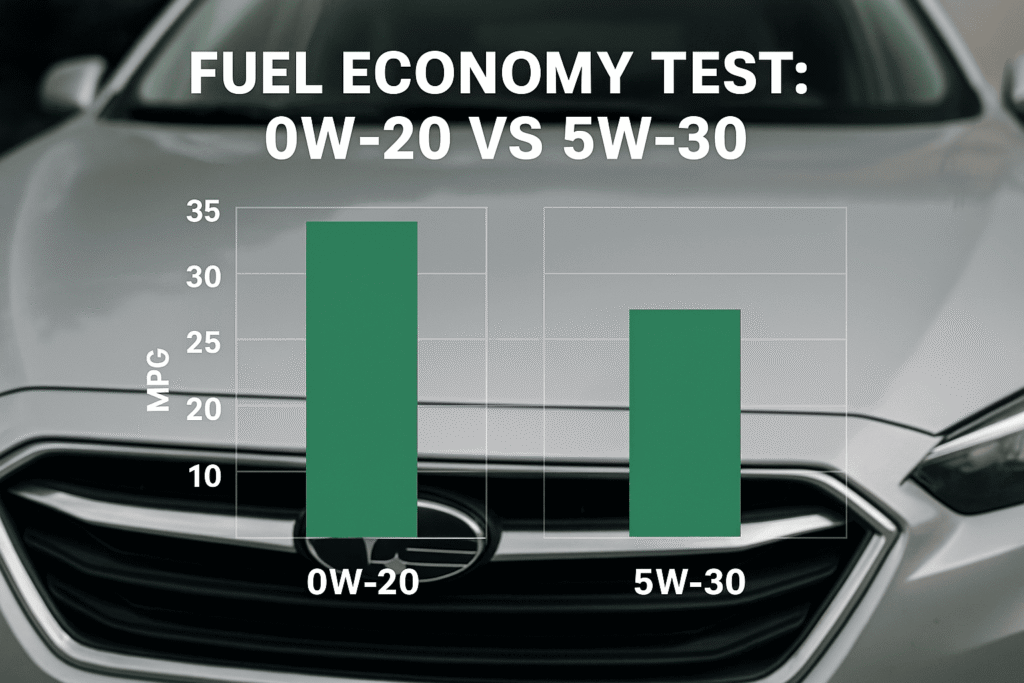
Fuel economy depends on how easily the engine parts move against each other. Thinner oils reduce friction and improve mileage. 0W20 oil is thinner at operating temperature, which can improve fuel economy by 1-2% compared to thicker oils.
5W30 oil offers more protection but may cause slightly higher engine drag due to its thickness. This can reduce fuel efficiency, especially in stop-and-go driving or city conditions.
Modern engines designed for low-viscosity oils benefit more from 0W20’s fuel-saving properties.
- 0W20: Lower friction, better fuel mileage.
- 5W30: Slightly higher fuel consumption but better under load.
Recent white papers indicate that while 0W-20 reduces parasitic drag, the HTHS (High-Temperature High-Shear) viscosity of 5W-30 remains 20–25% higher, providing a critical safety margin during “severe service” cycles.
Fuel Efficiency Impact
Fuel efficiency relates closely to fuel economy but focuses on overall vehicle performance. Using 0W20 oil reduces engine resistance, helping engines use less fuel. This effect is more noticeable in urban driving.
5W30 oil can increase fuel usage slightly due to its thicker nature. However, it offers consistent performance in mixed driving conditions, including highway and towing.
Vehicles with turbocharged or older engines may need 5W30 for reliable performance, despite minor fuel efficiency loss.
- 0W20: Better for light-duty and daily commuting.
- 5W30: Preferred for heavy-duty or high-temperature driving.
Temperature Suitability
Temperature range is key for oil choice. 0W20 oil suits cold to moderate climates due to its excellent low-temperature flow and adequate high-temp protection.
5W30 oil covers a wider temperature range, handling hot climates and severe driving conditions better. Its higher viscosity at operating temperature helps protect engines in heat.
- 0W20: Best for cold winters and temperate zones.
- 5W30: Ideal for hot summers and heavy load situations.
Choosing oil that matches your climate keeps your engine safe and efficient all year.
Cost And Availability
Both 0W20 and 5W30 oils are widely available. 0W20 oil may cost slightly more due to its advanced formulation for newer engines and fuel efficiency benefits.
5W30 oil is often cheaper and more common, especially in markets with older vehicles or warmer climates.
- 0W20: Slightly higher price, more synthetic blends.
- 5W30: Generally more affordable, wide availability.
Price differences are minor compared to the benefits each oil offers for specific vehicles.
Comparative Performance Metrics Table Of 0w20 Vs 5w30
| Feature | 0W20 | 5W30 |
|---|---|---|
| Viscosity at Cold Start | Flows very quickly at low temps | Flows well but slower than 0W20 |
| Viscosity at Operating Temp | Thinner (20 rating) | Thicker (30 rating) |
| Engine Protection | Good for modern engines, less under high load | Better under heavy load and heat |
| Fuel Economy | Improves mileage slightly | May reduce mileage slightly |
| Temperature Range | Cold to moderate climates | Wide range, including hot climates |
| Cost | Usually slightly higher | Generally more affordable |
This table helps compare key factors at a glance, simplifying your oil choice.
Compatibility With Engines
Choosing the right motor oil impacts engine health and performance. The debate between 0W20 and 5W30 oils often centers on their compatibility with different engines. Each oil type suits certain engine designs and conditions. Understanding which oil fits your engine helps maintain efficiency and reduce wear.
Modern Vs Older Engines
Modern engines often require thinner oils like 0W20. These oils flow easily at low temperatures, reducing engine strain during cold starts. Thinner oil also improves fuel efficiency by lowering internal friction.
Older engines, designed with wider clearances, usually benefit from thicker oils like 5W30. This oil provides a stronger protective film, helping to seal gaps and reduce oil consumption.
- 0W20 oil: Best for tight tolerances and advanced engine technology.
- 5W30 oil: Suitable for engines with looser tolerances or higher mileage.
| Engine Type | Recommended Oil | Key Benefit |
|---|---|---|
| Modern engines | 0W20 | Better cold start flow, improved fuel economy |
| Older engines | 5W30 | Thicker oil film, better wear protection |
Switching oil types without considering engine age may cause problems. Thinner oil in an older engine can lead to leaks or reduced protection. Thicker oil in a modern engine may increase friction and reduce fuel efficiency.
Manufacturer Recommendations
Engine manufacturers provide specific oil grades to ensure proper performance. These guidelines consider engine design, materials, and emission standards. Using the recommended oil keeps warranties valid and engine warranty intact.
Most manufacturers list oil grades in the owner’s manual or on the oil filler cap. It is essential to follow these instructions strictly.
- Check the owner’s manual for oil viscosity and specification.
- Use oil that meets the required API or ACEA standards.
- Choose synthetic or conventional oil as recommended.
- Maintain oil change intervals as specified.
| Manufacturer | Common Oil Grade | Notes |
|---|---|---|
| Toyota | 0W20 | Focus on fuel economy and emissions |
| Ford | 5W30 | Supports older and performance engines |
| Honda | 0W20 | Designed for modern engine technology |
Ignoring manufacturer advice can lead to engine damage, poor performance, and voided warranty. Stick to recommended oil grades for optimal engine life and efficiency.
The 2026 Global Engineering Paradox: Why Recommendations Vary By Region
The 2026 global engineering paradox deepens this debate because recommendations for these oils vary greatly by region. This paradox arises from diverse climate conditions, local manufacturing standards, and driving habits. These recommendations differ helps car owners pick the right oil for their vehicles and environment.
Why Climate Influences Oil Recommendations
Climate plays a major role in choosing motor oil. Regions with extreme cold need oils that flow easily at low temperatures. 0W20 offers excellent cold-start performance, making it popular in colder areas.
Warmer climates favor oils that maintain thickness during high heat. 5W30 keeps its protective qualities better in hot conditions.
- Cold regions: 0W20 recommended for quick engine start.
- Hot regions: 5W30 preferred for stable viscosity.
Manufacturing And Engine Design Differences
Automakers in different countries design engines with specific oils in mind. These designs consider local fuel quality, emission rules, and engine technology.
For example, Japanese cars often recommend 0W20 for fuel efficiency and emissions control. European models might favor 5W30 for durability and performance.
| Region | Common Oil Recommendation | Reason |
|---|---|---|
| North America | 0W20 | Cold winters, fuel efficiency focus |
| Europe | 5W30 | Warmer climate, engine longevity |
| Asia | Varies (0W20 or 5W30) | Wide climate range, diverse vehicles |
Driving Habits And Local Fuel Quality
Driving style affects oil choice. Stop-and-go city driving heats engines differently than highway cruising.
Local fuel quality also impacts oil performance. Lower quality fuel may require oils with stronger additives, often found in 5W30 formulas.
- City driving: Frequent stops increase engine stress.
- Highway driving: Steady speeds require stable oil viscosity.
- Fuel quality: Poorer fuel demands more protective oil.
Expert Consensus: When To Switch Grades
The debate between 0W-20 and 5W-30 oils often arises among car owners. Experts agree that switching oil grades depends on factors like climate, engine type, and manufacturer recommendations. Understanding when to switch grades helps maintain engine efficiency and prevents damage. This section explores the expert consensus on switching between 0W-20 and 5W-30 oils.
Is It Safe To Use 5w-30 In A 0w-20 Engine?
Using 5W-30 oil in an engine designed for 0W-20 oil is generally not recommended without proper guidance. Both oils differ in viscosity, affecting how they flow and protect the engine.
Key differences include:
- Viscosity at low temperatures: 0W-20 flows easier during cold starts, offering better protection in cold climates.
- Viscosity at high temperatures: 5W-30 is thicker and provides more protection in hotter conditions or under heavy engine loads.
Using 5W-30 in a 0W-20 engine could cause:
- Reduced fuel efficiency
- Possible increased engine wear during cold starts
- Potential voiding of vehicle warranty
When might it be safe?
- If the car is older and has higher mileage, 5W-30 might help maintain oil pressure.
- In warmer climates where cold start protection is less critical.
- When the manufacturer allows a range of viscosities.
| Aspect | 0W-20 | 5W-30 |
|---|---|---|
| Cold Temperature Flow | Flows very easily | Flows well but thicker than 0W-20 |
| Hot Temperature Protection | Thinner oil, less protection under heavy load | Thicker oil, better protection |
| Fuel Efficiency | Better fuel economy | Lower fuel economy |
Experts suggest: Always check the owner’s manual before switching. Using the wrong oil may cause engine damage or warranty issues.
Mixing 0W-20 and 5W-30 Engine Oil
Mixing 0W-20 and 5W-30 oils is not ideal but is sometimes unavoidable. Experts say short-term mixing usually does not harm the engine. Still, it should not become a long-term practice.
Important points about mixing oil grades:
- Both oils have different viscosities and additives.
- Mixing changes the overall oil viscosity and performance.
- It may reduce the oil’s ability to protect the engine effectively.
Possible effects of mixing:
- Altered flow properties at cold and hot temperatures.
- Reduced oil change intervals may be necessary.
- Potential impact on fuel efficiency and engine wear.
Experts recommend these steps if mixing happens:
- Plan to change the oil to the correct grade soon.
- Monitor engine performance and unusual noises.
- Use high-quality oils from reputable brands.
| Mixing Scenario | Potential Outcome | Recommended Action |
|---|---|---|
| Small amounts mixed during oil top-up | Minimal effect if changed soon | Schedule oil change at next service |
| Mixed grades used for long periods | Reduced engine protection and oil life | Drain and refill with correct grade immediately |
Bottom line: Avoid mixing oil grades regularly. Use the grade specified by the vehicle maker for best engine health.
When To Choose Each
Choosing between 0W20 and 5W30 motor oils depends on your car’s needs and the environment you drive in. Both oils offer unique benefits. Knowing when to use each type helps protect your engine and improve performance. This guide explains which oil works best for daily driving and extreme conditions.
Daily Driving
For most people driving in regular city or highway conditions, 0W20 oil is often the better choice. It is thinner and flows more easily at low temperatures. This means the engine gets lubrication quickly when you start your car in the morning. It also helps improve fuel efficiency.
- Better fuel economy: 0W20 reduces engine drag.
- Quick start-up protection: Lubricates engine parts faster in cold weather.
- Reduces engine wear: Thin oil reaches tight spots easily.
Here is a simple comparison table:
| Feature | 0W20 | 5W30 |
|---|---|---|
| Viscosity at low temperature | Thinner, better cold flow | Thicker than 0W20 |
| Fuel efficiency | Higher | Lower |
| Engine protection | Good for normal driving | Better for heavy loads |
Use 0W20 if you:
- Drive mainly in cities or highways.
- Have a newer car designed for thinner oil.
- Want to save on fuel costs.
Many car manufacturers recommend 0W20 for daily driving, especially in mild climates.
Extreme Conditions
When driving in harsh environments, 5W30 oil is often a safer option. It is thicker at high temperatures, offering better protection under stress. This oil helps engines work well in hot weather or heavy-duty use.
- Handles high heat: Keeps engine parts lubricated during long drives.
- Better for towing or heavy loads: Prevents oil from thinning too much.
- More durable in rough terrain: Protects engine in stop-and-go traffic or dusty roads.
Consider 5W30 if you:
- Live in hot climates.
- Drive on mountainous or rough roads.
- Tow trailers or carry heavy loads regularly.
5W30 oil provides a balance between cold start performance and high temperature protection. It suits engines that run hotter or work harder than usual. This oil helps prevent engine wear during extreme driving conditions.

Credit: heavyvehicleinspection.com
Frequently Asked Questions
What Is The Difference Between 0w20 And 5w30 Oil?
0W20 is thinner at low temperatures, providing better cold starts. 5W30 is thicker, offering more protection at high temperatures. Choose based on your vehicle’s manufacturer recommendations and climate conditions for optimal engine performance.
Which Oil Is Better For Cold Weather: 0w20 Or 5w30?
0W20 performs better in cold weather due to its lower viscosity at startup. It flows quickly, reducing engine wear during cold starts. 5W30 is thicker and may not flow as easily in freezing temperatures.
Can I Use 5w30 Instead Of 0w20 Oil?
Using 5W30 instead of 0W20 is possible but not always recommended. It may reduce fuel efficiency and affect engine performance. Always follow your vehicle manufacturer’s oil specifications to avoid potential damage.
How Does Oil Viscosity Affect Engine Performance?
Oil viscosity impacts lubrication and engine protection. Lower viscosity oils like 0W20 flow easier at cold temperatures. Higher viscosity oils like 5W30 protect better under high heat and heavy loads. Choosing the right viscosity ensures optimal engine efficiency and longevity.
Conclusion
Choosing between 0W20 and 5W30 depends on your car’s needs. Thinner oil like 0W20 helps with cold starts and saves fuel. Thicker oil such as 5W30 offers better protection in hot weather. Always check your vehicle’s manual for the right choice.
Using the correct oil keeps your engine healthy and running smoothly. Regular oil changes also extend engine life. Choose wisely to protect your car and enjoy better performance. Simple steps make a big difference.s