
0W-40 and 5W-40 oils differ mainly in cold-temperature performance, though they both offer the same thickness at normal operating temperature. The “0W” oil flows better in very cold conditions than “5W”, meaning it circulates faster at startup in cold climates, which can improve protection during cold starts. Once the engine reaches operating temperature, both grades behave like 40-weight oil, providing similar high-temperature protection and film strength. Choose 0W-40 for better cold-start performance in colder regions, and 5W-40 in moderate climates, but always follow your vehicle manufacturer’s recommendation.
Top 5 Best Engine Oil for Car: Top Valvoline Picks for Maximum Performance
0W40 vs 5W40 – Which Engine Oil Is Better for Your Car?
It was a Tuesday morning in mid-January, and my thermometer read a bone-chilling -5°F. I sat in my driveway, turned the key, and… whirrr… whirrr… cough. My engine sounded like it was waking up from a hundred-year nap. It eventually started, but that sluggish crank stayed on my mind all the way to work.
I realized then that my oil choice wasn’t just a “shop recommendation”—it was the lifeblood of my car. Most of us pick a bottle off the shelf and hope for the best. But whether you’re a daily commuter in a chilly city or someone who loves pushing a performance car on a hot Saturday afternoon, that first number on the bottle matters. Choosing between 0W40 vs 5W40 affects your fuel economy, how fast your engine wears down, and even that annoying “ticking” sound on cold starts.
I’m moving past the boring lab specs. I want to share what I’ve learned from years under the hood so you can stop guessing at the gas station.
Understanding What 0W40 and 5W40 Actually Mean
In short, these numbers tell you how thick or thin your oil is at different temperatures. The “0W” or “5W” describes the oil when the engine is cold, while the “40” describes it when the engine is hot.
Think of engine oil like syrup. When it’s cold, it gets thick and slow. When it’s hot, it runs like water. Engineers created “multi-grade” oils to give us the best of both worlds: oil that stays thin enough to flow in the winter but thick enough to protect when things get hot.
What the “0W” and “5W” Mean (Cold Temperature Rating)
The “W” stands for Winter, not weight. This first number is the “Cold Start” rating.
- 0W: This oil is designed to stay very fluid even in extreme freezes.
- 5W: This is slightly thicker than 0W when cold but still performs well in most climates.
In my experience, if you live somewhere like Minnesota or Maine, that 0W is a lifesaver. On a freezing morning, 0W oil reaches your engine’s top parts in seconds. 5W takes just a bit longer. Since most engine wear happens in those first few seconds before the oil starts flowing, faster is always better.
What the “40” Means (High-Temperature Protection)
The second number, 40, is the “Operating Temperature” rating. This is how the oil acts once your car is warmed up and you’re cruising down the highway.
Surprisingly, once your engine reaches its normal heat, a 0W40 and a 5W40 act almost exactly the same. Both provide a “40-grade” thickness (viscosity) to protect your pistons and bearings from metal-on-metal friction. Whether it’s a humid July day or a dry desert run, both oils offer solid heat resistance.
SAE Viscosity Grading Explained
These numbers come from the Society of Automotive Engineers (SAE). They created a standard scale so we don’t have to guess.
To make one oil act like two different weights, chemists add “viscosity modifiers.” These are tiny polymers that expand when they get hot and shrink when they get cold. It’s a bit of chemistry magic that keeps your engine safe. I always tell my friends: don’t just look at the brand; look at that SAE stamp to ensure it meets what your car actually needs.
Is Oil Life 50% OK? – Should You Wait or Change Now?
Key Differences Between 0W40 and 5W40
The main difference between 0W40 and 5W40 is how they flow when your engine is cold. While both protect your car the same way once you are cruising on the highway, the 0W40 grade is thinner at startup. This helps it reach vital metal parts faster during a freezing winter morning.
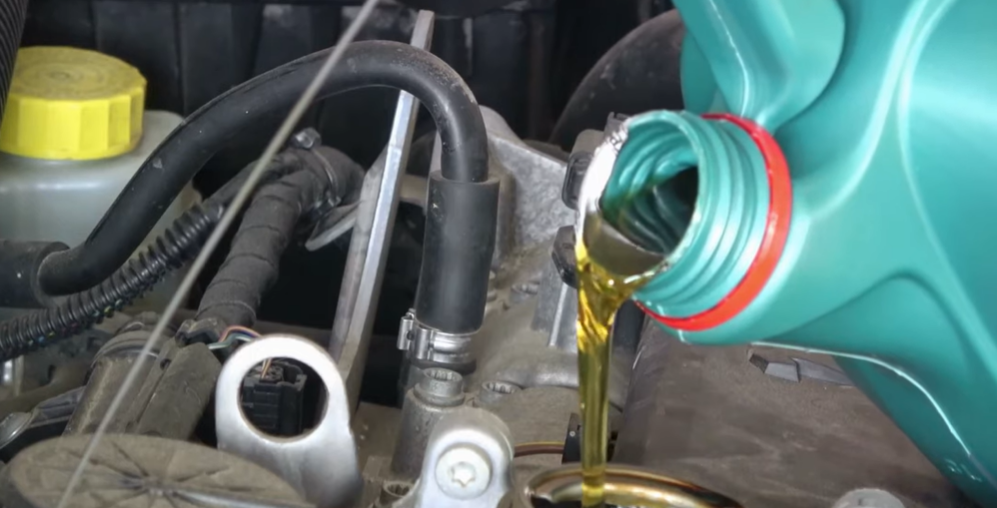
Cold Start Performance
I remember a ski trip last February in the mountains. My car had 5W40 in the pan. When I turned the key, the engine let out a slow, painful groan. It felt like the oil had turned into molasses overnight!
If I had used 0W40, that startup would have been a smooth hum. 0W40 stays fluid even in extreme sub-zero air. 5W40 is great for a mild Texas spring, but in a Minnesota winter, you want that “0W” rating. You can actually hear the difference; a thinner oil stops that scary “ticking” sound by lubricating the valves almost instantly.
Engine Wear Protection
Most engine damage does not happen while you drive. It happens in the first few seconds after you start the car. I’ve seen engines with high miles that look brand new inside because the owner used oil that flowed fast.
- Lubrication speed: 0W40 wins here. It gets to the top of the engine fast.
- Film strength: Once the engine is hot, both oils provide a strong shield.
- Startup wear: Thinner cold oil means less metal-on-metal rubbing during those first few cranks.
Fuel Economy Impact
I checked my trip computer after switching to a thinner cold-start oil. Does it turn your car into a fuel-sipping hybrid? Not quite. However, thinner oil means less drag on your engine parts when they are cold.
You might notice a tiny gain in your MPG if you do lots of short trips. When the oil is thick, the engine has to work harder to move it. It is a marginal gain, but every penny counts at the pump during a long holiday road trip!
Climate Suitability
Choosing between these two usually comes down to where you park your car at night. I treat it like picking a winter coat.
- Sub-Zero Climates: If you see frost on your windows every day, 0W40 is your best friend.
- Moderate Climates: In places where it rarely freezes, 5W40 is more than enough.
- Hot Summers: Both work great here. Since they both end in “40,” they handle the heat of a July traffic jam with ease.
0W40 vs 5W40 – Quick Comparison Table
The main difference lies in how they handle the cold. While both protect your engine perfectly once it is hot, 0W40 flows much faster during a freezing startup. Use the table below to see which one fits your neck of the woods.
| Feature | 0W40 Oil | 5W40 Oil |
| Cold Weather | Exceptional (down to -35°C) | Good (down to -30°C) |
| High Heat | Excellent Stability | Excellent Stability |
| Fuel Economy | Slightly better on cold starts | Standard |
| Best Climate | Arctic winters / Extreme cold | Mild to moderately cold |
| Typical User | Performance & cold-climate drivers | Daily drivers in balanced climates |
Which Oil Is Better for Cold Weather
For me, 0W40 is the clear winner for cold weather because it reaches the top of your engine almost instantly. I learned this the hard way last winter on a ski trip. My car had 5W40, and on a sub-zero Sunday morning, the engine groaned like it was full of wet sand.
Performance Below 0°F (-18°C)
When the air hits those negative numbers, oil thickness changes. Chemists use a “Cold Cranking Simulator” to see how much work an engine has to do to turn over. In my experience, 0W40 acts like a thin juice even when it is freezing.
Because it is thinner, your fuel pump and battery don’t have to fight as hard. I prefer 0W40 in the winter because it offers that extra “safety net” for the metal parts in my engine.
Real-World Cold Start Scenario
Picture this: It’s a Monday morning. You are late for work. The frost is thick on your glass. You turn the key, and you hear a slow crank… crank… thud. That is your engine struggling against thick oil.
I’ve stood in my driveway and felt the vibration of a cold engine. With 5W40, that vibration lasts longer. With 0W40, the oil gets to the valves so fast that the “ticking” sound vanishes in a heartbeat. It gives me peace of mind knowing I’m not grinding metal while I wait for the heater to kick in.
Which Oil Performs Better in Hot Weather?
In hot weather, both oils perform almost exactly the same because they share the same “40” high-heat rating. Once your engine is fully warmed up, whether you use 0W40 or 5W40, the oil thickness is identical. I’ve driven through desert heat on a summer holiday, and my temperature gauge stayed steady with both.
High RPM and Highway Driving
When I’m cruising on the highway for hours, I want an oil that doesn’t thin out like water. Both of these oils are built to stay stable at high speeds. Because they are often full synthetics, they handle the searing heat of a turbocharger without turning into sludge.
I’ve noticed that during long road trips, a 40-weight oil keeps the engine smooth and quiet. It provides a thick enough shield to stop parts from grinding when the sun is beating down on the asphalt.
Towing and Heavy Loads
Last summer, I helped a friend tow a small trailer on a humid Saturday. This is where things get interesting. While 0W40 is a great all-rounder, some people feel 5W40 is slightly tougher.
Why? Because 5W40 usually needs fewer chemicals to stay stable. Under the heavy strain of towing, this can lead to better “shear stability.” This just means the oil holds its shape better when it is being squashed between heavy engine parts. If you tow often in the heat, 5W40 is a very reliable partner.
0W40 vs 5W40 for High-Mileage Engines
For high-mileage engines, 5W40 is often the better choice because its slightly thicker base can help seal small gaps. As our cars get older, the internal parts wear down and create tiny spaces where oil can leak or burn away.
Oil Consumption Differences
I once had an old sedan that started “eating” oil every few weeks. I was using a thin 0W oil, and it was just slipping past the worn-out seals. When I switched to 5W40, the oil loss slowed down.
That slightly thicker “5W” start-up weight can act like a plug for old gaskets. If you find yourself adding a quart of oil between every change, moving to 5W40 might save you a few trips to the store.
Engine Noise in Older Cars
There is nothing worse than that metallic “tick-tick-tick” sound when you start an old car. I’ve sat in my garage and winced at that noise.
Using 5W40 can sometimes quiet those noisy valves. Since it is a tiny bit thicker when cold, it cushions the moving parts better than a very thin 0W oil. It won’t fix a broken engine, but it certainly makes those early morning drives much more peaceful.
Manufacturer Recommendations Matter (Always Check First)
You should always follow your owner’s manual because engineers spend years testing which oil keeps your specific engine alive. I once thought I knew better and tried a random grade on a whim. I ended up with a dashboard lit up like a Christmas tree. Your manual is the final word on what your car needs to run smoothly.
Why Automakers Specify Certain Grades
Engineers design cars with very tight gaps between moving parts. If the oil is too thick, it won’t fit into those tiny spaces. If it is too thin, it won’t stay put.
I’ve learned that oil pressure is a delicate balance. Using the wrong grade can mess with your sensors or even void your warranty. If you have a claim and the dealer finds the wrong fluid in the pan, they might leave you with a very expensive repair bill.
Can You Switch Between 0W40 and 5W40 Safely?
In many cases, yes, you can switch if the manual lists both. I often swap to 0W40 when I know a brutal winter storm is coming. It gives me peace of mind on those dark, icy mornings.
However, do not switch if your car specifically requires a unique “Low SAPS” or “Long Life” oil for a diesel filter. Only move between grades if they both meet the same quality standards listed in your book.
Performance Cars and Turbocharged Engines
Performance cars need high-quality oil because their engines run much hotter than a standard sedan. If you like spirited drives on a sunny Saturday, your oil has to work overtime. Turbochargers, in particular, spin at thousands of rounds per minute and need instant lubrication to stay cool.
Turbocharger Heat Protection
I’ve seen what happens when oil “cooks” inside a hot turbo. It turns into hard bits of carbon that can ruin the whole system. 0W40 and 5W40 are usually full synthetics, which means they can handle that intense heat without breaking down.
Synthetic oil stays stable. It flows through the hot turbo bearings and carries heat away quickly. This keeps your car fast and your engine healthy even when you are pushing it hard on a mountain road.
European Cars and 0W40 Popularity
If you drive a BMW, Mercedes, or VW, you have probably noticed that 0W40 is the star of the show. European car brands often have very strict rules called ACEA standards.
These cars are built for the Autobahn, where you might drive at high speeds for a long time. They need an oil that flows fast in a German winter but stays tough during a high-speed run. That is why 0W40 is so popular—it handles those two extremes perfectly.
Synthetic vs Conventional in 0W40 and 5W40
You will almost always find that 0W40 and 5W40 are full synthetic oils because conventional oil simply cannot handle such a wide temperature range. I once tried to find a “cheap” conventional version for an old project car on a Saturday afternoon, but it doesn’t exist. Natural crude oil gets too thick in the cold and too thin in the heat to meet these tough specs.
Why 0W40 Is Almost Always Full Synthetic
To get an oil to flow at -40 degrees while still protecting a hot engine, chemists have to build the molecules from scratch. This is what “full synthetic” means. I’ve seen how these oils stay clear and fluid in a freezer while conventional oil turns into a cloudy, waxy mess.
The additive packages in these synthetic oils are also top-tier. They include special cleaners that keep your engine guts shiny. Since 0W40 has to do so much “heavy lifting” in the winter, it needs a high-tech synthetic base to stay stable.
Longevity and Oil Change Intervals
One thing I love about using a high-quality synthetic 5W40 is that it lasts much longer. In my daily driver, I noticed the oil stays “cleaner” on the dipstick for more miles. Synthetic molecules are tough and do not break down or “oxidize” as fast as the old-school stuff.
Even though the oil can last longer, I still stick to a regular schedule. If you do a lot of stop-and-go driving on your commute, even the best synthetic oil picks up dirt. For me, changing a high-quality synthetic every 7,500 miles is the “sweet spot” for a healthy engine.
Cost Difference – Is 0W40 More Expensive?
Yes, 0W40 is usually more expensive than 5W40 because it requires more expensive synthetic base stocks and complex additives to achieve that “zero” winter rating. When I go to the auto parts store, I usually see a price gap of a few dollars per jug.
Price Comparison
On a typical shelf, a 5-quart jug of 5W40 might cost you $30 to $35. The same brand in a 0W40 bottle might jump up to $40 or more. It sounds like a big jump, but when you spread that cost over six months of driving, it is less than the price of a single fancy coffee per month.
I’ve found that 5W40 is much easier to find on sale. Since it is a more common “middle ground” oil, shops tend to stock more of it and offer better deals during the holidays.
Is the Price Difference Worth It?
For me, the extra five or ten bucks is a tiny price to pay for peace of mind. If you live in a place where your breath clouds in the air every morning, 0W40 is worth every penny. It saves your battery and your starter motor from wearing out early.
However, if you live in a warm state like Florida, you are paying for “cold-start tech” you will never actually use. In that case, I’d stick with the 5W40 and spend the extra cash on a better oil filter. It’s all about matching the price to your actual environment.
Pros and Cons of 0W40
Choosing 0W40 is the best move if you live in a place where the air hurts your face in the winter. It is a premium, high-tech oil that offers the widest range of protection. I’ve used it during mountain trips, and the way the engine kicks over instantly on a frosty morning is pure magic.
Advantages
- Superior Cold Starts: It flows like water even when the temperature drops to -35°C.
- High-Temp Shield: Once you are on the road, it protects just as well as any heavy oil.
- Extreme Versatility: It is perfect for people who drive in both snowy winters and hot summers.
Disadvantages
- Higher Price: You will likely pay a few extra dollars per bottle at the shop.
- Overkill for Warmth: If you live in a tropical climate, you are paying for cold-start tech you don’t need.
Pros and Cons of 5W40
The 5W40 grade is a fantastic, balanced choice for most drivers who want great protection without the “specialty” price tag. It is a workhorse oil. I usually reach for this for my daily driver during the spring and fall because it is reliable and easy to find.
Advantages
- Strong Protection: It offers a very thick, safe film for your engine parts.
- Budget Friendly: It is often cheaper and goes on sale more frequently.
- Great Availability: You can find this jug at almost any gas station or big-box store.
Disadvantages
- Slower Winter Flow: In a deep arctic freeze, it takes a few extra seconds to move than 0W40 does.
Common Myths About 0W40 vs 5W40
There is a lot of “garage talk” that can be very confusing. I’ve sat through many holiday dinners listening to uncles give bad advice about oil. Let’s clear the air with some facts I’ve learned from years of studying engine data.
“Thicker Oil Always Protects Better”
This is a classic mistake. People think “thick” means “strong.” In reality, if the oil is too thick when you start the car, it can’t reach the top of the engine. Metal rubs against metal, and that causes damage. Modern engines have tiny gaps that need thin oil to flow through them quickly.
“You Can Use Any 40-Weight Oil”
Not quite. While both are “40-weight” at high heat, the “0W” or “5W” part is vital for your starter motor and battery. If your manual asks for 0W and you put in 5W during a blizzard, your car might not start at all. Always respect the winter rating.
“Switching Grades Will Damage Your Engine”
I used to fear this, too. But switching between 0W40 and 5W40 is usually very safe as long as both oils meet your car’s quality specs. If you want to use 0W40 in the winter and 5W40 in the summer to save money, your engine will likely be very happy with that plan!
When Should You Choose 0W40?
You should choose 0W40 if you live in a place where winters are brutal or if you drive a high-performance car with a turbo. I always reach for the 0W40 bottle when the forecast shows a deep freeze is coming. It is the best choice for fast protection when the oil in your pan feels like ice.
- Extremely Cold Climates: If you wake up to frost every day, this oil flows fast enough to save your engine from wear.
- Turbocharged Engines: Turbos get very hot very fast. 0W40 moves quickly to cool those vital parts.
- Manufacturer Requirement: Many European cars specifically ask for this grade to maintain their high-speed performance.
- Seasonal Switching: I often swap to this oil just for the winter months to give my battery and starter motor an easier life.
When Should You Choose 5W40?
You should choose 5W40 if you live in a mild climate or have an older car with a lot of miles on the clock. It is a reliable, cost-effective oil that does a great job in most normal driving conditions. I find it perfect for my daily driver during the warm summer months when I don’t need arctic-level flow.
- Mild to Warm Climates: If your winters rarely drop below zero, 5W40 provides more than enough protection.
- High-Mileage Engines: The slightly thicker base can help quiet down a noisy engine and stop small oil leaks.
- Budget-Conscious Maintenance: It is usually easier on the wallet and works perfectly for standard oil change intervals.
Final Thoughts: 0W40 vs 5W40 – Which One Wins?
After years of changing my own oil on sunny Saturdays and freezing Mondays, I’ve realized there isn’t a single “winner.” It really comes down to what is right for your specific car and where you live.
I used to stress over the numbers, but the formula is simple: Climate + Manufacturer Spec = The Correct Answer. If your owner’s manual says both are okay, let the weather guide you. Use 0W40 if you want the ultimate cold-start safety net, and use 5W40 for a solid, all-around performer that saves you a bit of cash.
Your car is a big investment. Taking an extra minute to check the bottle ensures it stays healthy for years to come. Trust your manual, listen to your engine, and you can’t go wrong.
H2: Frequently Asked Questions (FAQs)
Quick answers to the most common questions drivers ask in garages, forums, and on cold Monday mornings.
H3: Is 0W40 better than 5W40?
Not necessarily. 0W40 performs better in extreme cold, while both protect equally well at normal operating temperature.
H3: Can I use 0W40 instead of 5W40?
Yes, in most cases — especially in colder climates — as long as your owner’s manual allows both grades.
H3: Is 5W40 thicker than 0W40?
Only during cold starts. Once the engine reaches operating temperature, both oils perform like a 40-weight oil.
H3: Which oil is better for winter?
0W40. It flows faster in freezing temperatures and reduces startup wear.
H3: Which oil is better for summer?
Both perform the same in hot weather since they share the same 40 high-temperature rating.
H3: Does 0W40 improve fuel economy?
Slightly in cold weather. The difference is usually small and hard to notice in daily driving.
H3: Is 0W40 fully synthetic?
Almost always, yes. It needs synthetic base oils to achieve its low cold-temperature rating.
H3: Can switching between 0W40 and 5W40 damage my engine?
No, not if both grades are approved by your manufacturer.
H3: Is 5W40 good for high-mileage engines?
Yes. Some drivers prefer it for slightly thicker cold startup protection in older engines.
H3: Which oil is better for turbo engines?
Both can work well, but 0W40 is often recommended in colder climates due to faster oil flow at startup.