
5W-30 vs 15W-40: The main difference between these engine oils is their viscosity in different temperatures. 5W-30 is thinner and flows better in cold conditions, helping engines start smoothly and improving fuel efficiency. 15W-40 is thicker and performs better in high temperatures and heavy-duty engines, offering stronger protection under heavy loads. Choosing between them depends on your vehicle type, climate, and the manufacturer’s recommendation.
Understanding Engine Oil Basics Before Comparing 5W-30 and 15W-40
I still remember standing in the auto parts store on a chilly Saturday morning, staring at the wall of colorful plastic jugs. I was trying to figure out which motor oil was actually right for my old truck. Those numbers—5W-30, 15W-40—felt like a secret code. Once I learned what they mean, choosing the right oil became simple. Understanding these labels helps you pick the best protection for your engine’s specific needs.
Top 7 best head gaskets – Long-Lasting Seals for High-Performance Engines
What Do Oil Viscosity Numbers Mean?
SAE viscosity ratings measure how easily oil flows at different temperatures. Think of it like liquid thickness. The “W” stands for “winter,” indicating how the oil flows during a cold start. The first number shows cold-start thickness, while the second number shows how the oil behaves once the engine warms up to operating temperature. Getting this balance right is key to keeping your engine parts protected.
- Low Numbers (e.g., 5W): These oils stay thin when it is cold. They flow quickly to vital parts the moment you turn the key.
- High Numbers (e.g., 40): These oils hold their thickness better when the engine is hot, providing a strong protective layer.
What Engine Oil Actually Does Inside Your Engine
I used to think oil just “lubricated” things, but it does so much more. Your engine is a complex machine with many metal parts moving at high speeds. Without the right oil, the heat and friction would destroy the internal components in minutes. Think of oil as the lifeblood that keeps the whole system running smoothly and quietly while you drive.
- Lubrication: It creates a slippery barrier so metal parts don’t grind against each other.
- Heat Transfer: It carries heat away from hot areas like pistons to help prevent overheating.
- Cleaning: It traps dirt and carbon deposits to prevent harmful sludge from building up.
- Protection: It coats surfaces to prevent rust and corrosion.
Why Choosing the Right Oil Viscosity Matters
Choosing the wrong oil is a risk I learned to avoid the hard way. Using oil that is too thick can make your engine work harder, while oil that is too thin might not provide enough cushion under heavy loads. Studies show that using the manufacturer-recommended viscosity can improve fuel economy by 1–2% compared to using an incorrect, thicker grade. Proper viscosity ensures your engine lasts for many years and thousands of miles.
- Cold Start Performance: The right “W” rating ensures your engine gets oil pressure in seconds, not minutes.
- Longevity: Correct oil prevents premature wear on bearings and cylinder walls.
- Efficiency: Modern engines are built with tight tolerances that require specific, thinner oils to minimize internal drag.
What Is 5W-30 Engine Oil?
5W-30 engine oil is a versatile, multi-grade lubricant designed to perform across a wide range of temperatures. It stays thin enough to circulate rapidly during chilly winter starts, yet it thickens to provide a protective layer once your engine reaches normal operating heat. For most modern sedans, hatchbacks, and compact SUVs, this oil is the go-to standard for balancing smooth engine performance with better fuel efficiency.
Key Characteristics of 5W-30 Oil
When I pop the hood of my daily driver on a brisk Tuesday morning, I need peace of mind. 5W-30 oil is engineered for that exact scenario. It has a low “W” rating, meaning it flows like a light liquid even when the thermometer drops.
- Cold Start Flow: It reaches critical engine components almost instantly.
- Temperature Stability: It maintains a consistent protective film even when you’re stuck in stop-and-go traffic on a hot afternoon.
- Modern Design: It is specifically formulated to meet the tight tolerances of today’s gasoline engines.
Typical Vehicles That Use 5W-30
If you drive a standard passenger vehicle manufactured within the last twenty years, your owner’s manual likely lists 5W-30. I’ve found this is the most common oil in my garage for everything from my reliable hybrid to my wife’s midsize SUV. It is the gold standard for most light-duty gasoline engines.
- Sedans and Hatchbacks: The bread and butter of modern road travel.
- Compact and Midsize SUVs: Great for daily errands and family road trips.
- Hybrid Vehicles: These engines benefit from the low friction provided by this grade.
Benefits of Using 5W-30
The biggest win for me is how much smoother the engine feels. Because 5W-30 is thinner at start-up than heavy-duty oils, it reduces internal drag significantly. Studies suggest that using the correct, thinner viscosity grade can improve your fuel economy by roughly 1–2%. It’s a small change that adds up to real savings at the pump over a long weekend of driving.
- Faster Lubrication: Less wear and tear on your engine during that initial “cold start” moment.
- Better Fuel Economy: Lower oil resistance means your engine doesn’t have to work as hard.
- Compatibility: It is widely available and approved by almost every major manufacturer for passenger cars.
Potential Downsides of 5W-30
While 5W-30 is great for my commute, it isn’t perfect for every situation. I noticed that when I tried to use it in an older, high-mileage vehicle, the engine burned through the oil a bit faster. Because it is a lighter oil, the protective film can thin out under extreme pressure or heavy towing. Research indicates that certain 5W-30 formulations are twice as likely to “shear out of grade” than lighter oils like 0W-20 under intense heat.
- Extreme Loads: It might not provide enough cushion for heavy-duty towing.
- High-Heat Stress: It can break down faster than thicker, heavy-duty oils in harsh, high-load conditions.
- Older Engines: If your engine has loose seals, this thinner oil might find its way out more easily.

10W-30 vs 15W-40– Engine Protection, Viscosity & Best Uses
What Is 15W-40 Engine Oil?
15W-40 engine oil is a robust, high-viscosity lubricant formulated specifically for heavy-duty applications and high-stress environments. Unlike thinner passenger car oils, it provides a thicker, more resilient film that stands up to extreme heat and heavy loads. It is the industry standard for diesel engines and hard-working machinery, offering superior protection when you are pushing your engine to its absolute limit, whether you are towing heavy trailers or operating in intense heat.
Key Characteristics of 15W-40 Oil
When I help my neighbor with his diesel truck, the first thing I notice is how different the 15W-40 oil feels. It’s thick and substantial. It is designed to maintain that thickness even when the engine gets screaming hot.
- High-Load Strength: It resists breaking down under extreme pressure.
- Stable Film: It stays between moving metal parts even when the engine is under a massive load.
- Winter Flow: Because it is a “15W” oil, it is much thicker than 5W-30 during a cold startup.
Vehicles and Equipment That Typically Use 15W-40
I usually reach for 15W-40 when I am working on heavy-duty equipment or diesel-powered vehicles. If your engine is designed to pull heavy loads, this is likely what it needs.
- Diesel Trucks: Ideal for heavy-duty pickups and commercial semi-trucks.
- Construction Gear: Used in excavators and loaders that run for long hours.
- Farm Machinery: Perfect for tractors that see dusty, hot, and demanding work days.
Advantages of 15W-40
The main benefit I’ve seen is how well it protects parts. In an engine pulling a heavy load up a mountain, heat is the enemy. 15W-40 provides excellent wear protection because it stays thick. This is a huge win for longevity. In fact, many diesel manufacturers require this grade because it handles high soot levels and heavy stress significantly better than standard passenger oils.
- Tough Protection: Perfect for hot climates and high-stress towing jobs.
- High Heat Stability: Doesn’t thin out easily, which protects bearings under heavy load.
- Long Life: Great at keeping heavy-duty engine parts from grinding down.
Possible Drawbacks of 15W-40
It’s not all sunshine, though. On a cold winter morning, this stuff can feel like molasses. Because it is thicker, it flows more slowly through your engine during that first start. This increases engine drag, which can reduce your fuel economy by 2–4% compared to lighter oils. Also, if you try to run this in a modern, tight-tolerance gasoline car, it will actually slow you down and hurt your gas mileage.
- Slow Flow: Can lead to a brief delay in lubrication during very cold starts.
- Fuel Efficiency: The extra thickness causes more drag, which hits your wallet at the pump.
- Compatibility: Definitely not meant for most modern, fuel-efficient gasoline engines.
5W-30 vs 15W-40: Quick Comparison
Choosing between 5W-30 and 15W-40 comes down to how your engine is built and the conditions you drive in. While 5W-30 is optimized for smooth, fuel-efficient performance in modern passenger vehicles, 15W-40 acts as a heavy-duty shield for diesel engines under intense stress. Understanding these core differences—ranging from flow rates during a cold morning start to thermal stability under load—is the secret to ensuring your engine stays healthy and runs efficiently for years to come.
Viscosity Differences
I used to think all oil was basically the same, but the thickness really matters. Think of 5W-30 as a “thin” oil that stays fluid even when it is freezing outside. Conversely, 15W-40 is much thicker and heavier. This difference in viscosity determines how fast the oil reaches your engine’s moving parts when you turn the key.
Cold Weather Performance
There is nothing worse than the sound of a dry engine on a snowy January day. Because 5W-30 has a lower “W” rating, it flows like water during a cold start, coating engine parts almost instantly. If you use 15W-40 in those same conditions, it can take much longer to circulate, which leaves your engine unprotected during the most critical seconds of the day.
High Temperature Protection
When I’m towing my trailer on a hot summer afternoon, I want an oil that doesn’t quit. 15W-40 is the hero here; it’s designed to handle massive heat and pressure without thinning out too much. While 5W-30 is great for normal driving, under extreme stress, it can break down faster. In fact, some tests show that heavier oils like 15W-40 provide a more stable, thicker film to prevent metal-on-metal contact when the engine is scorching hot.
Fuel Economy Impact
We all want to save a little cash at the pump. Because 5W-30 is lighter, it creates less internal drag, allowing your engine to spin more freely. This can lead to a 1–2% improvement in fuel economy. When I switched my daily driver back to the recommended 5W-30, I actually noticed that extra few miles per gallon on my weekly commute.
Engine Compatibility
Always check your owner’s manual before grabbing a jug. Using 15W-40 in a modern engine designed for 5W-30 is like trying to run a marathon in hiking boots—it just doesn’t fit. Modern gasoline engines rely on tight tolerances that require the specific flow characteristics of 5W-30. Diesel engines, however, usually demand the robust additives and thickness found in 15W-40 to handle their specific internal stresses.
Real-World Driving Scenarios: Which Oil Works Better?
The best choice between 5W-30 and 15W-40 usually depends on your unique driving environment and vehicle type. For daily city trips in a modern car, a lighter oil like 5W-30 ensures quick flow and saves fuel. However, if you are hauling a heavy trailer through desert heat, the robust film of 15W-40 offers the vital protection your engine needs. Matching your oil to your actual road conditions prevents unnecessary wear and keeps your engine running strong.
Daily Commuting in Modern Cars
I spend most of my weekdays stuck in stop-and-go traffic. It is frustrating, but it is also tough on an engine. Constant idling and short trips mean the oil rarely stays at a steady heat. In my experience, 5W-30 is the clear winner here. It flows fast during those frequent cold starts at the office or the grocery store. Since 5W-30 reduces internal drag, it helps me maintain my gas mileage. I’ve noticed that using a thinner, correct grade can improve fuel economy by about 1% to 2% compared to using a thick oil that the engine has to fight against.
Heavy Towing and Work Trucks
Last summer, I helped a friend move a massive boat during a holiday weekend. We used his diesel truck, and that is where 15W-40 really shined. When you are pulling a heavy load, your engine gets incredibly hot. You can almost feel the heat radiating through the floorboards. In these high-stress moments, you need a thick oil that won’t turn into water. 15W-40 stays stable under pressure. While 5W-30 oils are twice as likely to shear out of grade under extreme stress, 15W-40 keeps a solid barrier between those hard-working metal parts.
Hot Climate Driving
If you live in a place where the sun feels like a heat lamp, your oil choice matters even more. I remember a road trip through the desert where the dashboard temp hit 110°F. In such extreme heat, thin oils can struggle to stay thick enough to coat the engine. This is why many people in hot regions prefer 15W-40 for older or harder-working vehicles. It provides a “cushion” that resists the thinning effects of high ambient temperatures. It gives me peace of mind knowing my oil isn’t just evaporating away while I drive.
Cold Winter Conditions
I’ll never forget a Tuesday morning in January when my car barely groaned to life. In freezing weather, 15W-40 can get thick and slow. It’s like trying to pour honey on a cold day. On the flip side, 5W-30 is designed for this. It stays fluid so it can reach your overhead cams in a split second. Using the right low-temperature oil is vital.
- 5W-30: Flows quickly to prevent that scary “metal-on-metal” sound at startup.
- 15W-40: Best kept for warmer days or engines with block heaters.
- Pro Tip: Always check your dash; if the oil light stays on for more than a second, your oil might be too thick for the cold!
Can You Use 15W-40 Instead of 5W-30?
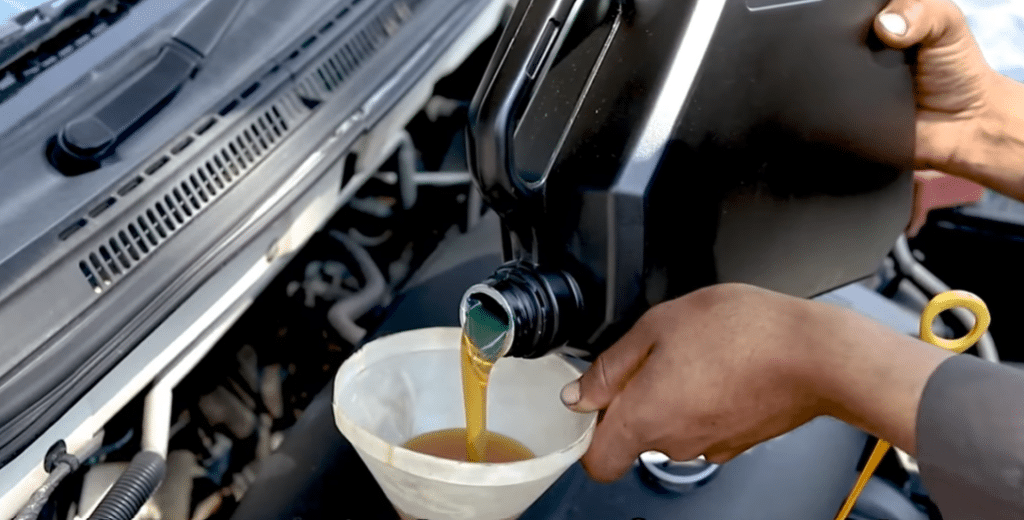
Swapping 15W-40 for 5W-30 is generally not recommended for modern vehicles unless it is a dire emergency. While 15W-40 is a sturdy, heavy-duty oil, its high cold-start thickness can prevent it from reaching tight engine parts quickly enough in cars designed for the thinner 5W-30. Using the wrong viscosity can lead to sluggish performance, increased internal friction, and a noticeable drop in gas mileage. Always prioritize your owner’s manual to avoid long-term engine damage.
When It Might Be Safe
I remember a hot Sunday afternoon at a remote campsite when I realized my old truck was dangerously low on oil. The only jug available was 15W-40. In that moment, having oil was better than having none. If you drive an older engine with high mileage, the slightly thicker 15W-40 might actually help seal small gaps in worn internal parts. It can be a temporary fix in warm climates where the oil won’t turn into thick sludge overnight.
- Emergency Situations: If it is the only way to get home, use it, but change it soon.
- Worn Engines: High-mileage vehicles sometimes benefit from a thicker film to reduce “oil burning.”
- Steady Heat: In tropical locations, the “15W” cold-start rating is less of a concern.
When You Should Avoid It
I would never dream of putting 15W-40 in my new hybrid or any car with a turbocharger. Modern engines are built with tiny passages that act like straw-sized veins. Thick oil simply cannot move through them fast enough. On a cold morning, this delay is devastating. Research shows that 5W-30 oils are twice as likely to shear out of grade than 0W-20, but 15W-40 is so thick it might not even reach the top of a modern engine during a freezing startup.
- Tight Tolerances: Modern cars need thin oil to lubricate small, precise gaps.
- Turbochargers: These spin at high speeds and need instant, thin lubrication to stay cool.
- Freezing Weather: In the winter, 15W-40 will make your engine groan and struggle to turn over.
Risks of Using the Wrong Oil
The first thing I noticed when I once experimented with a thicker oil was how “heavy” the car felt. My fuel economy dropped almost immediately. Because the engine has to push a thicker liquid, it works harder and burns more gas. 0W-30 provides a 1-3% fuel economy improvement over thicker grades, and the jump from 5W-30 to 15W-40 is even more drastic. You aren’t just losing money at the pump; you are also causing microscopic wear every time you start the car.
- Gas Mileage Drop: Expect to see fewer miles per gallon as internal drag increases.
- Metal Wear: Slow-moving oil means metal parts rub together without protection for those first few seconds.
- Sludge Risks: Over time, using the wrong weight can lead to nasty buildup that clogs your engine’s “arteries.”
Manufacturer Recommendations and Oil Standards
Your vehicle manual is the most vital tool in your garage for choosing engine oil. Automakers spend years testing specific viscosities like 5W-30 and 15W-40 to match their engine designs. Following these guidelines ensures your car meets its fuel efficiency targets and protects the warranty. While it is tempting to pick an oil based on a sale, the manufacturer’s spec is the only way to guarantee your engine stays healthy for the long haul.
Understanding Oil Certifications
I used to ignore the tiny symbols on the back of oil jugs until I realized they are like a “grade” for the oil. When I look at a bottle now, I check for the API (American Petroleum Institute) starburst. These ratings tell me if the oil meets the latest safety and performance needs for modern cars.
- API Standards: This tells you if the oil is for gasoline or diesel engines.
- ACEA Ratings: These are European standards that focus on high-performance needs.
- Approval Codes: Some brands, like BMW or Ford, have their own “secret sauce” requirements listed as specific codes.
Why Automakers Specify Certain Oils
Engineers design modern engines with tiny gaps between parts. If the oil is too thick, it can’t get in there. I learned that using the wrong oil can ruin a turbocharger or a catalytic converter. Automakers pick a grade to balance protection with economy. For example, 0W-30 provides a 1-3% fuel economy improvement over thicker oils. They want your car to run clean and use as little gas as possible.
How to Choose the Right Oil for Your Vehicle
Picking the right oil is about more than just a number on a bottle; it is about knowing your car’s lifestyle. I always start by checking my manual to see the base requirement. Then, I look at how I drive—do I haul heavy loads on the weekend, or do I just commute? Finally, I consider the weather, as a freezing winter day requires a much thinner oil than a scorching summer holiday in the desert.
Check Your Owner’s Manual First
The manual is my “holy grail” for car care. It usually has a chart that shows which oil to use based on the temperature outside. It is the best way to avoid a costly mistake. If your manual says 5W-30, sticking to it is the safest bet for your engine’s life.
Consider Your Driving Style
If you are like me and mostly do short trips to the store, your engine rarely gets hot. 5W-30 is great for this. But if you spend your holidays towing a trailer up steep hills, you might need something tougher. Heavy loads put extra stress on parts, and thicker oils like 15W-40 can provide a better “cushion” in those high-pressure moments.
Think About Climate and Environment
Climate changes everything. On a cold Monday morning in a snowy town, 15W-40 feels like cold honey and won’t move. In that case, 5W-30 is a lifesaver. However, if you live in a place where the pavement melts in July, a thicker oil might be recommended to keep the engine from wearing down.
Synthetic vs Conventional Oil Options
I remember the first time I switched to synthetic oil; the engine just sounded “happier” at start-up. Synthetics are man-made and stay stable much longer. While they cost a bit more, they don’t break down as fast as conventional oil. Data shows that 5W-30 oils are twice as likely to shear out of grade than 0W-20, but high-quality synthetics resist this “thinning out” much better than the cheap stuff.
- Synthetic: Better for extreme heat, cold starts, and longer gaps between changes.
- Conventional: Fine for basic driving if you change it very often.
Common Myths About Engine Oil Viscosity
I have spent many Saturday afternoons at local car meets listening to self-proclaimed experts share “oil wisdom.” While their passion is great, a lot of what they say is actually outdated or plain wrong. Myths about oil thickness can lead to poor fuel economy or even engine damage. Understanding the truth about engine oil viscosity helps you ignore the noise and make the best choice for your car’s health and your wallet.
“Thicker Oil Always Protects Better”
This is the most common thing I hear. People think thick oil acts like a heavy cushion. In reality, an oil that is too thick might not flow fast enough to reach your engine’s top end. Modern engines are built with very tight gaps. If the oil can’t get in, those parts will wear out. While it is true that 5W-30 oils are twice as likely to shear out of grade than 0W-20 under extreme heat, using a 15W-40 when your car calls for a 30-weight can actually cause more heat due to internal friction.
“All Engines Can Use Any Oil”
I once saw a guy try to put heavy diesel oil into a tiny hybrid car because it was on sale. This is a huge mistake. Every engine is a unique machine. Automakers choose a specific viscosity to meet strict fuel efficiency targets. For example, moving from a thick oil to a 0W-30 provides a 1-3% fuel economy improvement. If you use the wrong weight, you are literally throwing money away at the gas pump and putting your engine at risk.
“Switching Oil Types Damages Engines”
There is an old story that if you switch from conventional to synthetic oil, your seals will leak. I have switched many of my own cars over to synthetic without a single drop on the garage floor. Modern synthetic oils are designed to be compatible with all seals. In fact, they offer much better protection during cold starts. Don’t let old ghost stories stop you from giving your engine the better lubrication it deserves.
- Fact: Synthetics flow better in the cold.
- Fact: You can switch back and forth if you need to.
- Fact: High-quality oil keeps your engine cleaner for longer.
Is 15W-40 good for high-mileage engines?
Yes, it can provide thicker protection for older engines, especially under heavy loads.
H3: Can I mix 5W-30 and 15W-40?
It’s possible in a pinch, but it’s not recommended for long-term use—stick to one grade for best performance.
H3: Does oil viscosity affect engine noise?
Yes, thicker oil can quiet engine ticking, while thinner oil may let some noise through.
H3: Which oil is better for summer driving?
15W-40 handles high temperatures and heavy loads better, making it ideal for hot summer driving.
H3: Is 5W-30 suitable for diesel engines?
Some light-duty diesels can use 5W-30, but most heavy-duty diesels require thicker oils like 15W-40.