
Table of Contents
What Does the W Mean in 10W40 Motor Oil?
What does the W mean in 10W-40 motor oil refers to the winter rating in the SAE viscosity grading system. The “W” stands for winter, indicating how the oil flows at low temperatures. In 10W-40, the 10W rating describes cold-temperature performance and how easily the oil circulates during engine start-up, while 40 represents viscosity at normal operating temperatures. A lower W number means better cold-start flow. Understanding the W rating helps drivers choose engine oil suited to their climate and engine requirements.
If you are beginner and want learn more about on engine oil , this guide will help to build basic knowledge.
Motor Oil Basics
Understanding the meaning of the “W” in 10W40 motor oil starts with the basics of motor oil itself. Motor oil keeps an engine running smoothly by reducing friction and protecting parts. It also helps the engine stay clean and cool.
Role Of Motor Oil
Motor oil plays a vital role in engine health. It acts as a lubricant, coolant, and cleaner for engine parts. Without oil, engine parts would rub against each other, causing wear and damage.
Key functions of motor oil include:
- Lubrication: Oil creates a thin layer between moving parts to reduce friction.
- Cooling: Oil absorbs heat and helps keep the engine temperature low.
- Cleaning: Oil carries away dirt, metal particles, and sludge.
- Protection: Oil forms a protective barrier to prevent rust and corrosion.
- Sealing: Oil helps seal gaps between piston rings and cylinder walls.
Without proper oil, engines can overheat, wear out quickly, or even fail. That is why using the right type of oil is important. The “10W40” label tells you about the oil’s thickness and how it performs in different temperatures.
Types Of Motor Oil
Motor oil comes in different types. Each has unique qualities to fit various engines and conditions. The main types are:
- Conventional Oil: Made from crude oil. It works well for regular driving but may break down faster.
- Synthetic Oil: Made in labs for better performance. It resists heat and lasts longer.
- Synthetic Blend Oil: Mix of conventional and synthetic oils. It offers some benefits of synthetic at a lower cost.
- High-Mileage Oil: Designed for cars with over 75,000 miles. It helps reduce leaks and oil burn-off.
Each type suits different needs. Synthetic oils flow better in cold weather. Conventional oils may work fine in warm climates.
Viscosity is another key factor. The “10W40” label shows oil thickness at cold and hot temperatures:
| Number | Meaning | Effect |
|---|---|---|
| 10W | Winter viscosity rating | Oil flows well in cold weather |
| 40 | High-temperature viscosity rating | Oil stays thick enough at engine heat |
Choosing the right oil type and viscosity helps protect the engine and improve performance. Understanding motor oil basics makes oil selection easier and safer for your vehicle.
Breaking Down The Numbers 10w40
The numbers and letters on motor oil is important for car care. The label “10W40” shows how the oil works at different temperatures. Each part of this code tells you about the oil’s thickness or viscosity in cold and hot conditions. Breaking down the numbers 10W40 helps you choose the right oil for your engine.
What Does The “10w” Mean?
The “10W” is about the oil’s behavior in cold weather. The “W” stands for “Winter.” It shows how thick or thin the oil is when the engine is cold.
- Lower numbers before W mean the oil flows easier in cold temperatures.
- 10W means the oil flows well enough at low temperatures to protect your engine during cold starts.
- This helps the engine start smoothly and reduces wear.
What Does The “40” Mean?
The “40” number shows the oil’s thickness when the engine is hot. This is called the oil’s high-temperature viscosity.
- Higher numbers mean thicker oil at high temperature.
- 40 means the oil stays thick enough to protect engine parts when hot.
- This prevents engine wear and keeps parts moving smoothly.
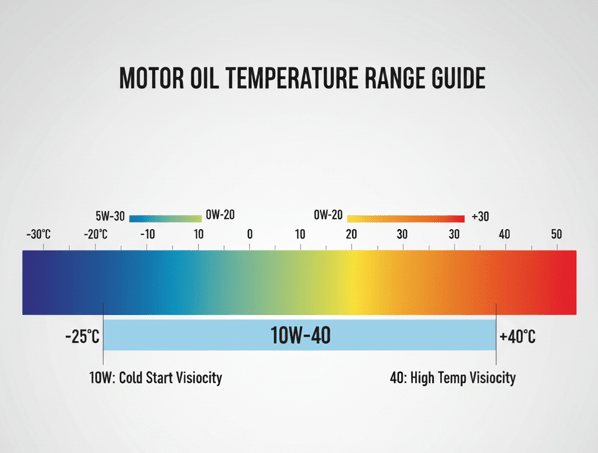
This chart illustrates that 10W-40 multigrade oil is engineered to maintain a functional flow (viscosity) in ambient temperatures as low as -25°C (-13°F) and as high as +40°C (104°F). Utilizing a 10W-40 grade offers a balanced mid-range solution for drivers in temperate climates who require reliable protection across shifting seasons.
Viscosity Explained In Simple Terms
| Term | What It Means | Effect on Engine |
|---|---|---|
| 10W (Winter Viscosity) | Oil thickness at cold temperature | Easier engine start and better protection in cold weather |
| 40 (High-Temperature Viscosity) | Oil thickness at engine operating temperature | Keeps engine parts lubricated and prevents wear |
Why Is This Important?
Choosing oil with the right 10W number helps your engine start well in cold weather.
The 40 number keeps your engine safe when it runs hot.
Both numbers together ensure your engine works smoothly in all seasons.
Understanding Motor Oil Viscosity
Understanding the “W” in 10W40 motor oil requires knowing about oil viscosity. Viscosity measures how thick or thin the oil is, affecting how well it flows inside the engine. Motor oil must work well in cold and hot temperatures. The “W” stands for winter, showing the oil’s ability to flow in cold weather. This section explains viscosity, why oil changes thickness with temperature, and how additives help multigrade oils perform well all year.
What Viscosity Is (flow Resistance)
Viscosity is the measure of a fluid’s resistance to flow. Think of it as how thick or thin the oil is. Honey has high viscosity because it flows slowly. Water has low viscosity because it flows quickly. Motor oil needs the right viscosity to protect engine parts and keep the engine running smoothly.
Key points about viscosity:
- High viscosity means thick oil that flows slowly.
- Low viscosity means thin oil that flows quickly.
- Viscosity affects how oil lubricates engine parts.
- Too thick oil can cause poor flow and engine wear.
- Too thin oil may not protect engine parts well.
| Viscosity Level | Flow Description | Example |
|---|---|---|
| High | Thick and slow flow | Honey |
| Medium | Moderate flow | Motor oil at room temp |
| Low | Thin and fast flow | Water |
Motor oil viscosity ensures the oil flows easily to all engine parts but stays thick enough to protect them. The number before the “W” in 10W40 (which is 10) shows the oil’s viscosity in cold temperatures. The lower the number, the thinner the oil at cold temperatures.
Why Oils Thin When Hot And Thicken When Cold
Oil changes thickness depending on temperature. Cold temperatures make oil thicker, slowing its flow. Hot temperatures make oil thinner, allowing it to flow faster. This happens because heat gives oil molecules more energy to move around.
How temperature affects oil:
- Cold oil: Molecules move slowly, causing thick oil.
- Hot oil: Molecules move faster, causing thin oil.
Engines need oil that flows well at startup, even in cold weather, to protect parts immediately. Oil also needs to stay thick enough when the engine heats up to keep parts lubricated and avoid metal contact.
The “W” number in 10W40 means the oil has been tested for flow at winter temperatures. A “10W” oil flows like a 10-weight oil would in cold weather, ensuring it moves fast enough to protect the engine on cold starts.
| Temperature | Oil Behavior | Effect on Engine |
|---|---|---|
| Cold | Oil thickens | Harder to pump, slower lubrication |
| Hot | Oil thins | Flows easily but may lose protection if too thin |
Role Of Additives In Multigrade Oils
Multigrade oils like 10W40 work well in a wide range of temperatures. Additives inside the oil help it keep the right thickness in both cold and hot conditions.
How additives help:
- Viscosity index improvers: These additives make oil thinner in cold weather and thicker in hot weather.
- Detergents: Keep engine parts clean by preventing sludge buildup.
- Anti-wear agents: Protect engine parts from friction and damage.
- Corrosion inhibitors: Stop rust and corrosion inside the engine.
Viscosity index improvers are key for multigrade oils. They change shape with temperature to control oil thickness. At cold temperatures, they contract, letting oil flow easily. At high temperatures, they expand, keeping oil thick enough to protect the engine.
This technology allows 10W40 oil to act like a 10-weight oil in winter and a 40-weight oil at high engine temperatures. It gives drivers the benefit of good protection all year without changing oils.
How “w” Affects Real-world Performance
The “W” in 10W40 motor oil stands for “Winter.” It shows how the oil performs at cold temperatures. This letter affects how easily the engine starts and how well oil flows in cold weather. Understanding the “W” helps choose the right oil for your car, especially in different climates.
What The “w” Means For Cold Starts
The “W” number tells how thick or thin the oil is when cold. A lower number before the “W” means the oil is thinner and flows better at low temperatures.
- 10W means the oil behaves like a 10-weight oil in winter or cold.
- Lower “W” numbers like 5W or 0W flow easier in freezing weather.
Thinner oil at cold starts helps the engine parts move quickly. This reduces wear and helps the engine run smoothly right after starting.
Impact On Engine Protection
Oil with the right “W” rating protects the engine better when it is cold. Thick oil can cause the engine to work harder at startup. This can lead to faster engine wear.
Choosing oil with a suitable “W” helps keep the engine parts lubricated during cold temperatures. It also improves fuel efficiency by reducing engine strain.
Choosing The Right “w” For Your Climate
The “W” number is important for choosing oil based on the climate:
| Climate | Recommended “W” Rating | Reason |
|---|---|---|
| Cold Winters | 0W, 5W | Flows easily at low temperatures for quick starts |
| Mild Winters | 10W | Good balance for moderate cold weather |
| Warm Climates | Higher “W” numbers (15W, 20W) | Thicker oil better for warmer starts, less thin at high temps |
How “w” Influences Oil Flow And Engine Efficiency
The “W” rating controls how fast oil moves through the engine at low temperatures. Faster oil flow means quicker lubrication.
Good lubrication prevents metal parts from rubbing and wearing out. It also helps the engine reach normal operating temperature faster.
Engines using oil with the right “W” start easier and run smoother. This improves engine efficiency and reduces fuel use.
Why Multigrade Oil Matters
Understanding the importance of multigrade oil helps protect your engine in different temperatures. The “W” in 10W40 stands for “Winter,” showing the oil’s performance in cold weather. Multigrade oils, like 10W40, work well in both cold and hot conditions. This flexibility keeps the engine running smoothly year-round.
What Does Multigrade Oil Mean?
Multigrade oil has two numbers separated by a “W.” The first number shows how the oil flows in cold weather. The “W” means winter. The second number shows the oil’s thickness at high temperatures. This combination allows the oil to work well in many climates.
How Multigrade Oil Protects Your Engine
- Cold starts: The oil flows easily at low temperatures, reducing wear.
- Hot operation: It stays thick enough to protect engine parts during heat.
- Engine cleanliness: Multigrade oils help prevent sludge and deposits.
Advantages Of Using 10w40 Multigrade Oil
| Feature | Benefit |
|---|---|
| 10W (Cold flow) | Keeps oil thin in winter for easy engine start |
| 40 (Hot viscosity) | Maintains thickness to protect engine at high temperatures |
| Versatility | Works well in many climates and driving conditions |
10w-40 Vs. Other Common Grades (the Comparison Chart)
Understanding the “W” in 10W-40 motor oil helps in choosing the right oil for your engine. The “W” stands for winter, showing how the oil flows at cold temperatures. The lower the number before the “W,” the better the oil performs in cold starts. Comparing 10W-40 with other common grades shows differences in viscosity and temperature performance. This helps you pick the best oil for your vehicle’s needs. Below is a detailed comparison chart of 10W-40 against popular motor oils.
10w-40 Vs. 5w-30
10W-40 and 5W-30 are popular motor oils but suit different conditions. The main difference is in their cold temperature performance and thickness at high temperatures.
- Cold Weather: 5W-30 flows better in cold weather because of its lower “5W” rating. It helps the engine start more easily on cold mornings.
- High Temperature: 10W-40 is thicker at high temperatures, offering better protection for engines running hot or under heavy loads.
- Fuel Economy: 5W-30 can improve fuel economy due to lower viscosity compared to 10W-40.
- Engine Type: 10W-40 suits older or high-mileage engines needing thicker oil for better seal and protection.
| Feature | 10W-40 | 5W-30 |
|---|---|---|
| Cold Start Viscosity | Thicker, less flow at cold | Thinner, better flow at cold |
| High Temp Viscosity | Thicker, better engine protection | Thinner, moderate protection |
| Fuel Efficiency | Lower | Higher |
| Best For | Older, high-mileage engines; hot climates | Modern engines; cold climates |
Choosing between 10W-40 and 5W-30 depends on engine age and climate. For cold regions, 5W-30 helps start engines easily. For hotter areas or older engines, 10W-40 offers thicker protection.
10w-40 Vs. 10w-30
Both 10W-40 and 10W-30 share the same cold temperature rating but differ in thickness at operating temperatures. This affects engine protection and oil flow during driving.
- Cold Performance: Both have “10W” rating, so oil flow in winter is similar.
- High Temperature Viscosity: 10W-40 is thicker than 10W-30 when the engine is hot, offering extra protection.
- Engine Wear: Thicker oil like 10W-40 can reduce wear in older engines with larger clearances.
- Fuel Economy: 10W-30 offers slightly better fuel efficiency due to lower viscosity.
| Feature | 10W-40 | 10W-30 |
|---|---|---|
| Cold Start Viscosity | Same | Same |
| High Temp Viscosity | Thicker, better sealing | Thinner, less drag |
| Fuel Efficiency | Lower | Higher |
| Best For | Older engines; high temperatures | Newer engines; moderate temperatures |
Pick 10W-40 for engines needing stronger high-temp protection. Choose 10W-30 for better fuel economy and smoother flow at high temperatures. Also, 10W40 vs 15W40 will help to decide on cold & hot weather.
How 10w40 Performs In Different Conditions
The “W” in 10W40 motor oil stands for “winter.” It indicates how the oil performs in cold temperatures. The number before the W (10) shows the oil’s flow at low temperatures, while the number after (40) represents its thickness at high temperatures. Understanding how 10W40 performs in different conditions helps you choose the right oil for your engine. This oil is designed to work well in both cold and hot environments, offering balanced protection and efficiency.
Cold Start Performance
At low temperatures, oil tends to thicken, making it harder for the engine to start and get lubricated quickly. The “10W” rating means this oil flows like a 10-weight oil in winter conditions. It is thinner than oils with higher W numbers, which helps the engine parts move smoothly right after starting.
Benefits of 10W40 oil during cold starts:
- Faster lubrication: Oil reaches engine parts quickly, reducing wear.
- Easy engine start: Less resistance from thick oil helps the engine crank smoothly.
- Improved fuel efficiency: Engine does not work as hard in cold weather.
Here is a simple table showing oil flow at cold temperatures:
| Oil Grade | Flow at -20°C | Cold Start Ease |
|---|---|---|
| 5W40 | Flows faster | Very easy start |
| 10W40 | Moderate flow | Good start |
| 15W40 | Flows slower | Difficult start |
10W40 works well in cold climates but not as fast as 5W oils. It is a good choice for moderate cold conditions. It prevents engine parts from wearing out during the first few minutes of running.
High Temperature Stability
At high temperatures, oil thins out and loses its ability to protect engine parts. The “40” in 10W40 means the oil maintains a thick enough layer to shield engine surfaces under heat. This thickness helps prevent metal-to-metal contact, which can cause damage.
Key features of 10W40 in hot conditions:
- Strong film strength: Keeps engine parts separated even when hot.
- Reduced oil consumption: Thicker oil means less evaporation.
- Better wear protection: Protects engine during heavy loads and high speeds.
Check the comparison of oil thickness at 100°C:
| Oil Grade | Viscosity at 100°C (cSt) | Protection Level |
|---|---|---|
| 10W30 | 9.3 – 12.5 | Moderate |
| 10W40 | 12.5 – 16.3 | High |
| 10W50 | 16.3 – 21.9 | Very High |
10W40 provides a good balance of flow and thickness at high heat. It suits engines working hard in warm weather or heavy traffic. The oil helps keep the engine cool and running smoothly under stress.
Choosing The Right Oil For Your Vehicle
Choosing the right oil for your vehicle is essential for its performance and longevity. The “W” in 10W40 motor oil stands for “Winter,” indicating how the oil flows at cold temperatures. Choose wisely to avoid mixing with different oil, which might cause a problem like oil smell like gasoline.
Manufacturer Recommendations
Car makers test and suggest specific oil types for each engine model. These recommendations ensure the engine works smoothly and lasts longer. Always check your vehicle’s owner manual or the manufacturer’s website for the right oil grade. Using the suggested oil grade helps maintain warranty coverage and keeps the engine healthy.
Here are some reasons to follow manufacturer advice:
- Proper viscosity: The right thickness of oil prevents engine wear.
- Engine design: Some engines need synthetic oils; others do fine with conventional.
- Fuel efficiency: Recommended oils often improve mileage.
- Emission standards: Correct oil helps meet environmental rules.
Below is a sample table showing how manufacturers recommend oil grades based on engine types:
| Engine Type | Recommended Oil Grade | Oil Type |
|---|---|---|
| Gasoline (Standard) | 10W-30 | Conventional or Synthetic Blend |
| Turbocharged | 5W-30 | Full Synthetic |
| Diesel | 15W-40 | Heavy Duty Synthetic |
Climate Considerations
Temperature changes affect motor oil performance. The “W” number in 10W40 shows how the oil behaves in cold weather. Lower “W” numbers mean the oil stays thinner and flows better when cold. This helps protect the engine during cold starts.
Consider these points based on your climate:
- Cold climates: Choose oil with a low “W” number, like 5W or 0W, for easier starting.
- Hot climates: Focus on the second number (40 in 10W40) to ensure the oil stays thick enough at high temperatures.
- Seasonal changes: Some drivers switch oils between winter and summer for better protection.
Use this simple guide to pick oil based on temperature:
| Temperature Range (°F) | Recommended Oil Viscosity |
|---|---|
| Below 0°F (-18°C) | 0W-20, 0W-30 |
| 0°F to 50°F (-18°C to 10°C) | 5W-30, 10W-30 |
| Above 50°F (10°C) | 10W-40, 15W-40 |
Common Misconceptions & Clarifications
Many people confuse the numbers and letters on motor oil labels. The “W” does not mean the oil is only for winter. It just shows the oil’s flow at cold temperatures, not its performance in summer heat.
Other common misunderstandings include:
- Thicker oil is always better: Too thick oil can cause poor lubrication at cold starts.
- Synthetic oil lasts forever: Synthetic oils still need regular changes to remove dirt and deposits.
- One oil fits all engines: Different engines require different oil grades and types.
Remember, the first number (before the “W”) shows cold weather flow, and the second number shows oil thickness at high temperatures. Both numbers matter for full-year protection.
Here is a quick fact table to clear up confusion:
| Label Part | Meaning | Example: 10W40 |
|---|---|---|
| First Number + W | Cold temperature viscosity | 10W = oil flows well down to about -20°C |
| Second Number | High temperature viscosity | 40 = oil stays thick at 100°C engine temperature |
Frequently Asked Questions
What Does The “w” Stand For In 10w40 Oil?
The “W” in 10W40 stands for “Winter. ” It indicates the oil’s viscosity at cold temperatures. This rating ensures the oil flows well during cold starts, protecting your engine in winter or cold climates.
Why Is The “w” Important For Motor Oil?
The “W” rating shows how the oil performs in cold weather. It helps ensure quick lubrication during engine start-up. This prevents wear and damage caused by thick or slow-moving oil in low temperatures.
How Does 10w40 Oil Perform In Cold Weather?
10W40 oil flows easily at low temperatures due to its 10W rating. It provides effective engine protection during cold starts. This helps maintain engine efficiency and reduces wear in winter conditions.
Can I Use 10w40 Oil Year-round?
Yes, 10W40 is a multi-grade oil suitable for various temperatures. It performs well in both cold starts and high operating temperatures. This makes it a versatile choice for many vehicles and climates.
Conclusion
The “W” in 10W40 motor oil stands for winter. It shows how the oil flows in cold temperatures. This helps your engine start easily on cold days. The number before “W” means the oil’s cold weather thickness. The number after shows oil thickness when the engine is hot.
Knowing this helps you pick the right oil for your car. Choose oil that protects your engine well all year. Understanding these numbers keeps your engine running smoothly. Simple but important.