
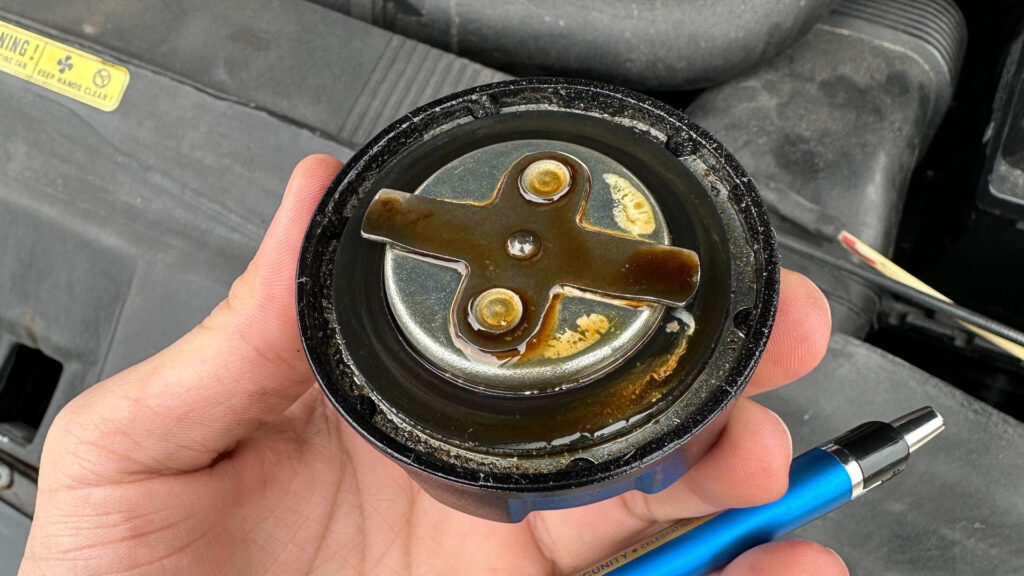
The Quick Verdict: White sludge on Oil Cap(often looking like “mayonnaise”) is an emulsion of engine oil and water/moisture. While it can be a symptom of a catastrophic blown head gasket, it is more commonly caused by simple condensation that hasn’t evaporated due to short driving trips in cold weather.
If you’ve ever lifted your oil cap and noticed a strange white, milky sludge underneath, you’re probably wondering: is this just moisture, or is it a sign of something more serious like a blown head gasket? It’s a question that can cause real worry because the health of your engine depends on it.
I reviewed the best universal oil dipstick options that fit common engines and setups in 2026, including custom builds and modern cars without an OEM stick.
The truth is, white sludge on the oil cap isn’t always a clear-cut warning. Sometimes it’s harmless condensation, but other times it could point to an engine problem that needs immediate attention. You’ll learn how to tell the difference, what causes this sludge, and when it’s time to see a mechanic.
Keep reading to protect your engine and avoid costly repairs down the road.
Table of Contents
White Sludge On Oil Cap
White sludge on the oil cap often worries car owners. This creamy, milky substance looks like a mix of oil and water. It signals moisture presence in the engine. Many wonder if it means a blown gasket or just harmless moisture. Understanding the causes helps in deciding the next steps for your vehicle.
Causes Of Milky Residue
White sludge forms when oil mixes with water or coolant. Condensation inside the engine is a common reason. Short trips that do not warm the engine fully also cause moisture buildup. Sometimes, a minor coolant leak adds to the problem. Not all white sludge means a serious engine issue.
Role Of Moisture In Oil
Water can enter the engine oil through condensation. Cold weather increases moisture inside the engine. Moisture thins the oil, reducing its ability to protect engine parts. Over time, this can cause wear and damage. Keeping moisture out of oil is essential for engine health.
Airtight Seal Importance
The oil cap must seal tightly on the engine. A poor seal lets moisture and dirt enter the oil system. This weak seal allows condensation to form inside the engine. Check the oil cap for cracks or damage regularly. Replacing a faulty cap helps prevent white sludge buildup.
Credit: www.youtube.com
Blown Head Gasket Signs
A blown head gasket causes serious engine problems. Spotting the signs early can save costly repairs. Knowing what to watch for helps protect your car.
This section covers key signals that point to a blown head gasket. Pay attention to changes in your engine’s behavior and fluids.
Common Symptoms
White smoke from the exhaust is a common sign. You may notice engine overheating more than usual. Loss of power and rough running also happen. Coolant leaks or unexplained coolant loss can occur. Sometimes, the engine misfires due to combustion issues.
Oil Appearance Changes
Oil turning milky or creamy is a warning. This happens when coolant mixes with oil. Check under the oil cap for a white sludge. The oil may look frothy or have a thick texture. These changes reduce lubrication and harm the engine.
Coolant And Overheating Issues
Coolant levels drop without visible leaks. The engine temperature rises quickly and stays high. You might see bubbles in the radiator or coolant reservoir. Overheating can cause long-term engine damage. Watch for steam or a sweet smell from the engine.
Other Issues Mimicking Blown Gasket
White sludge on the oil cap often raises concerns about a blown head gasket. Yet, several other issues can produce similar signs. These problems affect the engine’s cooling system and may cause overheating, coolant loss, or white smoke. Identifying the exact cause requires careful inspection and testing.
Coolant Leaks
Coolant leaks happen inside or outside the engine. Leaks in hoses, the radiator, or the water pump lower coolant levels. Internal leaks, like in the heater core, also reduce coolant. Low coolant can cause the engine to overheat, a sign often confused with a blown gasket.
Faulty Thermostat
The thermostat controls coolant flow. If it gets stuck closed, coolant cannot circulate properly. This blockage leads to rapid engine overheating. A faulty thermostat can create symptoms similar to those of a blown head gasket.
Bad Water Pump
The water pump moves coolant through the engine. When it fails, coolant stops flowing. This failure causes the engine to overheat quickly. A bad water pump can mimic the signs of a blown head gasket.
Blocked Radiator
A clogged radiator reduces coolant flow and heat dissipation. Blockages may result from dirt, debris, or corrosion. With poor cooling, the engine temperature rises, causing problems like those seen with a blown gasket.
Radiator Cap Problems
The radiator cap maintains system pressure and prevents coolant loss. A faulty cap can cause pressure drops and coolant leaks. Low pressure reduces cooling efficiency, leading to overheating and symptoms that resemble gasket failure.
Cracked Cylinder Head
A cracked cylinder head allows coolant and oil to mix. This mix creates the white sludge often linked to blown gaskets. Cracks also cause overheating and poor engine performance. Proper testing is essential to distinguish this issue from gasket problems.
Testing And Diagnosis
Testing and diagnosis are critical to find out why white sludge appears on your oil cap. White sludge can mean moisture buildup or a blown head gasket. Proper tests help pinpoint the exact cause. These tests avoid wrong repairs and save time and money.
How to Read Oil Dipstick – Low, Full | Check Your Oil Level the Right Way
Cooling System Pressure Test
This test checks the cooling system for leaks. A special tool pressurizes the system to see if it holds pressure. If pressure drops, leaks exist in hoses, radiator, or gasket. Detecting leaks early prevents engine damage and overheating.
Compression Test
The compression test measures pressure in each cylinder. Low pressure in one or more cylinders may mean a blown head gasket or damaged piston rings. This test shows engine health and helps diagnose internal engine problems causing the white sludge.
Uv Dye Test
Adding UV dye to the coolant helps find leaks invisible to the naked eye. After running the engine, use a UV light to spot dye escaping from cracks or gasket leaks. This test is effective for detecting small or hidden coolant leaks causing sludge.
Preventing Misdiagnosis
Preventing misdiagnosis is crucial when noticing white sludge on your oil cap. This sludge can signal different engine issues. Mistaking moisture for a blown gasket can lead to unnecessary repairs. Clear understanding helps save time and money. Accurate diagnosis ensures the right fix and protects your engine.
Symptoms Overlap
White sludge on the oil cap often looks the same for different problems. Moisture buildup and a blown head gasket share many signs. Both may cause milky residue and engine performance issues. This overlap confuses many car owners. Spotting unique symptoms alone is not enough for diagnosis.
Overheating, coolant loss, and white smoke can appear in several engine faults. External coolant leaks or a faulty thermostat may show similar symptoms. These common culprits mimic serious problems without being as severe. Careful observation is essential but not enough to identify the true cause.
Importance Of Professional Testing
Professional testing clarifies the cause behind white sludge. Experts use tools like combustion gas tests and pressure tests. These tests detect if coolant enters the oil system or if the gasket is damaged. Testing avoids guessing and unnecessary repairs.
Mechanics examine the engine closely to differentiate between moisture and gasket failure. They check for leaks, pressure drops, and gas traces in the coolant. This detailed inspection leads to a confident diagnosis. Trusting professionals saves money and prevents engine damage.

Credit: www.dubizzle.com
When To Seek Help
Knowing when to seek professional help for white sludge on your oil cap is important. This issue might be simple moisture or a sign of a blown gasket. Acting too late can lead to costly engine damage. Watch your car closely and understand the signs that need expert attention.
Signs To Watch For
Check your oil cap regularly. A small amount of white sludge may be normal in cold weather. Thick, creamy sludge means moisture mixes with oil. Engine overheating or loss of coolant can signal a blown gasket. Look for white smoke from the exhaust pipe. Rough engine running or misfires also warn of trouble. These signs need a mechanic’s review quickly.
Consulting Mechanics
Take your car to a trusted mechanic as soon as you notice symptoms. Mechanics can run tests to find the cause. They use pressure tests or combustion gas tests to check the gasket. Early diagnosis can save your engine. Professionals know how to fix leaks or replace parts properly. Do not delay if white sludge appears often or symptoms worsen.
Credit: www.thedrive.com
Frequently Asked Questions
What Is The White Goop On My Oil Cap?
The white goop on your oil cap is milky residue from engine oil mixing with moisture. It signals possible condensation or minor coolant leaks. This mixture often forms if the engine doesn’t fully warm up or seals allow moisture inside.
Check for overheating or coolant loss to rule out serious issues.
Is Oil Always Milky With A Blown Head Gasket?
Oil is not always milky with a blown head gasket. Milky oil often indicates coolant mixing with oil but can result from other issues too. Accurate diagnosis requires professional tests like a compression or cooling system pressure test.
What Can Be Mistaken For A Blown Head Gasket?
Coolant leaks, faulty thermostat, bad water pump, blocked radiator, or cracked cylinder head can mimic blown head gasket symptoms. Professional tests like pressure and compression tests help differentiate the issues accurately.
What Does An Oil Cap Look Like With A Blown Head Gasket?
An oil cap with a blown head gasket often shows a milky, creamy, or white sludge. This indicates oil mixed with coolant. The residue looks like thick, frothy mayonnaise under the cap. It signals coolant leaking into the oil, a common blown head gasket symptom.
Conclusion
White sludge on the oil cap often signals moisture mixing with oil. This can happen from short trips or cold weather. A blown head gasket causes more serious white sludge with other symptoms. Checking for overheating, coolant loss, or engine smoke helps spot the problem.
Simple tests like a pressure check can confirm if the gasket is damaged. Don’t ignore white sludge; early action can save your engine. Keep an eye on your oil cap and engine health to avoid costly repairs.