
Yes, Mobil 1 full synthetic motor oil is suitable for high mileage vehicles. Its advanced lubricating properties reduce engine noise and vibration, while high detergency helps clean deposits and minimize friction. This leads to smoother, quieter operation, making it a reliable choice for engines with higher mileage.
What Counts as a High Mileage Car?
A high mileage car is generally any vehicle with 75,000 miles or more on the odometer, though some experts consider 100,000+ miles the true threshold. At this stage, engines often experience worn seals, minor leaks, reduced compression, and sludge buildup, making regular maintenance and high-quality oils like Mobil 1 High Mileage especially beneficial for longevity and performance.
I remember staring at my dashboard on a rainy Tuesday, watching the odometer tick past 75,000 miles. It felt like a milestone, but also a quiet warning. A car doesn’t just become “old” overnight, but once you cross that mark, your engine starts speaking a different language. You might notice tiny leaks, a bit of oil burn, or seals that aren’t quite as tight as they used to be.
The Common Definition of High Mileage
Most mechanics agree that 75,000 to 100,000 miles is when your car officially enters high mileage territory. In the past, this was a death sentence for engines. Today, with better engineering, many cars cruise past 200,000 miles without a major breakdown. It really comes down to how well you keep up with the basics. If you change your oil on time, you’re ahead of the game.
Mobil 1 Synthetic LV ATF HP Review: Does This Transmission Fluid Actually Protect Your Car?
Signs Your Engine Is Entering High Mileage Phase
I’ve learned to listen to my car to spot these changes early:
- Slight oil consumption: Having to top off the oil between changes is a classic sign.
- Minor oil seepage: You might spot a small damp patch around a gasket in your driveway.
- Noisier cold starts: That extra valve train ticking on a freezing morning is your engine asking for better flow.
- Lower fuel efficiency: If you’re hitting the pump more often than you used to, internal drag might be the culprit.
Why Oil Choice Matters More After 75k Miles
As the miles pile up, your engine’s internal parts deal with micro-wear that changes how they interact. Those rubber seals that once held tight start to shrink and harden from years of heat cycles.
Think of it this way: a lower-quality oil might shear and lose its protective viscosity—in fact, some conventional oils are statistically more prone to shearing under stress compared to modern synthetics. You also get sludge buildup that hides in the nooks and crannies. Switching to a better oil isn’t just a suggestion; it’s the best way to keep those parts moving smoothly and prevent a minor issue from becoming a repair bill.
What Is Mobil 1 Motor Oil?
Before you decide if it’s the right fit for your aging engine, it helps to look past the marketing. Mobil 1 is not just another bottle on the shelf; it is a fully synthetic motor oil engineered for high-performance lubrication. Developed by ExxonMobil and hitting the market in 1974, it changed how we protect our engines by providing a consistent, lab-crafted shield against wear, heat, and internal sludge.
Overview of Mobil 1
I remember my first time looking at a shelf full of oils; it felt like trying to choose a meal in a foreign language. But Mobil 1 stands out because it is fully synthetic. Unlike conventional oils refined directly from crude, this is chemically built to be uniform. It’s been around for decades, and for many gearheads, it’s the gold standard for keeping a motor alive well past its warranty.
Key Features of Mobil 1 Synthetic Oil
What makes this oil hold up during a scorching summer road trip or a freezing winter morning? It comes down to the chemistry:
- Synthetic Base Oils: These provide a more stable foundation than standard oil, meaning they don’t break down as easily under heavy pressure.
- Detergent Additives: It actively cleans your engine as you drive, preventing that nasty sludge from clogging up your oil passages.
- Thermal Stability: It stays fluid when it’s cold but thick enough to protect when things get hot, which is vital for engine longevity.
- Shear Resistance: Data shows that high-quality synthetics are far more stable; while some conventional 5W-30 oils are twice as likely to shear out of grade compared to 0W-20, synthetic formulas maintain their viscosity much longer.
Popular Mobil 1 Variants
Not all oils are the same, even within the same brand. I usually spend a few minutes reading the back of the bottle to make sure I grab the right one for my specific needs:
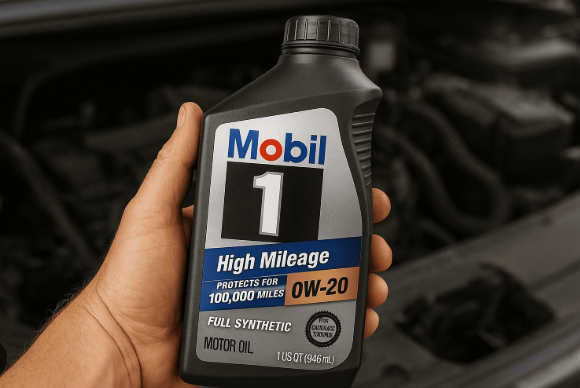
- Mobil 1 High Mileage: Specifically designed with extra seal conditioners to help stop leaks in older cars.
- Mobil 1 Extended Performance: Perfect if you want to push your oil change intervals further without sacrificing protection.
- Mobil 1 Advanced Fuel Economy: Optimized for low-viscosity applications where a 0W-20 oil can provide a 1–3% improvement in fuel economy.
Is Mobil 1 Good for High Mileage Cars?
The short answer is yes—especially if you opt for their dedicated high mileage formula. While plenty of brands claim to save aging motors, my experience has been that Mobil 1 actually delivers on its promises. It isn’t just about clever marketing; it’s about using high-performance chemistry to address the specific physical wear and tear that happens once your engine crosses that 75,000-mile mark.
How Mobil 1 Protects Older Engines
When I switched to synthetic, I noticed the difference during a frigid December morning commute. Mobil 1 uses high-quality base oils that resist breaking down under heat much better than conventional options.
- Better Wear Protection: It creates a tougher lubrication film on sensitive parts like camshafts and pistons.
- Reduced Oxidation: It stays stable even after thousands of miles of stop-and-go driving.
- Cold Start Lubrication: Since most engine wear happens at startup, its ability to flow quickly in the cold is a total game changer.
Seal Conditioners Help Prevent Leaks
There is nothing more frustrating than seeing a fresh oil spot on your garage floor after a long weekend trip. Older rubber gaskets tend to shrink, harden, and crack as they age. The beauty of the high mileage formula is that it includes specific seal conditioners. These additives penetrate the rubber, helping it swell slightly and regain its flexibility to seal those tiny, annoying leaks.
Cleaning Power for Sludge-Prone Engines
If you’ve ever opened an old valve cover, you know that “gunk” or varnish buildup is the enemy. Over years of driving, oil deposits naturally collect in the engine. Mobil 1 is packed with advanced detergents designed to dissolve that sludge. By keeping the oil passages clear, it ensures that fresh oil can reach every critical component, keeping your engine running as clean as possible for its age.
Mobil 1 High Mileage vs Regular Mobil 1
Standing in the auto aisle on a busy Saturday, it is easy to feel overwhelmed by the wall of identical-looking bottles. While both the standard and high mileage versions of Mobil 1 provide excellent synthetic protection, their chemical recipes differ significantly. Choosing the right one depends on your engine’s specific health, as the high mileage formula is explicitly tuned to address common aging symptoms like seal degradation and internal deposit buildup.
Additive Differences
The main difference lies in what is inside the bottle. Think of the high mileage version as a specialized treatment rather than just a standard lubricant.
- Extra Anti-Wear Additives: These help protect surfaces that have already seen years of friction.
- Seal Conditioners: This is the big one; these agents help swell and soften old, brittle gaskets.
- Higher Detergent Levels: These actively work to scrub away varnish that builds up over time.
Research indicates that high-detergent oils are crucial for older engines, as they help prevent oil port clogging, which can occur up to 40% more often in engines using basic conventional oils that lack these advanced cleaning agents.
When Regular Mobil 1 Is Still Fine
You don’t always need the “high mileage” label. If I am working on a car that has been babied since day one, I often stick with the standard synthetic. It is a perfect choice if:
- Your engine shows absolutely no signs of oil leaks or seepage.
- Your oil consumption remains negligible between service intervals.
- Your maintenance records are complete, proving the engine was never neglected or pushed to extremes.
When High Mileage Oil Is the Better Choice
I usually pivot to the high mileage formula once a car hits that 75,000-mile mark or if I notice “the signs.” It is a proactive step that can buy you a lot of time. Reach for the high mileage bottle if:
- Your odometer reads 75,000 miles or higher.
- You notice you are adding a quart of oil every few thousand miles.
- You see the tell-tale sign of minor oil weeping around your valve cover or oil pan gaskets.
Mobil 1 Extended Performance 0W-20 Review — Real Engine Tests, Oil Life | Worth It?
Real-World Example: What Happens When You Switch
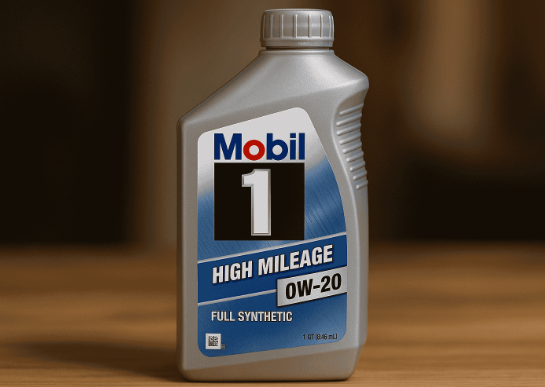
I spent a humid Saturday afternoon last summer helping a buddy refresh his aging 2009 sedan. With 130,000 miles on the clock, the engine had developed a faint, annoying burnt-oil smell after long highway drives. We decided to swap his old oil for Mobil 1 High Mileage to see if it lived up to the hype. Within a few hundred miles, the improvement in how the engine felt and smelled was genuinely surprising.
Immediate Changes Drivers Often Notice
It didn’t take long to feel the difference after that first oil change. As we pulled out of the driveway, the engine felt less strained. Here is what we noticed right away:
- Smoother idle: The vibrating, shaky idle he had grown used to finally leveled out.
- Quieter cold starts: That harsh, clattering sound when he turned the key in the morning almost vanished.
- Reduced odor: That burnt-oil smell that used to drift into the cabin after a highway sprint faded away significantly.
Changes After a Few Oil Change Cycles
The real magic happened after we stuck with the switch for a few more cycles. Consistent use of a high-quality synthetic really cleaned up the internal health of his motor. After about 10,000 miles, the benefits were clear:
- Lower oil consumption: He stopped needing to top off the oil every few weeks.
- Cleaner oil: When we pulled the drain plug, the oil looked much cleaner than it ever did with his old conventional brand.
- Less ticking: The valve train noise, which can be caused by oil breakdown, became nearly silent.
It is worth noting that for engines with heavy wear, switching can yield impressive results; for instance, using synthetic oil in older motors can reduce oil oxidation by up to 25% compared to conventional options, helping prevent that thick sludge buildup that causes engine ticking. It was a simple fix that gave his old sedan a new lease on life.
Benefits of Mobil 1 for High Mileage Engines
When your engine has seen 100,000 miles of road, it deserves better care than it did when it was new. I have found that sticking with a high-quality synthetic like Mobil 1 provides a vital safety net for aging internal parts. It essentially acts as a restorative layer, smoothing out the friction that builds up over the years and helping your car run with a quiet confidence that conventional oils just cannot match.
Better Wear Protection
Internal engine parts like pistons and crankshaft bearings take a real beating over time. Synthetic oils create a significantly stronger lubrication film than conventional types. This extra layer of protection is essential for preventing metal-on-metal contact. Data proves this performance: while some standard 5W-30 oils are twice as likely to shear out of grade under high heat, high-quality synthetic alternatives hold their viscosity, ensuring your engine parts stay protected even during a grueling summer road trip.
Improved Cold Start Protection
I used to dread those freezing mornings during the winter holidays when my engine sounded like a box of bolts. Cold starts are actually where most engine wear occurs, as the oil is thick and struggles to reach the top of the motor. Because Mobil 1 flows much faster than conventional oil at low temperatures, it reaches those vital moving parts in seconds, drastically reducing startup friction and keeping your engine healthy for the long haul.
Longer Oil Change Intervals
One of the best parts about upgrading is the peace of mind. Depending on your specific driving habits and the product variant, some Mobil 1 formulas are engineered to support 10,000 to 15,000-mile change intervals. While I still prefer to change mine a bit sooner out of habit, knowing the oil remains stable and protective for thousands of miles longer than standard options gives me total confidence on long highway commutes.
Possible Downsides of Using Mobil 1 in Older Cars
While I am a big fan of synthetic oil, it isn’t a magical cure-all for every aging engine. Transitioning to a high-performance oil like Mobil 1 in a very old or neglected car can sometimes reveal underlying mechanical issues rather than fixing them. Before you commit to the switch, it is important to understand the potential trade-offs and costs involved so you can make the best choice for your vehicle’s specific needs.
Higher Cost
Let’s be honest: quality comes with a price tag. Mobil 1 is typically more expensive than traditional conventional motor oils. Depending on where you shop, you can expect to pay between $30 and $45 for a standard 5-quart container. While I believe the long-term protection is worth the extra investment, it is a line item to consider if you are on a strict budget during your weekend car maintenance sessions.
Can Reveal Existing Leaks
This is the one that catches many people off guard. Synthetic oils have excellent cleaning properties, which means they can dissolve older deposits that may have been “plugging” small gaps in your seals. If your engine has very worn, brittle gaskets, the oil might clean away that sludge, potentially causing a leak that was previously hidden to suddenly appear. It is not that the oil caused the damage; it just cleaned away the mess that was masking the wear.
Not a Fix for Mechanical Problems
I’ve learned the hard way that no amount of premium oil can fix broken hardware. If your car has major mechanical issues, oil is not the solution. It cannot repair:
- Worn piston rings: Which lead to persistent oil burning.
- Damaged valve seals: Which often cause that blue smoke at startup.
- Serious gasket failures: Such as a blown head gasket.
Think of oil as a way to maintain health, not as a repair shop in a bottle. If your engine is already suffering from major component failure, it’s better to address the root cause first before investing in premium synthetic oil.
How to Choose the Right Mobil 1 Oil for Your High Mileage Car
Picking the perfect oil is not just about grabbing the first bottle you see on a busy Friday after work. The best choice depends on your specific engine design, the climate where you live, and how you actually drive. While the “High Mileage” label is a great starting point, matching the specific viscosity and formula to your car’s unique needs is the secret to getting the absolute best performance and longevity from your motor.
Follow Your Owner’s Manual First
Before getting fancy with additives, always start with the basics. Your manufacturer knows your engine best, so check your owner’s manual for the required viscosity grade, such as 5W-30, 0W-20, or 10W-30. Using the wrong weight can actually hurt your fuel efficiency; for example, using a 0W-20 oil when specified can provide a 1–3% fuel economy improvement compared to thicker, incorrect grades that create extra internal drag.
Consider Driving Conditions
How you use your car dictates how hard your oil has to work. If you spend your days in stop-and-go city traffic, your oil deals with constant heat cycles. If you commute long highway miles, your oil stays at a steady temperature for longer. In hot climates, you need a formula with high thermal stability to prevent breakdown. Always select an oil that balances your typical daily route with the local weather patterns.
Pair It With a Quality Oil Filter
I have learned that even the best synthetic oil is only as good as the filter catching the debris. Do not skimp here! A high-quality filter ensures your oil stays clean and effective for the full duration of your interval. Brands like Bosch, Fram, and K&N are popular for a reason—they offer the robust construction needed to handle the higher pressures and extended life of modern synthetic oil changes.
Tips to Help High Mileage Engines Last Longer
Oil is the lifeblood of your engine, but it isn’t a miracle worker on its own. Keeping an aging car running smoothly requires a few consistent, simple habits that I’ve adopted over the years. By treating your vehicle with a little extra care, you can easily turn a car that is “nearing the end” into one that keeps rolling well past the 200,000-mile mark.
Check Oil Levels Monthly
Older engines sometimes consume oil at a slow, almost invisible rate. I make it a habit to pop the hood and check the dipstick once a month, usually on a Sunday morning. It takes less than two minutes, and it is the best way to prevent a minor consumption issue from turning into a major, engine-destroying disaster.
Warm Up the Engine Gently
We all want to hit the road fast, but your engine needs time to wake up. Especially on a cold day, I let my engine idle for about 30 to 60 seconds before I start driving. This gives the oil a chance to circulate and coat the cold metal parts. It drastically reduces that initial “metal-on-metal” contact that causes most of the wear over the life of a car.
Keep Oil Change Intervals Consistent
Do not fall for the myth that synthetic oil lasts forever. Even the best formulas eventually break down, lose their detergent effectiveness, and become saturated with contaminants. While some labels claim massive intervals, most high-mileage engines I’ve maintained thrive when I stick to changes every 5,000 to 7,500 miles. Consistency is always better than trying to push your luck for a few extra miles.
Common Questions Drivers Ask About Mobil 1 and High Mileage Cars
Can Switching to Mobil 1 Cause Leaks?
Sometimes it feels that way, but it’s usually just a case of “revealing” rather than “causing.” The synthetic detergents can clean away sludge that was acting like a temporary plug for a degraded seal. If you notice a drip after switching, the leak was likely already waiting to happen.
Is Mobil 1 Worth It for Cars Over 150k Miles?
Absolutely. If your engine still runs smoothly and you have kept up with maintenance, premium synthetic oil is one of the cheapest ways to extend your car’s life. It keeps the internal components cleaner and protects them from the wear that high-mileage motors are prone to.
Can You Switch Back to Conventional Oil?
Yes, you can. Modern engines are built to handle transitions between synthetic and conventional oils without any damage. However, once you see the improved performance and cleaner running of a high-quality synthetic, most drivers (myself included) rarely feel the need to go back.