
What Is an Engine Oil Tester, and Why Do People Actually Use One?
An engine oil tester is a small, handheld device that acts like a blood test for your car. Instead of guessing based on mileage, you use it to check the actual health of your lubricant. I first grabbed one on a lazy Sunday morning before a long coastal road trip. It took thirty seconds to show my oil was thinning out, likely saving my engine from a very expensive “clunk” halfway through my holiday.
A Simple Definition (No Jargon)
Think of this tool as a shortcut to total peace of mind. It’s a pocket-sized gadget that analyzes how well your oil is still protecting your engine parts.
- The “Health Check” Tool: It tells you if your oil is still “fresh” or if it has turned into useless sludge.
- The Decision Maker: It helps you decide if you need a change today or if you can safely drive another 1,000 miles.
What It Typically Measures
When I hook up my tester, I’m looking for more than just “dirty” liquid. These devices look for specific data points that can kill an engine if left alone.
- Oil Degradation Level: It tracks the breakdown of additives. For instance, many 5w30 oils are twice as likely to shear out of grade than a 0w20, and a tester catches that thinning immediately.
- Contamination: It detects if water, fuel, or dirt has leaked into your system. Even a 1% fuel dilution can significantly lower your oil’s flashpoint.
- Metal Particles: It senses tiny bits of iron or copper. Finding these early is the difference between a cheap fix and a full engine swap.
- Viscosity Changes: It checks if the oil has thickened too much. Switching to a high-quality 0w30 can provide a 1–3% fuel economy improvement, but only if the oil stays within its intended thickness.
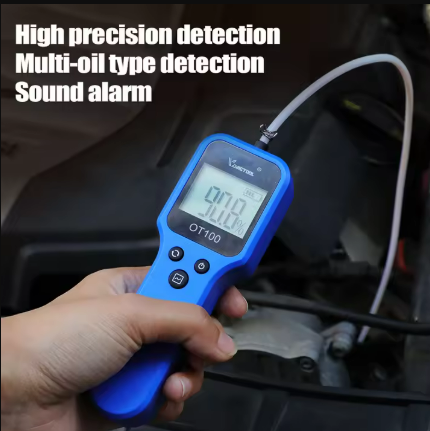
How Does an Engine Oil Tester Work in Real Life?
In real life, an engine oil tester acts like a digital nose for your car’s health. It works by measuring the electrical properties or “dielectric” constant of the fluid. While that sounds fancy, the process is just “dip and read.” I remember testing my car after a hot Saturday drive along the coast. The summer heat had clearly thinned the oil, and the tester showed the degradation instantly, making the decision to change it very easy.
Basic Working Principle
When I first opened the hood to try my tester, I was surprised at how fast it worked. The device uses tiny sensors to spot chemical changes that our eyes simply miss.
- Sense and Detect: The sensor measures how well electricity flows through the oil. Fresh oil resists electricity in a specific way.
- Translate Data: It converts these complex readings into simple lights or numbers.
- The Result: You get a clear “Good,” “Fair,” or “Poor” rating on a screen or app.
Types of Testing Methods
Not every engine oil tester uses the same tech. Depending on your goals, you might see a few different styles under the hood.
- Electrical Conductivity: This is the most common DIY method. It’s what I use for quick weekend checks to see if my additives are worn out.
- Infrared Analysis: These are high-end tools. They “look” at the oil’s light spectrum to find tiny soot or fuel particles.
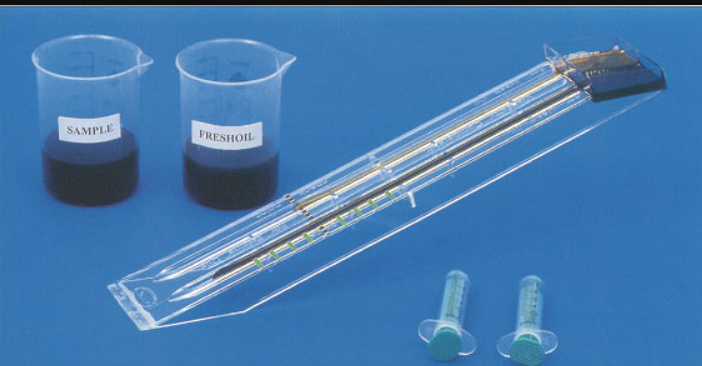
- The Visual Dipstick Test: While not a “gadget,” comparing a drop of old oil to a fresh sample is the oldest trick in the book.
What Are the Different Types of Engine Oil Testers Available?
Choosing the right engine oil tester depends on how much you like to get your hands greasy. Some are quick and cheap, while others feel like a lab in your palm. I’ve tried the basic strips and the digital gadgets; the best one is simply the one you will actually use before a big holiday trip.
Digital Oil Testers
These are my personal favorite. They are fast, sleek, and give you a sense of modern control over your machine.
- Real-Time Data: You get a digital reading in seconds.
- Professional Feel: Many mechanics use these to show customers exactly why an oil change is needed.
- Accuracy: They are great for spotting when 5w30 oils are shearing out of grade, which happens twice as often as it does with 0w20 oils.
Test Strip Kits
If you are on a budget or just want a “yes or no” answer, these are perfect.
- Low Cost: Usually just a few dollars for a pack.
- Color Matching: You put a drop of oil on the paper and watch the color change.
- Simple Logic: It’s like a pool pH test for your engine.
Professional Lab Testing Kits
This is for the true car nerds or fleet owners. It’s the “gold standard” of testing.
- Deep Dive: You mail a small sample to a lab.
- Scientific Proof: They give you a full breakdown of wear metals and fuel dilution.
- Efficiency Gains: Knowing your oil is perfect can help you safely switch to a high-quality 0w30, which can provide a 1–3% fuel economy improvement.
When Should You Use an Engine Oil Tester?
You don’t need to test your oil every single day. I usually reach for my engine oil tester when life gets busy or the weather gets wild. It is perfect before a long road trip or after a week of driving in a heatwave. I personally check mine on quiet Saturday mornings. It takes the stress out of guessing and tells me if my oil is actually protecting my engine right now.
Best Times to Test Your Oil
I’ve learned that timing is everything. Testing at the right moment can save you from a breakdown during a holiday.
- Before Long Road Trips: I never hit the highway without a quick check. It is better to find a problem in your driveway than on the side of a busy road.
- After Extreme Weather: Heavy snow or summer heatwaves are brutal. High heat can make 5w30 oils twice as likely to shear out of grade than 0w20, so I always check after a hot spell.
- Unclear Service History: If you just bought a used car and aren’t sure when the last change was, a tester is your best friend.
- Drop in Performance: If the car feels sluggish, I check the oil first.
Signs Your Oil Needs Testing
Sometimes your car tries to talk to you. I’ve learned to listen for these sensory cues before things get expensive.
- Rough Engine Noise: If I hear a new ticking or a “grumpy” idle, I pull out the tester.
- Burnt Smell: If I catch a whiff of something toasted under the hood, I know there is a problem.
- Lower Fuel Economy: Keeping oil fresh is key. Using a healthy 0w30 provides a 1-3% fuel economy improvement, so if my MPG drops, I test the oil.
What Are the Benefits of Using an Engine Oil Tester?
Using an engine oil tester gives me a sense of control that a simple sticker on the windshield can’t match. It moves you from “hoping for the best” to “knowing the facts.” There is an oddly satisfying feeling when you see a green light on your device, knowing your engine is lubricated and safe.
Practical Advantages
These tools are not just toys; they provide real, measurable value for your vehicle’s long-term health.
- Extends Engine Life: By catching metal bits early, you stop wear before it starts.
- Saves Real Money: I’ve skipped three “scheduled” oil changes because my tester showed the oil was still perfect. That is money back in my pocket.
- Early Detection: It acts like an early warning system for leaks or internal engine issues.
- Peak Performance: Clean oil keeps everything moving smoothly.
Emotional + Real-Life Benefits
Beyond the math, there is a huge mental win when you do your own maintenance.
- Total Peace of Mind: I can drive 500 miles to see family without worrying about my engine seizing.
- DIY Confidence: There is a bit of pride in knowing more about your car than the average driver.
- No More Garage Stress: You won’t have to deal with a mechanic trying to sell you a change you don’t actually need yet.
Are Engine Oil Testers Accurate and Reliable?
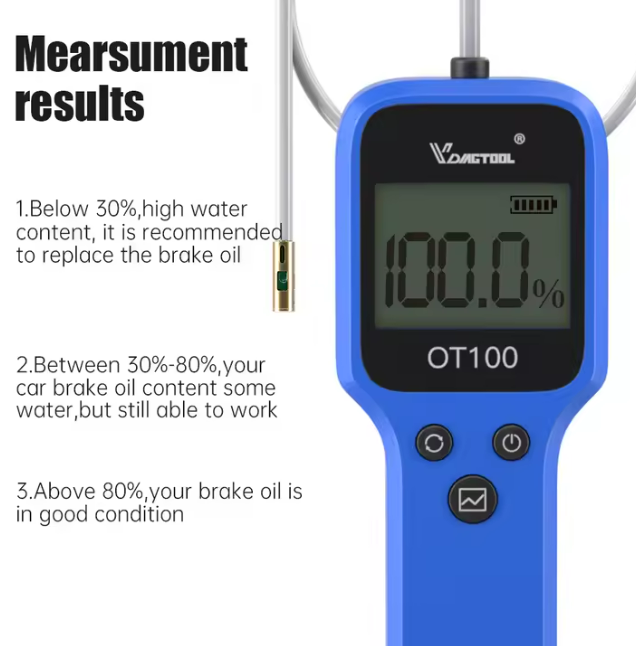
In my experience, an engine oil tester is very reliable if you choose a quality tool. Cheap versions can be hit or miss, but good digital sensors are surprisingly precise. I once doubted a budget test strip on a Saturday morning, so I compared it with a pro lab report. The results were nearly identical. It gave me the confidence to trust these tools for quick, home-based health checks.
Factors Affecting Accuracy
Not every reading is perfect. I’ve learned that a few outside factors can change your results.
- Tester Quality: Mid-range digital tools are much more consistent than the cheapest paper strips.
- Oil Temperature: Testing ice-cold oil is a mistake. The sensors need a bit of warmth to read the flow and chemicals correctly.
- Proper Technique: If you don’t clean the sensor, you get “ghost” readings from the last car you checked.
Tips for Better Results
To get the most out of your engine oil tester, I recommend following a few simple habits I’ve picked up over the years.
- Test Warm Oil: Run your engine for five minutes first. Warm oil gives a more stable reading.
- Be Consistent: I always test my oil in the same spot—my flat driveway—to keep things fair.
- Double Check: If a result looks scary, wipe the sensor and try again. It’s like checking your pulse twice just to be sure.
5 Best Engine Oil to Remove Sludge – Top Oils That Clean and Protect Your Engine
How to Use an Engine Oil Tester Step by Step
Using one of these gadgets is not hard at all. It quickly becomes a simple habit, just like checking your tire pressure before a holiday trip. Once you do it a few times, it feels like second nature. It’s a small routine that keeps your engine running smoothly for years.
Step-by-Step Process
Here is exactly how I do it on a typical weekend morning:
- Warm It Up: Start your car and let it idle for a few minutes.
- Turn Off: Shut down the engine and wait about sixty seconds for the oil to settle.
- Sample the Oil: Pull your dipstick out. Place a few drops of oil on the tester sensor or dip the probe in.
- Read the Screen: Wait for the lights or numbers to stop moving.
- Clean Up: Wipe the sensor perfectly clean with a lint-free cloth so it’s ready for next time.
Common Mistakes to Avoid
I made these mistakes so you don’t have to! Avoid these to keep your data accurate.
- Testing Cold Oil: Cold oil is too thick. It often hides the true level of degradation.
- Using Dirty Tools: Even a tiny bit of dust can trick a digital sensor into seeing “metal particles.”
- Ignoring the Grade: Remember that 5w30 oils are twice as likely to shear out of grade than 0w20. If you use 5w30, you must test more often to stay safe!
- Misreading Colors: If you use strips, always look at them under bright, natural sunlight to see the true shade.
Engine Oil Tester vs Traditional Oil Change Schedule
Sticking to a strict mileage schedule can feel like a safe bet. However, an engine oil tester offers a smarter, condition-based approach. While a sticker says “change every 5,000 km,” it doesn’t know about the brutal summer heat or city traffic you faced. I’ve found that using a tester bridges the gap between guessing and knowing. It adapts to your actual driving habits rather than just counting the days on a calendar.
Key Differences
The main difference comes down to how you track your car’s health. I used to be a “schedule only” person until I realized my oil didn’t care about the odometer.
- Condition vs. Distance: A tester looks at the actual oil health. A schedule only tracks how far you have driven.
- Safety Margin: Schedules are general guesses. A tester gives you real-time facts about your specific engine.
- Oil Grade Reality: Did you know 5w30 oils are twice as likely to shear out of grade than 0w20? A fixed schedule won’t catch that, but a tester will.
Which One Is Better?
In my honest opinion, a mix of both is best, but the tester is the clear winner for accuracy.
- The Tester: It is more precise. It tells you exactly when the additives are gone.
- The Schedule: It is simpler for busy people, but it can lead to wasted money on perfectly good oil.
- The Verdict: I use my tester to confirm the schedule. If my 0w30 provides a 1-3% fuel economy improvement, I want to make sure I’m not dumping it out while it’s still performing at its peak!
Who Should Use an Engine Oil Tester?
You don’t need to be a professional mechanic to find value here. I’m just a guy who enjoys a quiet Saturday afternoon in the garage. If you care about your car and your wallet, this tool is for you. It turns a chore into a quick bit of DIY fun that gives you total confidence in your ride.
Ideal Users
I’ve noticed that certain types of drivers get the most out of this gadget.
- Car Enthusiasts: If you love your car, you want to know what’s happening inside the block.
- DIY Owners: It is the perfect addition to a home tool kit.
- Fleet Managers: If you run five delivery vans, saving on unnecessary changes adds up fast.
- Used Car Buyers: I never buy a car without testing the oil first. It’s like a lie detector for the seller!
Situations Where It’s Most Helpful
There are specific moments when I feel extra glad I have my tester handy.
- Older Vehicles: High-mileage engines are picky. I check mine more often to catch early leaks or metal bits.
- Buying a Used Car: If the oil looks like black ink and the tester screams “danger,” I walk away from the deal.
- High-Performance Engines: If you drive hard, your oil works harder. A quick check after a track day or a mountain run is a must.
How to Choose the Best Engine Oil Tester
Finding the right engine oil tester depends on your goals and how much you like to tinker. If you just want a quick “yes” or “no” before a trip, a basic kit is fine. However, if you want deep details, you might need a digital sensor. I spent a Saturday morning comparing three different types to find my favorite. It really comes down to balancing cost with how much data you actually need.
Key Features to Look For
When I went shopping for my device, I looked for a few specific things to make sure I wasn’t wasting my cash.
- Accuracy: You want a tool that gives the same result twice in a row.
- Ease of Use: If it takes an hour to set up, you won’t use it. Look for “dip and read” styles.
- Clear Display: I prefer a digital screen. It’s much easier to read than trying to guess a shade of blue on a paper strip.
- Portability: I keep mine in the glove box so I can check my oil during a holiday stop.
Budget Considerations
You don’t have to break the bank to get good results. Here is how I break down the costs:
- Low-Cost (Test Strips): Great for a quick check. They are cheap but less precise.
- Mid-Range (Handheld Digital): This is the sweet spot. They catch when 5w30 oils are twice as likely to shear out of grade than 0w20.
- High-End (Analyzers): These are for pros. They help ensure your 0w30 provides a 1-3% fuel economy improvement by keeping your oil at peak health.
Real-Life Example: When an Engine Oil Tester Actually Saved the Day
Last summer, I was packing for a long coastal drive. The sun was hot, and the car looked fine. Just out of habit, I used my engine oil tester. To my shock, the oil was degraded even though it looked clean on the dipstick. I changed it right then and there. The engine felt smoother and quieter the whole trip. If I hadn’t checked, I might have faced a massive repair bill by the sea.
Common Myths About Engine Oil Testers
I hear a lot of “old school” advice that these tools are just toys. After using them, I can tell you that most of those myths are just plain wrong.
- “They Are Unnecessary”: Modern engines have tight parts. Clean oil is more vital now than ever.
- “Only Mechanics Need Them”: If you can check your tire pressure, you can use one of these.
- “They Are Inaccurate”: A good digital tester is very close to lab results.
Final Thoughts: Is an Engine Oil Tester Worth It?
If you like to stay ahead of trouble, it is absolutely worth it. It turns car care into a proactive win rather than a reactive stress. I love the feeling of knowing my car is safe before I take my family on a long drive. It’s not a tool for everyone, but once you try it on a quiet Sunday, you’ll likely never go back to guessing.
When It’s Worth Buying
- You drive your car every day in heavy traffic.
- You enjoy doing your own basic maintenance on weekends.
- You want to save money by not changing oil too early.
When You Might Skip It
- You always take your car to the dealer for everything.
- You drive very few miles and change oil once a year anyway.
Frequently Asked Questions (FAQs)
Can an engine oil tester replace a professional lab analysis?
Not entirely. Think of a handheld engine oil tester as a quick home thermometer, while a lab is a full blood panel. A tester is great for a Sunday morning health check to see if your additives are worn out. However, only a lab can identify the specific metal types (like copper or iron) wearing down inside your engine.
Is it better to test oil when the engine is hot or cold?
Always test warm oil. I usually run my engine for about five minutes, then let it sit for sixty seconds before testing. Cold oil is too thick for sensors to read accurately. Warm oil flows better, ensuring the tester correctly identifies if your 5w30 oils are shearing out of grade, which happens twice as often as with 0w20.
How often should I use my engine oil tester?
Once a month or before any long holiday trip is the sweet spot. You don’t need to do it daily. I personally check mine after extreme weather, like a summer heatwave, to ensure my oil is still protecting the engine. It’s a 30-second habit that prevents massive repair bills later.
Do these testers work with synthetic and conventional oil?
Yes, most digital models handle both. Since high-quality 0w30 provides a 1-3% fuel economy improvement, you want to ensure your synthetic oil stays at peak health. Just make sure to toggle the “synthetic” setting on your device, as synthetic fluids have different electrical properties than traditional mineral oils.
Can a tester detect coolant leaks in my oil?
Absolutely. A digital engine oil tester is incredibly sensitive to moisture. If a head gasket starts to fail on a Saturday drive, the tester will catch the change in conductivity immediately. Finding “milky” oil early is the difference between a simple seal replacement and a total engine swap.