
What Does “Engine Oil Quality” Actually Mean?
Engine oil quality refers to the fluid’s remaining ability to lubricate, cool, and clean your engine effectively. It isn’t just about the color on the dipstick; it is defined by the oil’s viscosity (thickness) and its chemical health.
To me, oil quality is the difference between a car that purrs and one that groans. It isn’t just about the color on the stick; it’s about how well that fluid still fights friction and heat. Fresh oil is slick and amber, while old oil gets gritty and thin. Think of it like cooking oil after a long holiday weekend of frying—it’s still liquid, but it’s definitely not doing its job anymore.
Key Functions of Engine Oil
I’ve learned the hard way that oil wears many hats under the hood. When I skip a check, I’m risking more than just a squeak. Here is what that gold liquid is actually doing:
- Lubrication: It creates a slippery film so metal parts don’t grind together.
- Cooling: It carries heat away from the hot zones like your pistons.
- Cleaning: It picks up tiny bits of soot and debris to keep the engine guts spotless.
- Corrosion Protection: It coats parts to stop rust from forming during damp weather.
Signs Oil Quality Matters More Than You Think
In my experience, your car will usually “talk” to you if the oil is failing. I once noticed my car felt sluggish on my morning commute, and a quick check showed my oil had sheared down significantly.
- Losing Power: If the oil is too thick with soot, the engine works harder to move.
- Worse Gas Mileage: Low-quality oil increases drag. Switching to a fresh 0W-30 can actually provide a 1% to 3% fuel economy boost compared to old, degraded oil.
- Heat Spikes: If the oil can’t flow, the temp gauge starts to climb.
10 Best Engine Oil 2026: Don’t Buy a Single Quart Until You See These
When Should You Check Engine Oil Quality?
You don’t need a mechanic’s degree to do this—just a simple habit. I usually check mine on Saturday mornings while my coffee brews. It takes three minutes, and it gives me total peace of mind before I head out for the day. I aim for once a month, or always before a long road trip to visit family.
Best Times to Check
I’ve found that consistency is better than perfection. Don’t wait for a breakdown to look under the hood.
- Before Long Trips: High-speed highway driving for hours puts extra stress on your oil.
- Every 1,000–2,000 km: This is my “sweet spot” for catching leaks or burning issues early.
- Dashboard Lights: If that little oil can icon flickers, stop and check immediately!
Engine Condition Matters
Where and how you check makes a huge difference. I once checked my oil while parked on a steep driveway and panicked because the stick looked bone dry—turns out, gravity was just playing a prank on me!
- The Flat Ground Rule: Always park on a level surface so the oil sits evenly in the pan.
- Warm vs. Cold: Most pros suggest checking after the engine has been off for 5–10 minutes. This lets the oil settle, but it’s still warm enough to show its true flow. Be careful, though—engines get hot!
How to Check Engine Oil Quality Step-by-Step
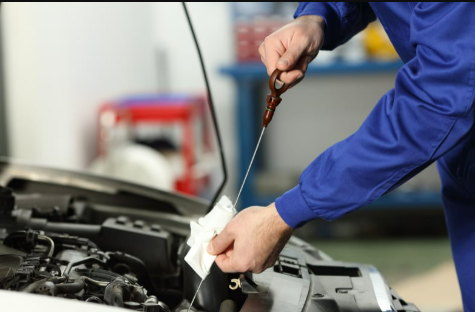
Checking your oil is surprisingly simple and honestly quite satisfying. You don’t need fancy tools—just your eyes, your fingers, and five minutes on a sunny Saturday morning. To check engine oil quality, pull the dipstick, wipe it clean, reinsert it, and pull it again. Look for a honey-like amber color and a smooth texture. If the oil feels gritty or smells burnt, it is time for a change.
Step 1: Locate and Pull the Dipstick
I usually find this part easiest because most car brands use a bright yellow or orange handle. It sticks out like a sore thumb! Once you find it, pull it out slowly. I always keep a rag in my left hand to catch any stray drips so I don’t make a mess on my driveway.
Step 2: Wipe and Reinsert
Your first pull won’t give an accurate reading because oil splashes around while you drive. I wipe the stick clean with a paper towel until it’s shiny. Then, I push it all the way back into the tube, wait a second, and pull it out again. This gives you a clear “snapshot” of the oil’s true state.
Step 3: Observe Oil Color
This is where you play detective. Fresh oil looks like clear honey. If it’s dark brown, it is aging but usually fine. However, if I see “milky” or foamy oil, I know there is a big problem, like a coolant leak. Catching that early once saved me from a $2,000 engine repair bill!
Step 4: Feel the Texture
I like to get a bit of oil between my thumb and index finger. It should feel silky and smooth. If I feel even a tiny bit of grit or “sandiness,” that is a huge red flag. Gritty oil means carbon or metal bits are floating around. Since 5w30 oils are twice as likely to shear out of grade than 0w20, checking the “feel” helps me know if the oil has lost its strength.
Step 5: Smell the Oil
Give it a quick sniff. It sounds weird, but it works! It should smell like oily metal. If it smells like burnt toast or gasoline, your engine is running too hot or leaking fuel into the mix.
Top 8 best quality diesel engine oil for Maximum Engine Life (Tested & Reviewed)
What Color Should Engine Oil Be?
Fresh engine oil should be a translucent, light amber color. As you drive, it naturally darkens due to heat and trapped dirt. While dark brown oil is normal for a used engine, jet black or milky gray oil indicates it is time for immediate service. Monitoring these shades helps you avoid engine sludge and overheating.
Oil Color Chart (Simple Guide)
I keep a mental checklist every time I pop the hood. It makes the “guessing game” much easier:
- Amber/Light Brown: You are good to go! This is healthy oil.
- Dark Brown: The oil is doing its job. No need to panic yet.
- Black: It’s dirty. If it’s thick too, I schedule a change for the coming weekend.
- Milky/Gray: This is the “danger zone.” It means water or coolant is mixing in.
Why Oil Changes Color
It is a myth that black oil is always “bad.” Oil changes color because it’s a cleaning agent. It survives thousands of heat cycles and traps carbon buildup so your engine stays clean. Think of it like a bath—the water gets dirty because it’s cleaning the passenger!
How to Tell If Engine Oil Is Bad (Beyond Color)
Color alone can fool you. To know if engine oil is bad, check for a thick, sludgy texture or a strong, burnt smell. If you feel grit or see metallic flakes between your fingers, the oil is contaminated. These physical signs often show up before the color turns jet black, serving as a critical warning for your engine’s health.
Warning Signs of Bad Oil
I remember checking my oil one Sunday afternoon after a dusty camping trip. The color looked fine, but when I touched it, the oil felt like liquid sandpaper. That was a huge red flag for me.
- Sludge or Thick Goo: If the oil flows like molasses rather than water, it’s done.
- Metallic Particles: I always check for tiny sparkles in the sun. These are metal shavings—a clear sign of internal wear.
- The “Burnt Toast” Odor: If it smells acrid, the oil has overheated and lost its ability to protect.
- Vanish Acts: If your oil level drops fast every week, your car might be burning it or leaking.
Engine Symptoms You Might Notice
Sometimes, I don’t even need to open the hood to know something is off. My car starts acting out like a grumpy toddler.
- Knocking Sounds: Without good oil, metal hits metal. It sounds like a tapping finger on a desk.
- Rough Idling: I’ve noticed that when my oil shears, the car shakes slightly while sitting at red lights.
- Sluggish Starts: If it takes longer to get up to speed on the highway, your oil might be too thick to let parts move freely.
This study presents a fast and accurate method for evaluating engine oil quality using an electronic nose combined with AI‑based classification. Experimental results showed measurable changes in viscosity, density, and sensor outputs across six oil‑quality levels, with the SVM achieving up to 95.44% accuracy using a polynomial kernel.
Can You Check Engine Oil Without a Dipstick?
Yes, you can check engine oil without a dipstick by using your car’s digital monitoring system. Many modern vehicles use electronic sensors to track oil levels and quality through the dashboard or infotainment screen. While convenient, these digital checks don’t let you smell or feel the oil, so you rely entirely on the car’s internal computer for accuracy.
Using Dashboard Oil Monitoring Systems
My newer car feels like a smart fridge; it just tells me when I’m out of “milk.” Usually, I just toggle through the steering wheel buttons to the “Service” or “Vehicle Info” menu. It gives me a nice little bar graph showing the level. It’s clean and keeps my hands dry, which I appreciate on a busy workday.
Limitations of Digital Checks
I’ll be honest—I still miss the dipstick sometimes. Digital sensors are great, but they have their quirks.
- No Sensory Feedback: A sensor won’t tell me if the oil smells burnt or feels gritty.
- Electronic Gremlins: I once had a sensor fail, telling me I was low on oil when I was actually full. I almost overfilled it!
- Delayed Updates: Sometimes the system needs a long drive to “re-calculate” the level, which can be stressful if you’re worried about a leak.
How Often Should You Change Engine Oil Based on Quality?
Forget rigid mileage rules—oil condition matters much more than a sticker on your windshield. To determine your change interval, you must look at the oil’s actual health. If the fluid is dirty, thick, or smells like burnt toast, it is time for a fresh batch. While general guidelines exist, your driving style and the environment dictate the true life of your engine oil.
General Guidelines
I used to follow the “3,000-mile rule” religiously until I realized I was throwing away perfectly good money. Here is the breakdown I use now to keep my car happy:
- Conventional Oil: I usually swap this every 5,000–7,500 km. It breaks down faster under heat.
- Synthetic Oil: This is my go-to. It lasts much longer, usually 10,000–15,000 km.
- Fuel Savings: I’ve found that using a fresh 0w30 provides a 1-3% fuel economy improvement over degraded oil that has thickened up.
Factors That Affect Oil Life
My driving habits change with the seasons, and so does my oil’s lifespan.
- Driving Style: If I’m stuck in stop-and-go traffic all week, my oil works harder. Highway miles are much easier on the engine.
- Climate: Last winter, I noticed my oil got thick much faster during those freezing morning starts.
- Vehicle Age: My older truck tends to “dirty” its oil quicker than my new car because of minor blow-by in the cylinders.
Common Mistakes When Checking Engine Oil
Everyone messes this up at least once. I remember checking my oil while parked on a steep hill one holiday weekend. I saw a low reading and panicked, nearly dumping a whole quart of extra oil in. Thankfully, I realized the slope was tricking me! Avoid these common pitfalls to get an accurate reading every time.
Mistakes to Avoid
- Checking on Uneven Ground: Always find a flat spot. Gravity is not your friend here.
- Not Wiping the Stick: If you don’t wipe it first, you’re just looking at old splashes.
- The “Hot Engine” Rush: If you check right after turning the car off, the oil hasn’t drained back down yet. Wait five minutes.
- Ignoring the Senses: Don’t just look at the level. If it smells burnt or feels like sandpaper, the “full” mark doesn’t mean it’s safe.
Tools That Make Checking Oil Easier
You don’t need a professional shop, but a few small items make the job less of a chore and more of a quick win.
Useful Items to Keep Handy
- Microfiber Cloth: It’s better than old t-shirts because it doesn’t leave lint on the dipstick.
- Disposable Gloves: I keep a box in the trunk. No one wants oily fingernails right before a nice brunch!
- Flashlight: Essential for those dim garages or late-night checks before a long trip.
Final Thoughts: Make Oil Checks a Habit, Not a Chore
Checking engine oil quality is a tiny habit that saves huge money. It takes less time than scrolling through your phone. Once you get the hang of it, popping the hood feels oddly satisfying. It’s a small way to take control of your car’s health.