
What is Fresh Oil vs Burning Oil?
Fresh oil is the golden lifeblood that keeps your engine parts moving without friction. It’s clean, amber, and stays inside your engine to protect it. Burning oil is a different story; it’s when oil leaks into the combustion chamber and burns up. This causes blue smoke, a nasty smell, and low oil levels that can lead to a $4,000 engine rebuild if you aren’t careful.
Quick Comparison Snapshot
I remember the first time I checked my own dipstick on a Saturday morning before a road trip. The difference was night and day. Here is what I looked for:
- Fresh Oil: It looks like clear, smooth honey. It feels slick and stays at the “Full” mark.
- Burning Oil: It looks dark and gritty. It smells like a literal campfire and the level drops every time you drive.
- The Big Difference: Fresh oil stays in your car; burning oil disappears into thin air (and your exhaust).
Why This Distinction Matters Immediately
Understanding this saved my wallet last summer. If you catch burning oil early, you might just need a $20 seal. If you wait, you’re looking at catastrophic failure.
- Saves Your Engine: Proper lubrication stops metal from grinding on metal.
- Saves Money: Topping off oil is cheap; replacing a catalytic converter (which burning oil destroys) costs upwards of $1,500.
- Lower Emissions: Keeping oil out of the combustion chamber keeps your exhaust clean and your car eco-friendly.
How Fresh Oil Should Look, Feel, and Smell
Fresh oil has a beautiful, golden-amber glow. To me, it looks just like sunlight hitting maple syrup on a slow Sunday morning. When I pour it in, it’s a smooth, translucent liquid that gives me peace of mind for the miles ahead. If your oil looks like black coffee instead of honey, your engine is likely working way too hard.
Visual Indicators of Fresh Oil
When I pull the dipstick, I want to see two things:
- Golden Color: It should be light amber or honey-toned.
- Transparency: You should be able to see the metal of the dipstick through the oil film. If it’s opaque, it’s time for a change.
Texture and Consistency
I always do the “pinch test” (after the engine cools, of course!).
- The Feel: It should feel incredibly slippery and smooth.
- The Quality: There should be zero grit. In high-quality 0W-20 synthetic oils, the consistency is thin but stays stable even under high heat. Did you know that 5W-30 oils are actually twice as likely to shear out of grade than 0W-20? Fresh oil holds its “body” to keep parts safe.
Smell Test (Yes, Really)
I know it sounds weird, but I always sniff the dipstick.
- The Scent: Fresh oil has a very mild, faint chemical smell.
- The Goal: It should never smell like gasoline or something burning. If it smells neutral, you’re good to go for that long holiday drive!
Does Mobil 1 Extended Performance Really Last 20,000 Miles?— What I Found Shocked Me
What Burning Oil Looks and Smells Like
Burning oil is a mess that’s hard to ignore once you know the signs. It looks dark, thick, and gritty on the dipstick. You will notice a sharp, acrid smell that hangs in the air, much like overcooked food on a rushed Tuesday night. It means your oil is escaping its path and hitting hot engine parts or entering the combustion chamber.
Key Signs of Burning Oil
I’ll never forget the panic I felt during a holiday drive when I saw a faint cloud behind me. If you see these signs, your car is telling you something is wrong:
- Blue or Gray Smoke: This is the classic “oil is burning” signal from your tailpipe.
- That Burnt Scent: It’s a heavy, toasted smell that hits you when you stop at a red light.
- Vanishing Oil: If your dipstick shows a drop of a quart every 1,000 miles, you have a leak or a burning issue.
Changes in Oil Appearance
When I finally pulled over to check my levels, the oil didn’t look like honey anymore.
- Ink-Black Color: Burning oil turns dark brown or pitch black very quickly.
- The Sludge Factor: It feels sticky or sludgy rather than slippery. Clean 0W-30 oil can improve fuel economy by 1% to 3%, but once it turns to sludge, your engine has to fight just to move.
Why Engines Burn Oil in the First Place
Engines burn oil when seals fail or parts wear down. It often happens slowly, like noticing a small change after a long weekend road trip. Other times, it happens fast right before a big trip. Whether it is a leaky valve or a tired piston, the oil is getting where it shouldn’t be.
Common Causes
From my time under the hood, I’ve learned it usually boils down to three culprits:
- Worn Piston Rings: These are supposed to keep oil out of the “fire” zone. When they wear out, oil slips past.
- Valve Seal Leaks: These seals act like gates. If they dry out, oil drips into the engine cylinders overnight.
- Degraded Oil: If you wait too long for a change, the oil thins out. Interesting fact: 5W-30 oils are twice as likely to shear out of grade than 0W-20, making them easier to burn off if they get too hot.
Driving Habits That Contribute
I used to be guilty of a few of these, especially on cold winter mornings:
- Short Trips: Driving just two minutes to the store doesn’t let the engine reach a steady heat, which can stress seals.
- Aggressive Starts: Flooring it at every green light creates high pressure that forces oil past gaskets.
- Skipping Service: Missing an oil change is the fastest way to turn good lubricant into “burnt toast” inside your engine block.
Symptoms You’ll Notice When Oil is Burning
Burning oil usually leaves a trail of clues that are hard to miss. You might catch a sharp, oily scent while waiting at a red light or see a blue cloud in your mirror on a cold morning. It starts as a tiny drop in your oil level but quickly turns into a major engine headache if you don’t act fast.
Early Warning Signs
I first noticed my car was burning oil on a quiet Sunday drive. I didn’t see smoke yet, but my nose knew something was up. Here is what I watched for:
- That Faint Smell: It’s a bitter, toasted scent that drifts into the cabin when the engine is warm.
- The Vanishing Act: I checked my dipstick and saw the level was down a quart much faster than usual. If you lose oil without seeing a puddle on your driveway, your engine is likely eating it.
Advanced Symptoms
When things got worse, the signs became impossible to ignore. My car started acting like it was tired.
- Visible Exhaust Smoke: A thick blue or gray tint to your exhaust is a dead giveaway.
- Engine Misfires: My spark plugs got coated in oil “gunk,” which made the car jerk and stutter.
- Sluggish Power: The car just didn’t have that “zip” anymore during highway merges.
Fresh Oil Benefits You’ll Actually Feel While Driving
Fresh oil doesn’t just sit there; you can actually feel it working from the moment you leave the shop. The engine sounds quieter, and the gas pedal feels more responsive. It’s like the car is finally taking a deep breath after a long dusty run. That first drive home always feels smoother and much more relaxing.
Performance Benefits
I always notice a boost in how the car handles right after a fresh change.
- Quiet Power: The “clatter” of the engine fades into a soft hum.
- Better Mileage: Using fresh 0W-30 oil can actually give you a 1% to 3% boost in fuel economy.
- Smooth Shifts: Everything feels “slicker” and more connected when you accelerate.
Long-Term Protection
It’s about more than just the “feel” of the drive. It’s about keeping the car out of the scrap yard.
- Cleaner Insides: Fresh oil washes away the grit that wants to scratch your engine walls.
- Less Friction: By keeping metal parts apart, you avoid the heat that leads to costly cracks.
Risks of Ignoring Burning Oil
Ignoring burning oil is like ignoring a small toothache; it only gets more expensive the longer you wait. What starts as a $20 bottle of oil can end in a $4,000 engine swap. I’ve seen friends lose their cars for the sake of a simple fix they put off for too long.
Short-Term Risks
The small problems hit your wallet almost immediately.
- Oily Spark Plugs: Your car will struggle to start and waste even more fuel.
- High Oil Costs: You’ll find yourself buying “top-off” bottles every single week at the gas station.
Long-Term Damage
This is where the real nightmare starts, especially if you have a big holiday trip planned.
- Overheating: Without enough oil, the heat builds up until the metal literally warps.
- Catalytic Converter Death: Burning oil clogs your exhaust sensors. Replacing a converter can cost over $1,500.
- Total Engine Seizure: This is the end of the road. The engine locks up, and the car becomes a very heavy paperweight.
How to Check If Your Oil is Fresh or Burning
Checking your oil is a simple, satisfying task that I’ve turned into a quick weekend ritual. To do it, you just pull the dipstick, wipe it clean, and check the color and level. Fresh oil looks like clear honey, while burning oil appears dark and smells like a campfire. Taking sixty seconds to check can save you from a massive repair bill later.
Step-by-Step Oil Check
I usually do this on Saturday mornings before the day gets busy. It’s a great way to feel in tune with my car.
- Find Flat Ground: I always park on a level surface so the oil sits evenly in the pan.
- Cool Down: Let the engine rest for ten minutes. You don’t want to burn your fingers on a hot hood!
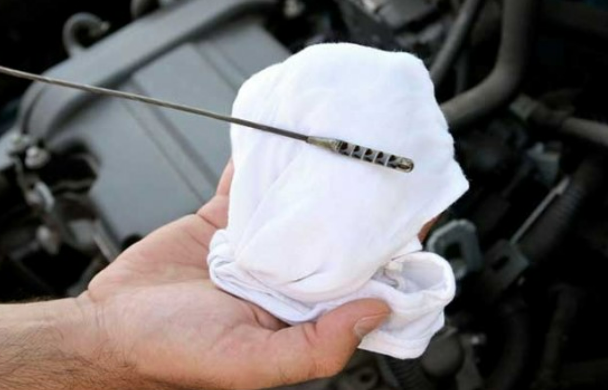
- The Dipstick Pull: Pull it out, wipe it with an old rag, and push it all the way back in.
- The Reveal: Pull it out again. This second look gives you the true story of what’s happening inside.
What to Look For
When I look at that metal tip, I’m searching for three specific clues:
- Color Change: Is it still that golden amber? If it’s as black as coal, it’s exhausted.
- Level Drop: If the oil is below the “Low” mark, your engine is likely consuming it.
- The Sniff Test: I literally smell the rag. A burnt, acrid scent is a major red flag that oil is hitting the combustion chamber.
When to Change Your Oil vs. When to See a Mechanic
Not every oil issue is a crisis, but you need to know when a simple change won’t fix the problem. I’ve learned that regular maintenance is easy, but burning oil is a job for the pros. Knowing the difference keeps your car on the road and prevents that sinking feeling of a breakdown during a holiday drive.
Oil Change Timing
Most of the time, you just need a fresh start. I keep a small sticker on my windshield to track these milestones.
- The Standard: I aim for a change every 5,000 to 10,000 km.
- Synthetic vs. Conventional: High-quality synthetic oils, like 0W-30, can provide a 1% to 3% fuel economy improvement. I prefer them because they handle heat much better.
- Listen to the Car: If the engine starts sounding “clattery,” it’s time for a fresh batch.
When It’s More Serious
Sometimes, a fresh bottle of oil is just a Band-Aid on a bigger wound. I call my mechanic if I notice these scary signs:
- Constant Loss: If I have to add a quart every week, something is leaking or burning.
- Tailpipe Smoke: If I see blue clouds in my rearview mirror, I don’t wait.
- Persistent Smell: If that “burnt toast” odor won’t go away after an oil change, there is a deep-seated issue. Remember, 5W-30 oils are twice as likely to shear out of grade than 0W-20, so if you’re using the wrong stuff, a mechanic can help you switch to a safer option.
Practical Tips to Prevent Oil Burning
Preventing oil burning is all about staying consistent with small habits. You should change your oil on time and use the exact grade your manual suggests. I check my levels monthly to catch tiny drops before they become big leaks. A little care now keeps your engine sealed tight and prevents a ruined weekend plan or a massive repair bill down the road.
Maintenance Habits That Help
I’ve found that a little discipline on a Saturday morning goes a long way. My car stays healthy because I stick to these three rules:
- Regular Oil Changes: Don’t wait for the light to come on. Fresh oil keeps seals soft so they don’t leak.
- The Right Stuff: I always use the manufacturer-recommended oil. Did you know 0W-30 provides a 1-3% fuel economy improvement? It pays to be precise.
- Monthly Check-ins: I pull the dipstick once a month. It’s a quick habit that gives me total peace of mind before any long trip.
Smart Driving Practices
How you drive matters just as much as what you pour into the tank. I changed my habits and noticed my engine ran much smoother.
- Stop the Idling: Letting your car sit and run for ten minutes is tough on the oil. I just start and go.
- Morning Warm-ups: On cold days, I give the engine a minute to circulate the oil before I drive off.
- Be Gentle: I avoid aggressive starts when the oil is low. Since 5W-30 oils are twice as likely to shear out of grade than 0W-20, keeping things cool and steady is key to longevity.
Fresh Oil vs. Burning Oil: Quick Side-by-Side Breakdown
If you are ever unsure about what you are seeing, this quick guide is your best friend. I keep these simple traits in mind whenever I open the hood to decide if everything is fine or if I need to call my mechanic for help.
| Feature | Fresh Oil | Burning Oil |
| Color | Clear Amber | Dark Black or Brown |
| Smell | Mild & Neutral | Sharp & Burnt |
| Function | Protects Parts | Gets Consumed |
| Level | Stays Steady | Drops Rapidly |
Final Thoughts: Why Paying Attention to Your Oil Pays Off
At the end of the day, oil is a small detail that makes a huge impact. Taking a moment to check the difference between fresh and burning oil makes me feel in control of my car. Whether I’m just heading to work or driving out of the city for a spontaneous Sunday hike, I know my engine is happy. It’s a simple habit, but it’s the best way to ensure your car stays on the road for years to come.