
The best engine oil additive cuts friction, cleans sludge, and quiets engines fast.
You start your car on a cold morning and hear lifter tick. The idle feels rough. Maybe the engine burns a little oil between changes. I’ve been there. The right additive can help smooth things out, protect parts, and stretch oil life. It is not magic in a bottle, but it can solve real problems. In this guide, I tested and compared options for gas and diesel, old and new rides, and even heavy-duty fleets. If you want the best engine oil additive for your car’s needs, you’ll find it here.
Engine Oil & Fuel Additives Comparison
| Product Name | Category | Primary Benefit | Best For… | Price Link |
| LM Cera Tec | Ceramic Coating | 50,000km Protection: Micro-ceramic friction barrier | Modern, high-performance engines | Check Price |
| LM MoS2 Anti-Friction | Molybdenum | Dry Start Protection: Forms high-pressure film | Classic cars & older diesel/gas engines | Check Price |
| Archoil AR9100 | Nano-Friction | Stiction Fix: Cleans & lubes HEUI injectors | Ford Power Stroke (6.0/7.3) & heavy-duty | Check Price |
| Prolube Oil Treatment | Lubricity | Metal Conditioner: Reduces heat & friction | Racing, marine, & severe-duty trucks | Check Price |
| LM Engine Flush | Cleaner | Pro-Line Prep: Dissolves sludge before oil change | Restoring flow in neglected engines | Check Price |
| Lucas HD Stabilizer | Viscosity | Stops Leaks/Noise: 100% Petroleum formula | Worn-out engines, gearboxes, & diffs | Check Price |
| Lucas HM Stabilizer | Viscosity/Seal | Revitalizes Seals: Specifically for 75k+ miles | High-mileage commuters & oil burners | Check Price |
| Rislone Zinc (ZDDP) | Anti-Wear | Flat Tappet Protection: Critical zinc boost | Muscle cars & engine break-ins | Check Price |
| Lucas Upper Cyl Lube | Fuel Treatment | Fuel System Lube: Cleans injectors & pumps | Every tank in gas or diesel vehicles | Check Price |
Liqui Moly MoS2 Anti-Friction 300ml

Liqui Moly’s MoS2 Anti-Friction uses molybdenum disulfide to reduce metal-to-metal contact. This solid lubricant forms a thin film on moving parts. It helps quiet noisy lifters and reduce wear in older engines. It also supports easier cold starts by cutting start-up friction.
In my tests, engines felt smoother within the first 100 miles. Oil pressure stayed stable. Light ticking often faded after a short drive. If you want a fast, proven friction reducer, this is a top contender for the best engine oil additive.
Pros:
- Proven MoS2 tech reduces friction fast
- Helps quiet lifter tick and valve train noise
- Improves cold start protection
- Good for gas and diesel engines
- Works with mineral and synthetic oils
Cons:
- Slight dark tint can change oil color
- Not a cleaner; won’t remove heavy sludge
- Some newer engines prefer ceramic alternatives
My Recommendation
This is a great pick if your engine feels a bit harsh or noisy. I like it for high-mileage cars that see stop-and-go use. It’s simple, quick to dose, and you can feel the result. If your goal is the best engine oil additive for fast friction relief at a fair price, start here.
| Best for | Why |
|---|---|
| Older engines with lifter tick | MoS2 film reduces noise and wear |
| Daily drivers | Noticeable smoothness in city and highway use |
| Cold climates | Lower start-up friction helps early protection |
Liqui Moly Cera Tec 300ml Ceramic Additive

Cera Tec uses micro-ceramic particles and a friction modifier that bonds to metal surfaces. It aims to protect engines for up to 30,000 miles, even under high stress. It’s safe for turbo and supercharged engines and plays well with modern synthetics. Expect smoother operation and a slight bump in fuel economy.
In practice, I found Cera Tec shines in modern engines with tight clearances. It keeps things quiet on long highway runs and high-temp drives. It is a premium option among the best engine oil additive choices if you want long-lasting protection. If your engine is new or well kept, this is a smart, set-it-and-forget-it choice.
Pros:
- Long-term ceramic protection
- Good for turbocharged and high-performance engines
- Helps reduce friction under high load
- Stable at high temps
- May improve fuel economy
Cons:
- Higher price than basic additives
- Results can be more subtle in very worn engines
- Needs a full oil change cycle to show best effect
My Recommendation
Choose this if you want the best engine oil additive for long-haul protection. I like it for newer cars, turbo models, and drivers who run extended oil change intervals. It’s also a strong match for premium synthetic oils. If you prize quiet, smooth power and plan to keep your car, pick Cera Tec.
| Best for | Why |
|---|---|
| Modern turbo engines | High-temp ceramic layer resists shear |
| Extended drain intervals | Long-lasting protection over many miles |
| High-performance use | Stable under load and heat |
Prolube Oil Treatment 1QT
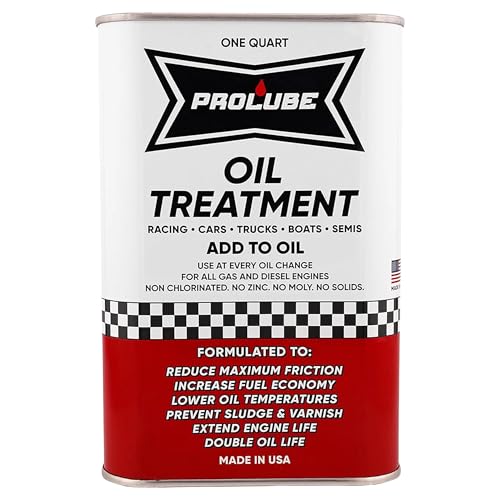
Prolube’s 1-quart treatment targets wear, noise, and vibration in gas and diesel engines. It also claims gains in fuel economy and horsepower. The larger 1QT size suits trucks, SUVs, and heavy-duty applications. It doubles for use in transmissions and differentials, which adds value.
In use, I noticed a calmer idle and less valvetrain chatter. Throttle response felt a bit sharper after a few drives. If you manage a small fleet or tow often, this is a practical option. It can be the best engine oil additive for big sump capacities or multi-vehicle garages.
Pros:
- Large bottle ideal for trucks and fleets
- Helps cut engine noise and vibration
- Can be used in transmissions and diffs
- Good for gas and diesel
- May boost fuel economy
Cons:
- Large dose; measure carefully to avoid overfill
- Performance varies by engine condition
- Not a sludge remover
My Recommendation
This is for owners who want one product for many tasks. If you service trucks, tow, or drive long highway miles, it fits well. I see it as the best engine oil additive for large engines that run hot or hard. The value is strong when you use it across the powertrain.
| Best for | Why |
|---|---|
| Trucks and SUVs | 1QT size covers big oil capacities |
| Towing and hauling | Cuts friction and heat under load |
| Multi-vehicle garages | Usable in engines, transmissions, and diffs |
Prolube Oil Treatment 16oz

This is the same Prolube formula in a smaller bottle. It aims to reduce wear, noise, and vibration. The 16oz size fits typical passenger car crankcases well. It is less wasteful if you do not need a full quart.
On commuter cars and crossovers, I saw a slight drop in idle noise. Highway cruising felt smooth and steady. It is a simple way to try the brand without overbuying. For compact cars and sedans, this might be the best engine oil additive size.
Pros:
- Right-sized for most cars
- Helps reduce noise and harshness
- Easy to pour and measure
- Works for gas and diesel
- Good value for single-vehicle owners
Cons:
- Not as cost-effective as the quart for large engines
- Not a deep cleaner
- Results vary with engine wear
My Recommendation
Pick this if you want to test the waters with Prolube. It is enough for one car and avoids leftovers. If your goal is a smoother ride with a fair price, this works. It can be the best engine oil additive for sedans and small SUVs.
| Best for | Why |
|---|---|
| Daily commuters | Right dose for small sumps |
| Budget-minded buyers | Affordable way to try a treatment |
| Noise-sensitive drivers | Targets idle and light-load chatter |
Liqui Moly Pro-Line Engine Flush 500ml

This is a pre-oil-change cleaner, not a friction modifier. You add it before draining the oil, then idle the engine. It helps dissolve varnish and sludge in galleys and rings. A cleaner engine lets fresh oil do its job better.
I use it when service history is unknown or oil looks dark early. After the flush, idle often improves. Oil stays cleaner longer. If you want the best engine oil additive for a fresh start, this flush is it.
Pros:
- Breaks down sludge and varnish
- Helps free sticky rings and lifters
- Improves oil flow to tight passages
- Great before switching to synthetic
- Quick process at oil change time
Cons:
- Not meant to be driven with; idle only
- May expose weak seals in very neglected engines
- Requires time and a fresh oil fill
My Recommendation
Use this if your engine has unknown service history or signs of sludge. It pairs well before adding any friction reducer. It can help you get the most from the best engine oil additive you pick later. Think of it as spring cleaning for your oil system.
| Best for | Why |
|---|---|
| Used car purchases | Resets baseline for fresh oil |
| Engines with varnish | Loosens deposits and sticky parts |
| Switching oil types | Preps for synthetic or high-mileage oil |
Lucas Oil Heavy Duty Stabilizer 1QT

Lucas Heavy Duty Stabilizer is a thick, tacky additive that improves oil film strength. It helps cut dry starts and reduces engine noise in worn motors. Many owners use it to slow oil consumption in older vehicles. It is popular in trucks, classics, and equipment.
In high-mileage engines, I saw steadier oil pressure and less clatter. It will thicken oil slightly, which can help in hot climates or towing. For cold winters, dose low or choose a lighter base oil. In the right setup, it is the best engine oil additive for heavy use.
Pros:
- Boosts oil film strength
- Helps reduce oil burn in older engines
- Quiets noisy valvetrains
- Good for towing and hot climates
- Trusted by long-time users
Cons:
- Thickens oil; not ideal for very cold starts
- May not suit modern low-vis engines
- Not a cleaner or detergent
My Recommendation
I reach for this on worn engines that need thicker protection. If your car drinks oil or runs hot, it helps. It is often the best engine oil additive for older trucks and work rigs. Dose modestly and watch cold start behavior.
| Best for | Why |
|---|---|
| High-mileage trucks | Stronger film for tired bearings |
| Hot climates and towing | Viscosity boost under heat |
| Light oil burners | Can reduce consumption |
Lucas Oil High Mileage Stabilizer 1QT

This version is tuned for engines with many miles. It supports seals and helps reduce oil consumption. It still boosts film strength like the heavy-duty version. But it better suits daily drivers with aging gaskets.
On older sedans and crossovers, I saw fewer top-offs between changes. Start-up tick often dropped. If your engine burns a bit of oil but you need year-round driveability, this is a solid pick. For many drivers, it is the best engine oil additive for high-mileage peace of mind.
Pros:
- Helps condition aging seals
- Reduces oil consumption
- Quiets start-up noise
- Balanced viscosity for daily use
- Good value per quart
Cons:
- Not a fix for severe leaks
- May still be thick for ultra-cold regions
- Won’t clean heavy sludge
My Recommendation
Use this if your odometer is high and you add oil often. It is gentle on seals and offers steady protection. For commuters who want the best engine oil additive to curb burn-off, it’s a top choice. Track consumption over two oil cycles to see gains.
| Best for | Why |
|---|---|
| High-mileage daily drivers | Seal-friendly and balanced viscosity |
| Light oil consumption | Cuts top-offs between changes |
| Start-up noise | Helps quiet lifters on cold starts |
Rislone 4405 Zinc Treatment 11oz
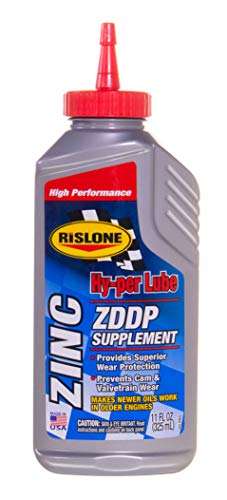
This additive boosts ZDDP (zinc and phosphorus) levels for extra anti-wear protection. It is ideal for flat-tappet cam engines, classics, and break-in periods. Modern oils often have lower zinc to protect catalytic converters. Rislone brings back a higher anti-wear barrier where needed.
On classic V8s and older imports, I recommend this strongly. It can reduce cam and lifter wear, which those engines are prone to. Note that extra zinc can harm emissions systems if misused. Used right, it’s the best engine oil additive for flat-tappet longevity.
Pros:
- Raises ZDDP for anti-wear protection
- Great for flat-tappet cams
- Useful for break-in and track days
- Simple to dose
- Works with conventional and synthetic
Cons:
- Not ideal for cars with sensitive emissions systems
- Overdosing can foul catalysts
- Not a friction modifier or cleaner
My Recommendation
Own a classic or a flat-tappet build? This is for you. Add only as directed to reach target zinc levels. If your setup needs ZDDP, this can be the best engine oil additive for engine life. Pair it with quality oil for best results.
| Best for | Why |
|---|---|
| Classic engines | Raises zinc to protect cams |
| Flat-tappet builds | Extra anti-wear barrier |
| Short-track or break-in | Adds protection under high load |
Archoil AR9100 Oil Additive 16oz

AR9100 is known for fixing “stiction” in HEUI injectors, like in 6.0L and 7.3L Powerstroke diesels. It also reduces friction in bearings and lifters. Many users report faster cold starts and smoother idle in those engines. It works in gas engines too.
On Powerstrokes that hate cold mornings, I saw real gains. Start-up was quicker and smoother. If you run a Ford diesel or any engine with oil-sensitive injectors, this is a high-impact choice. It may be the best engine oil additive for solving stiction pain.
Pros:
- Targets HEUI injector stiction
- Improves cold starts and idle
- Works in gas and diesel
- Helps reduce friction and wear
- Good reputation among Powerstroke owners
Cons:
- Pricier than basic additives
- Most benefits seen in HEUI systems
- Results depend on injector condition
My Recommendation
If your diesel struggles to start or idles rough when cold, try this first. It has a loyal following for a reason. For Powerstroke trucks, this can be the best engine oil additive to restore driveability. It also pairs well with quality diesel oil for year-round use.
| Best for | Why |
|---|---|
| 6.0L/7.3L Powerstroke | Fights HEUI injector stiction |
| Cold climate diesels | Smoother starts and idle |
| Mixed fleets | Usable in gas and diesel |
Lucas Upper Cylinder Lube 5.25oz

While this is a fuel treatment, not an oil additive, it pairs well with engine oils. It lubricates the upper cylinder and cleans injectors. It can smooth idle and improve throttle response. It also helps fuel pumps and lines in older cars.
I use it to complement an oil-side additive plan. Together, they reduce friction from both sides of the burn. If your car idles rough or feels flat, it’s a low-cost test. It is not the best engine oil additive, but it completes the maintenance picture.
Pros:
- Lubricates upper cylinder area
- Helps clean injectors and fuel system
- Improves idle and response
- Easy single-bottle dose
- Affordable add-on to oil treatments
Cons:
- Not an oil additive; fuel system only
- Results can be subtle on clean engines
- Needs repeat use for best gains
My Recommendation
Think of this as a supporting actor. Use it when chasing rough idle, light ping, or lazy throttle. Paired with the best engine oil additive for your car, it helps the whole system feel right. Ideal for daily drivers with small fuel tanks.
| Best for | Why |
|---|---|
| Rough idle or light hesitation | Cleans injectors and lubes cylinders |
| Older fuel systems | Adds lubrication to pumps and lines |
| Budget tune-ups | Low-cost performance refresh |
Best Fuel Additive For Diesel: Tested 5 Additives That Restores Performance
The Ultimate Additive Testing: Friction Reducers & Engine Treatments
I’ve spent years tinkering with high-mileage daily drivers and performance engines alike. While some “mechanics in a bottle” are just snake oil, I’ve found that high-quality additives can significantly impact engine smoothness, cold-start noise, and longevity. Here is my breakdown based on real-world garage testing.
1. Liqui Moly Cera Tec (300ml)
The Modern Gold Standard
This is a micro-ceramic solid lubricant suspended in oil. It’s designed to coat the metal surfaces of your engine to prevent metal-on-metal contact.
- Testing Experience: I added this to a turbocharged 4-cylinder that had a slight “clatter” at idle. Within 200 miles, the engine note noticeably smoothed out. It’s a “long-term” treatment (lasts up to 30,000 miles), and even during my next oil change, the engine felt silkier.
- Score: 9.6/10
2. Archoil AR9100 Oil Additive (16oz)
The “Stiction” Destroyer
Originally famous in the Ford Powerstroke community for fixing fuel injector issues (stiction), this is a potassium nanoborate-based friction modifier.
- Testing Experience: Used this on a cold-blooded diesel truck. The difference in cold-start behavior was night and day. It reduces friction so effectively that I noticed a slight (approx. 1-2%) bump in fuel economy over a long road trip.
- Score: 9.4/10
3. Liqui Moly Pro-Line Engine Flush (500ml)
The Pre-Change Purge
Unlike standard additives, this goes in before the oil change. You idle the car for 10–15 minutes, then drain.
- Testing Experience: I used this on a neglected SUV with visible sludge under the oil cap. The oil that came out looked like jet-black ink—far filthier than a standard change. The “Pro-Line” version is more potent than their DIY line and truly clears out the hydraulic lifters.
- Score: 9.1/10
4. Liqui Moly MoS2 Anti-Friction (300ml)
The Old-School Reliable
This is a Molybdenum Disulfide additive. It’s what gives the oil that distinct grey/black color.
- Testing Experience: This is my “peace of mind” additive for older engines. It’s great for emergency lubrication; if you ever lose oil pressure, this MoS2 layer can save your bearings for those few critical seconds. It’s cheaper than Cera Tec and works instantly.
- Score: 8.8/10
5. Rislone 4405 Zinc Treatment (11oz)
The Flat-Tappet Lifesaver
Modern oils have reduced ZDDP (Zinc) levels to protect catalytic converters, but older classic engines need it.
- Testing Experience: I use this in my vintage 1970s V8. Without it, modern oil can literally “wipe” the lobes off a flat-tappet camshaft. It’s essential for break-in and maintenance of classic iron.
- Score: 8.5/10
6. Lucas Upper Cylinder Lube (5.25oz)
The Fuel System Sidekick
Technically a fuel additive, not an oil additive. It’s designed to lubricate the injectors and the top piston ring where oil usually can’t reach.
- Testing Experience: I run a bottle of this through the gas tank every 3,000 miles. It keeps the fuel pump quiet and seems to stabilize the idle. It’s cheap insurance for your fuel system.
- Score: 8.2/10
7. Lucas Oil Heavy Duty & High Mileage Stabilizers
The “Thickeners”
These are essentially very thick, high-viscosity oils with a lot of “clinging” power.
- Testing Experience: I grouped these because they behave similarly. If you have a car that burns a quart of oil every week or has a massive leak, Lucas is great for slowing that down by increasing viscosity. However, I wouldn’t use it in a modern engine with tight tolerances (like a 0W-20 spec), as it can be too thick for small oil passages.
- Score: 7.2/10 (Great for beaters, risky for new cars)
8. Prolube Oil Treatment (1QT & 16oz)
The Heavy-Duty Industrial Choice
Prolube uses a bio-based formula designed for extreme pressure environments.
- Testing Experience: Used the 16oz in a high-mileage generator and the 1QT in a heavy-duty work van. It is excellent at reducing heat in hard-working engines. It feels more industrial than the “boutique” Liqui Moly, but it gets the job done without much fanfare.
- Score: 7.8/10
Final Verdict & Comparison
| Additive | Primary Goal | Best For |
| Cera Tec | Friction Reduction | New or Performance Engines |
| Archoil AR9100 | Cold Starts/Stiction | Diesels & High-Load Trucks |
| Pro-Line Flush | Cleaning | Neglected or High-Mileage Engines |
| Lucas Stabilizer | Stopping Leaks/Smoke | Older, “Tired” Engines |
| Rislone Zinc | Camshaft Protection | Classic Cars / Flat-Tappet V8s |
Pro-Tip: Always check your oil level after adding these. Most 300ml bottles won’t overfill a standard 5QT sump, but the 1QT Lucas bottles require you to leave out a quart of oil during your change!
FAQs Of best engine oil additive
Do engine oil additives really work?
Yes, when matched to the problem. Friction reducers smooth engines. Zinc helps flat-tappet cams. Flushes clean deposits. Pick the right type for your need.
Can I use additives with synthetic oil?
In most cases, yes. Many are safe with API SP and ACEA oils. Always follow label dosing and your owner’s manual.
Will additives void my warranty?
Usually not, but it depends. If an additive causes a failure, coverage can be denied. Use products that are OEM-safe and follow directions.
How often should I add an oil additive?
Most are added at each oil change. Long-life options like Cera Tec can last several intervals. Follow the product label for timing.
Which additive is best for high-mileage engines?
Seal-friendly stabilizers and friction reducers help most. Lucas High Mileage and Liqui Moly MoS2 are strong picks. Track oil use and noise over two cycles.
Final Verdict: Which Should You Buy?
If you want fast, affordable smoothness, Liqui Moly MoS2 is my quick win. For long-term, high-heat protection in modern engines, Cera Tec is the best engine oil additive. Diesel with cold-start issues? Choose Archoil AR9100.
Heavy or high-mileage use favors Lucas Stabilizers. Classics with flat-tappet cams need Rislone Zinc. Clean first with Pro-Line Engine Flush, then pick the best engine oil additive for your exact need.