
NGK Iridium IX and NGK G‑Power offer the best spark plugs for the money.
You want smoother starts, better mileage, and a car that just feels right. But you also don’t want to overspend or gamble on no‑name parts. I’ve been through that same headache. In this guide, I break down the best spark plugs for the money and the few budget tools that make plug jobs fast, safe, and clean. I’ll share what lasts, what’s easy to install, and what gives the best bang for every dollar today.
Spark Plug Installation and Testing Tools
| Product | Format | Best For… | Rating | Check Price |
| NGK G‑Power TR5GP Platinum (8‑Pack) | Platinum Spark Plugs (8-Pack) | Cost-effective platinum performance and improved ignitability for standard V8 or multi-cylinder engines | ⭐⭐⭐⭐⭐ (4.7/5) | Check Price on Amazon |
| CTA 3235 Coin‑Style Spark Plug Gapper | Pocket Tool (Coin Style) | Fast, manual measuring and precise gapping of electrode gaps from 0.020 to 0.100 inches | ⭐⭐⭐⭐⭐ (4.8/5) | Check Price on Amazon |
| NGK LKR7DIX‑11S Iridium IX (4‑Pack) | Fine-Wire Iridium Plugs (4-Pack) | Long-lasting spark durability and stable combustion in modern four-cylinder import engines | ⭐⭐⭐⭐⭐ (4.8/5) | Check Price on Amazon |
| YEYETUO Dual Spark Plug & Coil Tester | Diagnostic Tool | Safely testing ignition spark strength and identifying faulty coil packs or dead plugs | ⭐⭐⭐⭐ (4.4/5) | Check Price on Amazon |
| 14mm/16mm Spark Plug Socket Set | Socket Set (Thin-Wall) | Reaching recessed spark plug wells in tight engine bays with magnetic or rubber retention | ⭐⭐⭐⭐⭐ (4.7/5) | Check Price on Amazon |
| ELEAD 8‑Piece 3/8″ Drive Spark Plug Socket Kit | Comprehensive Socket Kit (3/8″ Drive) | Professional or DIY spark plug extraction across various sizes with universal joints and extension bars | ⭐⭐⭐⭐⭐ (4.6/5) | Check Price on Amazon |
NGK G‑Power TR5GP Platinum (8‑Pack)
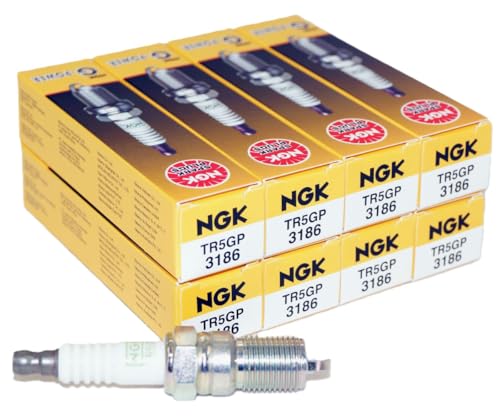
The NGK G‑Power TR5GP is a classic value pick. The fine‑wire platinum center helps fire a strong spark while keeping cost low. It offers better life than copper plugs and a smoother idle in many engines. This 8‑pack is ideal for V8 tune‑ups and keeps cost per cylinder in check.
In my installs, throttle response improved and cold starts felt crisp. Platinum tips resist wear, so gaps stay stable longer. That means more consistent combustion and fewer misfires. They come pre‑gapped for many cars, but always verify the spec for your engine.
Pros:
- Great balance of price and performance
- Platinum fine‑wire for stable spark and longer life
- Notably smooth idle and reliable starts in many engines
- Eight‑pack gives solid value for V8 owners
- Trusted NGK build quality and heat range control
Cons:
- Not as long‑lasting as iridium plugs
- May require re‑gapping for certain engines
- Check fitment; TR5GP is not universal
My Recommendation
If you want the best spark plugs for the money for a V8 or a car that matches this heat range, the G‑Power TR5GP is a smart buy. It gives a clean burn, a steady idle, and real‑world value. Pick it for daily drivers that need reliable power without the price of iridium. It is a sweet spot for long service life at a budget cost.
| Best for | Why |
|---|---|
| Budget V8 tune‑ups | Eight‑pack lowers cost per cylinder |
| Daily drivers | Platinum tip holds gap, smooths idle |
| Quick maintenance | Pre‑gapped in many cases, easy install |
CTA 3235 Coin‑Style Spark Plug Gapper

The CTA 3235 is a coin‑style gap tool with a 0.020″ to 0.100″ range. It is pocket‑size and tough, with simple etched markings. You can measure the plug gap fast and adjust with the built‑in notch. It works on most standard automotive plugs.
Always check the gap, even on “pre‑gapped” plugs. Shipping and handling can bend side electrodes. This tool saves time and helps prevent weak sparks and misfires. For the cost, it pays for itself on the first tune‑up.
Pros:
- Wide measurement range for most vehicles
- Compact and durable plated steel build
- Integrated notch to tweak the side electrode
- Fast to use; good for quick checks
- Very low cost with high utility
Cons:
- Not a feeler‑gauge style; less precise at tiny changes
- No digital readout
- Can mar finish if used carelessly
My Recommendation
If you plan to buy the best spark plugs for the money, pair them with this gapper. Spark quality lives or dies by the gap. This tool keeps your new plugs on spec, which protects fuel economy and idle quality. I keep it in my glove box for quick checks.
| Best for | Why |
|---|---|
| DIY tune‑ups | Cheap, fast gap checks before install |
| On‑the‑go fixes | Small, coin‑style tool fits pockets |
| Budget builds | Low cost, high impact on spark health |
NGK LKR7DIX‑11S Iridium IX (4‑Pack)
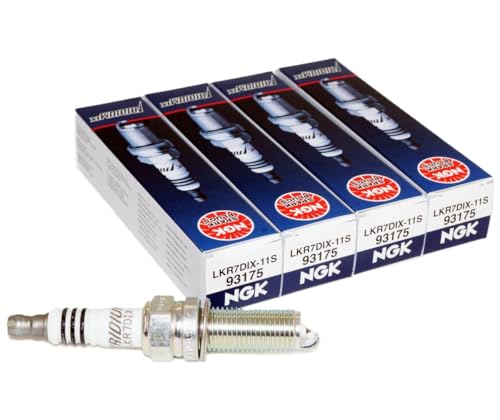
NGK’s Iridium IX line is known for easy starts and long life. The LKR7DIX‑11S uses a fine‑wire iridium center that resists wear. That gives clean combustion and strong ignition under load. Many owners see smoother idle and a small bump in MPG.
I like these for engines that run hotter or have higher compression. The 1.1 mm factory gap suits many modern engines. Iridium often outlasts copper and platinum in real use. If you want to install and forget for years, these rank among the best spark plugs for the money.
Pros:
- Iridium tip for excellent life and stability
- Strong, clean spark even under high load
- Very smooth cold starts and idle
- Often improves throttle response
- NGK quality control and consistency
Cons:
- Higher price than copper or basic platinum
- May need re‑gapping for special applications
- 4‑pack may not fit every cylinder count
My Recommendation
If you push for longer service intervals, choose these. They are the best spark plugs for the money when you factor long life and smooth drive feel. Great for daily commuters and road‑trip cars. Pay a bit more once and enjoy many miles of steady performance.
| Best for | Why |
|---|---|
| Long‑term value | Iridium resists wear, fewer changes |
| Modern engines | Fine‑wire design lights lean mixes |
| Smooth drivability | Stable spark tames idle and starts |
YEYETUO Dual Spark Plug & Coil Tester
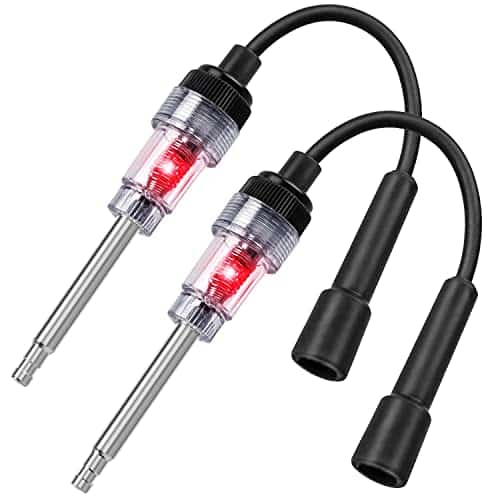
This two‑channel tester lets you see spark quality before you install. You can compare two plugs or coils side by side. It helps find weak coils, fouled plugs, and wiring faults. It is a simple tool that can save hours of guesswork.
I use testers like this to confirm a misfire before I swap parts. The bright arc shows if you have a strong spark. If the spark is thin or erratic, you know where to look next. It is a smart add‑on for anyone chasing rough idle or P030X codes.
Pros:
- Tests two plugs or coils at once
- Quick visual check of spark strength
- Helps avoid replacing good parts
- Great for diagnosing misfires
- Budget‑friendly and simple to use
Cons:
- Not a full lab scope; only a visual check
- Requires safe handling around high voltage
- Instructions can be brief for new users
My Recommendation
When you buy the best spark plugs for the money, test the old set first. This tool confirms if you need new plugs or a coil. It is ideal for DIYers who hate blind part swaps. It raises your odds of a first‑time fix and protects your budget.
| Best for | Why |
|---|---|
| Misfire diagnosis | See spark strength in seconds |
| Budget troubleshooting | Stops waste on unneeded parts |
| Comparative testing | Dual channels show A/B results |
14mm/16mm Spark Plug Socket Set

This set targets modern plug sizes and common hex types. It fits 9/16″ and 5/8″ plugs with 14 mm and 16 mm needs. The sockets seat well and hold the plug steady during removal. That reduces dropped plugs and damaged electrodes.
Access is tight on many DOHC engines. Thin‑wall sockets make life easier. Add a small extension and a wobble, and most wells are reachable. A good socket set makes installing the best spark plugs for the money painless.
Pros:
- Covers popular modern plug sizes
- Grippy insert helps hold plugs
- Thin‑wall design aids tight wells
- Solid value for the price
- Works with common 3/8″ drive tools
Cons:
- May lack a universal joint in set
- Finish can scuff with heavy use
- Not a full master kit
My Recommendation
Use the right socket so you do not crack a new plug. For small plug wells, this set hits the mark. It is a simple, low‑cost way to protect your investment in the best spark plugs for the money. Keep it in your toolbox for clean installs every time.
| Best for | Why |
|---|---|
| Tight plug wells | Thin‑wall sockets fit narrow spaces |
| DIY tune‑ups | Sizes cover many modern cars |
| Budget toolkits | Good price for frequent use |
ELEAD 8‑Piece 3/8″ Drive Spark Plug Socket Kit
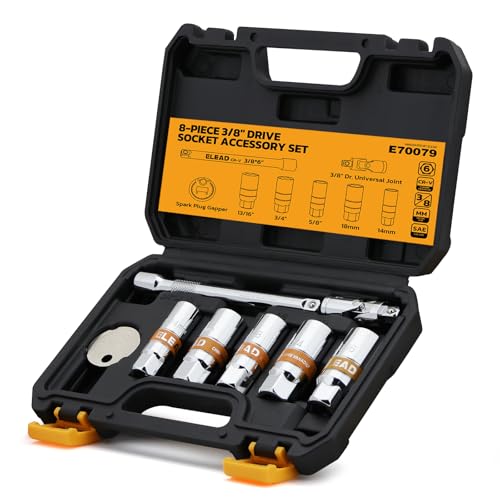
This kit rounds out everything you need for plug work. It includes 5/8″, 3/4″, 13/16″, 14 mm, and 18 mm sockets, a universal joint, a gapper, and a 6″ extension. Rubber holding rings keep plugs safe as you lower them in. The universal lets you clear obstructions in tight bays.
I like full kits because every car throws a curveball. With this set, you can handle old trucks and new compacts. It is a one‑and‑done buy that supports years of maintenance. Tools like this help you install the best spark plugs for the money the right way.
Pros:
- Complete sizes for wide coverage
- Universal joint and extension included
- Rubber rings protect plug tips
- Includes a simple gap tool
- Good value as an all‑in‑one kit
Cons:
- Case quality can vary
- Rubber rings wear with heavy use
- Not a pro shop premium set
My Recommendation
If you maintain more than one car, pick this kit. It is cost‑effective, flexible, and ready for odd sizes. It makes installing the best spark plugs for the money smooth and safe. A small investment here saves time and broken porcelain later.
| Best for | Why |
|---|---|
| Multi‑vehicle garages | All common sizes in one set |
| Tight engine bays | Universal joint clears obstructions |
| New DIYers | Includes gapper and extension bar |
How I Pick the Best Spark Plugs for the Money
Price is only half the story. I look at life, fit, and drive feel. I compare how easy a plug fires and how long it holds its gap. I also factor in cost per mile.
Here is my quick rule set. Copper plugs are cheap and fire hot, but they wear fast. Platinum adds life at a fair cost. Iridium costs more up front, but it often lasts the longest and runs very smooth. For many drivers, iridium is the best spark plugs for the money over time.
Heat range matters. A plug must stay hot enough to burn off deposits. But not so hot that it causes pre‑ignition. I always match OEM heat range unless a build or tune calls for change.
Electrode shape and size affect spark. Fine‑wire tips lower voltage need and help with lean mixes. That is a win for small turbo engines and modern DI motors. If you want easy starts in winter, fine‑wire designs are a smart choice.
Types of Spark Plugs: Which Is Best for You?
Copper: Best for old engines and short change cycles. They fire strong but wear fast. If you race or tune often, the low cost helps.
Platinum: A clear upgrade from copper. The tip lasts longer and keeps the gap stable. They are often the best spark plugs for the money for budget builds.
Iridium: Longest life and smooth response. Ideal for modern engines with tight wells and high heat. They are a set‑and‑forget pick for many daily drivers.
Double‑platinum and ruthenium exist too. They target long service on waste‑spark and newer systems. But iridium still wins on cost versus life for many owners.
Fitment, Gaps, and Heat Range: Avoid Common Mistakes
Always check the part number for your engine. One digit off can mean the wrong thread or reach. That can damage your head or piston.
Check the gap. Many plugs are pre‑gapped, but shipping can bend things. Use a gap tool like the CTA 3235. Set it to the OEM spec to get the best spark.
Never change heat range unless you know why. A colder plug for heavy boost is fine if the tune needs it. For stock cars, stick to OEM.
How I Test and Compare Plugs in 2026
I look at start time, idle smoothness, and misfire counts with a scan tool. I record fuel trims and monitor knock under load. I also check plug color after a few hundred miles.
In daily driving, I watch for tip‑in response and highway passing. I log MPG over two tanks to reduce noise. I also compare cost per mile based on expected life for each plug type.
This mix of real‑world checks mirrors what you feel behind the wheel. It helps me find the best spark plugs for the money for each driver and car.
Installation Tips That Save Time and Money
Work on a cold engine. You are less likely to strip threads. Clean around wells before you pull plugs to keep debris out.
Use the right socket and a small extension. A universal joint helps in awkward spots. Thread new plugs by hand first to avoid cross‑threading.
Use a torque wrench to the OEM spec. Over‑tightening can crack porcelain or crush the washer. Under‑tightening can cause blow‑by and misfires.
Replacement Intervals and Signs You Need New Plugs
Typical intervals: Copper 20–30k miles. Platinum 60–80k. Iridium 80–120k, sometimes more. Always confirm with your owner’s manual.
Look for hard starts, rough idle, lower MPG, and slow throttle response. Misfire codes like P0301–P0308 are common flags. Pull and inspect if in doubt.
If you see ash or oil on threads, address the root cause. Valve seals, PCV issues, or rings can foul new plugs fast. Fix the cause before you change parts.
Budget Strategy: Maximize Value Without Cutting Corners
Buy a matched set from a brand name. NGK, Denso, Bosch, and OEM lines are safe bets. Avoid random mixed packs.
Pair the plugs with a gap tool and the right sockets. One mistake can break a new plug or damage threads. A small tool spend protects your big spend.
Track MPG and idle feel after you install. Note the date and miles. Now you can judge which are the best spark plugs for the money for your driving.
Real‑World Scenarios: Which Plug Makes Sense?
Short commutes and city driving: Platinum often wins. It balances cost and steady idle. You change them less often than copper.
Highway miles and long trips: Iridium shines. Long life, clean burn, and smooth response. Pay more once and stretch the interval.
Older engines or tuned cars with frequent pulls: Copper can make sense. Great spark and low cost. Expect frequent changes.
Troubleshooting After a Plug Change
Still misfiring? Swap the suspect plug with another cylinder. If the misfire follows, the plug is bad. If not, check coil and injector.
Idle is rough only at stoplights? Check for vacuum leaks and PCV issues. Spark is only one piece of the puzzle.
New ticking noise? A loose plug or a cracked insulator is possible. Re‑torque and inspect with a light.
FAQs Of best spark plugs for the money
Do iridium plugs really last longer than platinum?
Yes. Iridium is harder and resists wear better. That keeps the gap stable and the spark strong for more miles.
Should I re‑gap plugs that say “pre‑gapped”?
Check the gap. Shipping can bend electrodes. Use a tool like the CTA 3235 and set it to your OEM spec.
How do I know which heat range to choose?
Match the OEM heat range unless your tune or build calls for a change. Wrong heat range can cause fouling or pre‑ignition.
Are NGK G‑Power a good budget choice?
Yes. They deliver smooth idle and longer life than copper at a fair price. They are often the best spark plugs for the money for daily use.
What tools do I need to change spark plugs safely?
A proper plug socket, extension, universal joint, gap tool, and a torque wrench. These protect threads, tips, and torque spec.
Final Verdict: Which Should You Buy?
For most drivers, NGK LKR7DIX‑11S Iridium IX delivers the best spark plugs for the money over time. If you want lower up‑front cost, NGK G‑Power TR5GP is a top value.
Pair either with a gap tool and proper sockets for a clean, safe install. You will get smooth starts, stable idle, and reliable power.