
Yes, you can mix Mobil 1 with Mobil 1 Extended Performance without harming your engine. Both oils are made by Mobil 1 and use compatible synthetic formulas. Mixing them won’t cause engine damage, but it may slightly reduce the longer oil-change benefits that Mobil 1 Extended Performance is designed to provide.
You’re in your driveway on a crisp Saturday morning. The sun is just starting to warm up the pavement, and you’ve got the car jacked up, halfway through an oil change. Then, you glance at the oil rack and freeze. You realize you grabbed one quart of standard Mobil 1 Full Synthetic and one quart of Mobil 1 Extended Performance. They’re both Mobil, both have those familiar gold caps, and both are sitting right there. The question hits you immediately: Can I just mix these? It’s a classic DIY panic moment, but rest assured, you aren’t about to destroy your engine by blending these two.
The Short Answer — Yes, You Can Mix Mobil 1 with Extended Performance
Yes, you can safely mix Mobil 1 Full Synthetic with Mobil 1 Extended Performance. Because both are high-quality synthetic motor oils manufactured by ExxonMobil, they share identical base oil technology and adhere to the same stringent API and ILSAC specifications. Mixing them will not damage your engine. However, you will lose the specific benefits of the Extended Performance formula, such as its extended drain interval—a detail worth considering before you top off.
Why They’re Compatible at a Chemical Level
Think of mixing these like pouring two different craft beers from the same brewery into one glass. They might have different labels, but they share the same fermentation DNA. Both products use advanced Group IV and V synthetic base stocks, which are PAO-based. Because they come from the same additive chemistry family, there is zero risk of a harmful chemical conflict inside your crankcase. They both meet the same modern API (such as SP) and ILSAC GF-6 standards, meaning they are designed to play nice together under the heat and pressure of your engine.
What “Fully Synthetic” Actually Means Here
When we talk about “full synthetic,” we are referring to the oil’s high-performance molecular structure compared to synthetic blends or conventional oil. ExxonMobil uses their proprietary SuperSyn additive technology across these lines to ensure your engine stays clean. Both of these oils pass the same rigorous base performance thresholds for lubrication chemistry. While the specific ratio of detergents might vary, the viscosity rating and base oil quality remain consistent, ensuring that your engine’s internal components stay protected during that next drive.
What Is the Actual Difference Between Mobil 1 and Mobil 1 Extended Performance?
The primary difference lies in the drain interval. Mobil 1 Full Synthetic is rated for up to 10,000 miles, while Extended Performance is engineered for up to 20,000 miles under ideal conditions. Beyond this, Extended Performance features a higher concentration of long-life antioxidants and detergents. These are specifically designed to remain stable and resist oil degradation, oxidation, and soot accumulation over significantly longer periods of service.
Drain Interval — The Big One
The main reason people pay more for the gold bottle is the promise of 20,000 miles or one full year between changes. Standard Mobil 1 covers you for a solid 10,000 miles, which is more than enough for most daily drivers. Honestly, real talk? Most of us aren’t hitting 20,000 miles in a single year anyway. Unless you are a highway warrior living behind the wheel, the extra longevity might be more peace of mind than a practical necessity.
Additive Package Differences
Think of Extended Performance as the “heavy-duty” version. It is packed with a more robust cocktail of detergents and dispersants to keep your engine internals clean over thousands of extra miles. It also uses specialized viscosity modifiers to ensure the oil doesn’t thin out or break down when pushed to the limit. Neither oil is “better” for raw performance—both provide excellent lubrication. It is strictly a question of how long you want to go before getting your hands greasy again.
Price Difference — Is Extended Performance Worth It?
If you’re doing the math at the auto parts store, you’ll notice the Extended Performance quart costs a bit more. That’s just the premium for the extra chemistry. Here is the funny thing: if you mix it with standard oil, you’re basically paying premium prices just to dilute that specialized additive package. It’s like ordering an expensive, high-end steak and then drowning it in cheap ketchup—you’re defeating the purpose of the upgrade!
Mobil 1 Extended Performance 0W-20 Review — Real Engine Tests, Oil Life | Worth It?
What Happens to the Extended Performance Drain Interval When You Mix?
When you mix Mobil 1 with Extended Performance, the blended oil performs safely, but the 20,000-mile drain interval no longer applies. Think of it like mixing two paint colors; you get a new shade, not the best of both. The oil’s overall additive concentration drops proportionally. Because of this, the smart, safe move is to always revert to the standard 10,000-mile interval associated with the base Mobil 1 product.
The Dilution Effect on Additives
Think of the additive package like a concentrated shot of espresso. If you add one quart of standard Mobil 1 to four quarts of Extended Performance, you haven’t ruined the oil, but you have diluted that “long-life” booster by roughly 20%. In a quick, emergency top-off scenario, this dilution is negligible. However, if you perform a full oil change using a 50/50 mix, that balanced, robust protection for extended intervals is significantly reduced.
What Drain Interval Should You Use After Mixing?
The golden rule here is to play it safe and follow the lower-rated product’s interval. If any standard Mobil 1 makes it into your crankcase, treat the entire batch as 10,000-mile oil. Personally, if I’m unsure about the mix, I just aim for 5,000 miles. For those who really love the data, sending a sample to a service like Blackstone Labs for a used oil analysis can tell you exactly how well your specific blend is holding up.
Does Your Engine Even Notice?
For most daily drivers, your engine won’t feel a difference in operation. However, if you drive a turbocharged engine or an older high-mileage vehicle, those systems can be slightly more sensitive to shifting additive levels. While these engines are built to handle some variation, maintaining consistent lubrication chemistry helps ensure better engine wear protection over time. If you’ve got a performance machine, don’t play guessing games—stick to one consistent product.
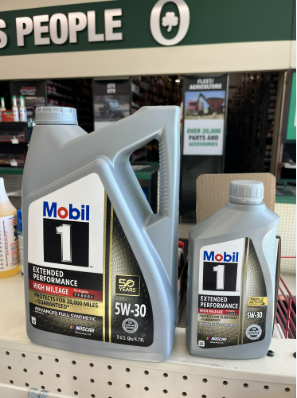
Is It Ever a Good Idea to Mix Them Intentionally?
Honestly, you should rarely mix these oils on purpose. While it’s perfectly fine if it happens accidentally, you shouldn’t make a habit of it. The only real scenario where intentional mixing makes sense is a roadside emergency. If you are stuck in the middle of nowhere and only have access to one type of Mobil 1, always choose that over running your engine low. Consistency is key for long-term health.
Emergency Top-Off Scenarios
Picture this: you are on a massive road trip, cruising through rural Montana at 9 p.m. on a Sunday. Suddenly, your oil light flickers. That distinct, sharp smell of burning oil hits you, and you realize you are a quart low. In that moment, any Mobil 1 product on the shelf beats running your engine dry. Getting home safely is the priority, so grab what you can and don’t overthink the chemistry.
Transition Oil Changes
Sometimes, you might want to switch from Extended Performance to standard Mobil 1 because your driving habits have changed. If you only have a quart of the “old” oil left, don’t worry about using it to top off. That one transition quart is a non-issue. Just keep a quick log of what you added and mark your calendar to perform a full, fresh oil change at the shorter interval.
When You Should NOT Mix
There are times when you absolutely need to stick to the manual. If your car is still under a factory warranty, check the specific OEM oil requirements first. Many European models demand strict ACEA ratings, and some General Motors vehicles require a specific dexos1 Gen 3 approval. Mixing in an oil that lacks these certifications could theoretically cause warranty headaches. Always verify your specs if your car is relatively new or high-performance.
Can You Mix Mobil 1 Extended Performance with Other Brands?
Technically, yes—all API-certified synthetic oils are formulated to be compatible. Mixing Mobil 1 Extended Performance with another full synthetic from brands like Castrol, Pennzoil, or Valvoline won’t blow your engine. However, just like mixing Mobil 1 with its own Extended Performance cousin, you are diluting the premium additive package you paid for. Think of cross-brand mixing as a “get home safe” move, not a long-term maintenance strategy.
Brand Compatibility Basics
All API SP-certified oils share a baseline of compatibility. While every brand uses different “secret sauce” additive packages—some friction modifiers can interact in unique ways—they are all designed to coexist in your engine without clumping or turning into sludge. If you absolutely have to mix, the safest move is to stick with the same viscosity grade and ensure both oils are full synthetic. This minimizes the risk of unpredictable performance during daily driving.
Synthetic Blend vs. Full Synthetic — Don’t Go Backwards
Adding a synthetic blend to your full synthetic Extended Performance is technically safe, but it is not ideal. You are essentially pulling down the overall synthetic performance of the oil. It is like diluting a high-end shot of espresso with gas station drip coffee; the blend works, but you have definitely sacrificed the quality of the original pour. If you do this, don’t plan on hitting those long drain intervals.
Conventional Oil and Extended Performance — Just Don’t
Mixing conventional motor oil with Extended Performance is truly a “break glass in case of emergency” situation. It is safe for a short-term top-off to get you to a shop, but you should change the oil as soon as possible. Conventional oil introduces contaminants and a much different chemical makeup that doesn’t pair well with synthetic tech. If you must mix them, assume your protection interval has reset to standard conventional limits, usually 3,000 to 5,000 miles.
What Viscosity Grades Are We Actually Talking About?
Mobil 1 and Extended Performance both come in common viscosity grades like 0W-20, 5W-20, 5W-30, and 10W-30. Mixing works best when you match these grades exactly. If you mix a 5W-30 with another 5W-30, your engine stays happy. However, if you start combining different grades, you are muddying the oil’s cold-start and operating temperature behavior. Always prioritize matching the viscosity grade for the best engine protection.
Why Viscosity Matching Matters More Than Brand
SAE viscosity ratings are simple: the first number is your cold-flow protection, and the second is how the oil behaves at operating temperature. When you mix, say, a 0W-20 with a 5W-30, you create a hybrid that doesn’t fully match either spec. Think of it as confusing your engine’s internal clock. Always look at your owner’s manual—OEM requirements are the final word because they know the HTHS (High Temperature High Shear) viscosity your engine needs to avoid premature wear.
What If the Grades Are Close But Not Identical?
In a pinch, minor differences are usually survivable. Mixing a 0W-20 and 5W-20 has minimal real-world impact. If you mix 5W-30 and 10W-30, you might get slightly thicker cold behavior, but that’s usually negligible unless you’re in the middle of a sub-zero winter. Keep in mind that 5W-30 oils are sometimes twice as likely to shear out of grade than 0W-20 oils, so don’t make a habit of mixing these during a cold snap. When in doubt, try to keep the grades as close as possible.
What Do Mechanics and Engineers Actually Say About Mixing Synthetics?
Every professional mechanic I’ve spoken with gives the same answer: mixing compatible full synthetics is a total non-issue. ExxonMobil’s own technical data sheets confirm that their products are designed to work together without conflict. Where the pros get opinionated is on drain intervals. They almost always suggest treating mixed oil conservatively, meaning you shouldn’t stretch your change interval based on the higher-performing product’s marketing claims.
ExxonMobil’s Official Position
The company doesn’t explicitly tell you not to mix Mobil 1 variants. If you call their support line, they will tell you the oils are compatible. However, they are smart about it—they’ll remind you that the drain interval defaults to the shorter-lived product in the mix. It is all about protecting your engine, not selling you on an arbitrary rule. When in doubt, trust the technical data rather than forum hearsay.
What ASE-Certified Technicians Recommend
I’ve walked into a lot of shops over the years, and the consensus is always the same. ASE-certified techs generally say to match the viscosity, stick to a conservative schedule, and don’t lose sleep over it. The only time I’ve seen them truly frown is when someone tries to mix vastly different tiers, like dumping cheap conventional oil into a high-performance synthetic system. Keep it consistent, and your engine will run forever.
Oil Analysis — The Nerdy but Definitive Answer
If you are the type of person who changes your own oil in the garage on a cold November Saturday, you might love used oil analysis. Sending a sample to a lab like Blackstone Labs is the only way to get real proof. They test your TBN, or Total Base Number, to see if those additives are actually still working. It’s the ultimate “peace of mind” test for anyone obsessed with long drain intervals and engine protection.
The Bottom Line — Should You Mix Mobil 1 with Extended Performance?
If you need to, go ahead—it is safe, and your engine will never know the difference. But if you are planning it on purpose, you have to ask yourself why. You’re essentially paying Extended Performance prices for a product whose main benefit—the long drain interval—gets diluted the moment you add a different oil. Pick one, stick to it, and set a reminder on your phone. Done.
Quick Decision Guide
- Emergency top-off: Mix freely; any Mobil 1 product is better than running low when you’re miles from home.
- Planned oil change: Choose one—either standard or Extended Performance—based on your typical annual mileage.
- Transitioning products: It is perfectly fine to have one “mixed” cycle while switching from one grade to another.
- High-mileage or turbo engines: Stick to one specific product and follow the shorter, more conservative drain interval to stay safe.
Which Mobil 1 Product Is Right for Your Driving Style?
- Under 10,000 miles/year: Standard Mobil 1 is more cost-effective for your needs.
- Highway commuters: Extended Performance makes better economic sense if you are covering serious distance.
- City stop-and-go drivers: Shorter, frequent changes are much healthier for your engine regardless of the oil; the Extended Performance advantage shrinks in heavy traffic.
- Track/performance use: Go with standard Mobil 1 and simply perform more frequent, consistent oil changes to maintain peak protection.
Frequently Asked Questions About Mixing Mobil 1 Oils
Can I top off with Mobil 1 if my car currently has Extended Performance in it?
Yes, absolutely. Since they share the same brand and compatible specifications, a small top-off won’t meaningfully dilute the additive package in your Extended Performance oil. If it makes you feel better, just adjust your next oil change date slightly sooner. It’s a perfectly safe way to keep your engine properly lubricated until you hit your next service milestone.
Will mixing void my warranty?
No, it won’t. As long as the oils you are mixing meet the specific API and ILSAC standards required by your vehicle manufacturer, you are fully covered under the Magnuson-Moss Warranty Act. The only exception to watch for is if you drive a specialized European vehicle that demands a specific ACEA rating. When in doubt, check your owner’s manual, but generally, you are safe.
What if I accidentally put the wrong Mobil 1 in entirely?
If you haven’t started the engine yet, just grab a drain pan and swap it out—it’s an easy fix. If you have already driven the car, don’t panic; your engine isn’t ruined. Just plan to perform a fresh, full oil change at the next convenient time. Think of it as an early, bonus maintenance day for your car.
Is Mobil 1 Extended Performance better for high-mileage engines?
Not specifically. Mobil 1 actually produces a dedicated High Mileage line that is formulated with special seal conditioners and extra anti-wear additives for older engines. While Extended Performance is excellent for long drain intervals, it isn’t necessarily optimized for aging gaskets or high-wear seals. If your car has over 100,000 miles, look for the product specifically designed for high-mileage needs.