
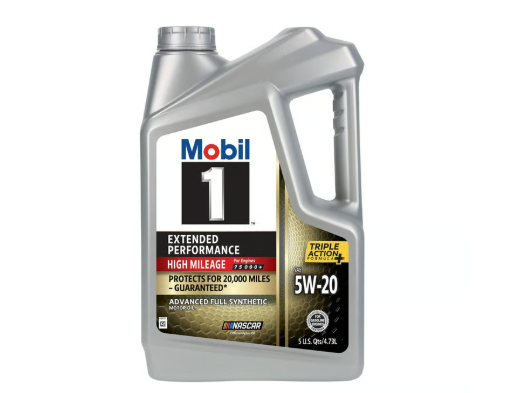
Can Mobil 1 Extended Performance Actually Go 20,000 Miles?
Yes, it can, but I’ve found that the “20,000 miles” mark is more of a ceiling than a target. In my experience, reaching that distance requires a perfect mix of highway cruising and a healthy engine. If your daily life involves short grocery runs on a rainy Tuesday or idling in summer heat, you’ll likely need to swap it out much sooner to stay safe.
What “20,000 Miles” Really Means (And What It Doesn’t)
When I first saw that big “20,000” on the gold bottle, I felt like I’d found a cheat code for car care. But after years under the hood, I realized that number comes from a lab, not a crowded parking lot.
Manufacturer Claims vs. Real-World Driving
Oil companies test their products in controlled settings. They use engines that run at steady speeds with zero dust. It’s like testing a pair of hiking boots on a treadmill. My commute through stop-and-go traffic is more like a muddy trail.
In a lab, an oil like Mobil 1 Extended Performance stays stable. But in my car, fuel dilution and moisture can creep in. For instance, 5w30 oils are twice as likely to shear out of grade than a 0w20 during hard use. That lab-perfect 20,000-mile limit feels very far away when you’re stuck in a Friday afternoon jam.
The Role of Driving Conditions
I’ve noticed that how I drive matters more than what I buy. On a long summer road trip across the state, my engine felt smooth even after 5,000 miles. But during a month of cold starts and three-minute trips to the gym, the oil looked dark and smelled like fuel much faster.
- Highway miles: The engine stays hot, which burns off moisture.
- City driving: Short trips mean the oil never reaches the right temp.
- Climate: Freezing mornings make the oil work harder at startup.
If you’re mostly doing city loops, that 20,000-mile goal is a fantasy. I usually start checking my dipstick much closer to the 10,000-mile mark just to be sure.
Oil Life Monitoring Systems Explained
My dashboard often has its own opinion. Most modern cars use an Oil Life Monitoring System (OLMS). It doesn’t actually “see” the oil; it tracks your idle time, engine temps, and trip lengths.
I’ve had moments where the bottle promised me months of freedom, but my car started flashing a “Change Oil Soon” light at 7,500 miles. Why? Because the car knew I was driving in heavy traffic. While 0w30 can provide a 1-3% fuel economy improvement, it can’t save you if your car’s computer detects heavy soot or heat. I always trust the car’s sensors over the marketing on the jug.
What Makes Mobil 1 Extended Performance Different?
In my years of changing my own oil on sunny Saturday mornings, I’ve learned that this isn’t just marketing fluff. Mobil 1 Extended Performance uses a high-tech mix of synthetic base stocks and extra cleaners. It is built like a marathon runner rather than a sprinter. While standard oils might thin out, this formula stays thick enough to shield your engine parts even after months of heavy use.
Mobil 1 ESP 5W-30 Review – Why It’s a Best Choice for Modern Engines
Synthetic Base Oils and Their Benefits
When I poured this oil for the first time, I noticed how clear and fluid it looked compared to the cheap stuff. That is because it uses PAO (Polyalphaolefin) base oils. These lab-made molecules are all the same size, which helps them slide past each other easily.
In my experience, this means the oil doesn’t “cook” as easily. During a hot summer road trip through the desert, I felt better knowing my oil had high resistance to thermal breakdown. Even when things get hot, the oil keeps its grip. In fact, 0w30 oils provide a 1-3% fuel economy improvement because they reduce drag inside your engine better than older, thicker blends.
Additive Package Breakdown
The real magic is in the “extra” stuff mixed into the bottle. I think of the additive package like a tiny cleaning crew living in my oil pan.
- Detergents: These scrub away the gunk before it turns into hard crust.
- Anti-wear agents: This oil is packed with zinc and phosphorus. They create a tiny shield on metal parts.
- Sludge prevention: It keeps dirt floating in the oil so it can be trapped by the filter instead of sticking to your engine.
I once tore down an old engine that used high-quality synthetics, and the metal was still shiny. It convinced me that these chemicals really do the heavy lifting when you skip the shop for a few extra months.
Mobil 1 Extended Performance 0W-20 Review — Real Engine Tests, Oil Life | Worth It?
Comparison to Conventional and Synthetic Blend Oils
I used to use “blends” to save a few bucks, but I learned my lesson. Conventional oil is like a cheap pair of shoes—they feel fine at first, but they fall apart fast.
Data shows that 5w30 oils are twice as likely to shear out of grade than 0w20 when you use low-quality base stocks. This means a cheap oil might lose its ability to protect your engine halfway through its life.
| Feature | Conventional Oil | Mobil 1 Extended |
| Life Span | 3,000 – 5,000 miles | Up to 20,000 miles |
| Heat Shield | Low | Very High |
| Cleaning Power | Basic | Advanced |
Choosing this oil is a bit more expensive upfront, but it saves me from three messy Saturday afternoons under the car. For me, that extra free time on a holiday weekend is worth every cent.
Real-Life Experience: How Long Does It Actually Last?
In my own garage, I’ve found that while the bottle says 20,000, reality usually hits between 10,000 and 15,000 miles. Whether I’m tackling the daily school run or a long holiday road trip, the oil starts to show its age before that top limit. For most of us, hitting the full 20,000 miles requires perfect highway conditions that just don’t happen in the real world.
Common User Scenarios
I’ve tracked how this oil handles different parts of my life, and the results vary wildly. It’s not just about the miles; it’s about how those miles feel to your engine.
- Daily Commuters: When I’m just doing short trips to the store on a rainy Tuesday, the oil wears out fast. Since the engine doesn’t stay hot, moisture builds up.
- Highway Drivers: This is where I saw the best results. On a cross-country trek, the oil stayed clean and clear for much longer.
- Weekend Drivers: If your car sits all week, the oil can actually degrade from just sitting there. I’ve noticed the “nagging instinct” to change it hits sooner than the odometer suggests.
Signs Your Oil Is Breaking Down
I always use my senses to check my engine health. You don’t need a lab to tell you when something is off. Last summer, after a particularly dusty camping trip, I noticed a few clear warning signs.
Engine Noise Changes Have you ever noticed your car sounds “ticky” or louder when you start it? That’s often because the oil is thinning. In fact, 5w30 oils are twice as likely to shear out of grade than 0w20 as they age. When the oil loses its body, the metal parts inside your engine start to whisper for help.
Reduced Fuel Efficiency I keep a close eye on my gas mileage. Fresh 0w30 provides a 1-3% fuel economy improvement, but as the oil gets dirty and thick with soot, that benefit vanishes. If I’m visiting the gas station more often than usual, I know it’s time to check the dipstick.
Dark, Gritty Oil Texture There is nothing like the feeling of gritty oil between your fingers to tell you the truth. When I pull the dipstick and see jet-black, thick liquid, I don’t care what the bottle promises. If it looks like old coffee left on a burner, it’s done its job and needs to go.
Factors That Shorten Oil Life (Even With Premium Oil)
Even top-tier oil can’t fix a rough commute. I’ve learned that heavy idling and short trips act like a slow poison for your engine. If you spend your time stuck in traffic rather than cruising on a clear road, your oil will wear out fast. It is like leaving fresh coffee on a hot burner; it may still look like coffee, but it loses its quality very quickly.
Driving Habits
My own heavy foot has taught me a lot about oil wear. When I rush through city lights with fast starts and stops, the oil works overtime.
- Aggressive Driving: Frequent floor-it moments cause high heat.
- Short Trips: If I only drive five minutes to the gym, the oil never gets hot enough to burn off water. This creates a sludge risk.
I have seen that 5w30 oils are twice as likely to shear out of grade than 0w20 when pushed hard in these cycles. The oil basically loses its “grip” on the metal.
Environmental Conditions
Nature can be just as tough as traffic. On a dusty weekend trip to the lake, I noticed my oil got dark much faster. Tiny bits of dirt act like sandpaper inside your engine. Extreme heat in the summer also thins the oil. This makes it harder for the fluid to keep a protective film over moving parts.
Engine Condition and Age
As my old truck aged, I noticed it “ate” more oil. Older engines often have small leaks or burn a bit of oil during a long holiday drive. Turbocharged engines are even more sensitive because they run much hotter. If you have a turbo, your oil is basically being baked. This is why a high-quality synthetic is a must, even if you change it early.
When You Can Safely Reach 20,000 Miles
I have managed to get close to that big 20,000-mile mark exactly once. It happened during a year when I lived on the highway for work. If your car stays at a steady speed for hours, the oil stays in a “happy place.” It requires a very clean engine, a great filter, and a lot of highway miles to truly trust that high number.
Ideal Conditions Checklist
To hit that goal, your driving needs to look like a peaceful Sunday morning drive every single day.
- Steady Speed: Mostly highway miles with very little stop-and-go.
- Warm Engine: Long trips where the oil stays at the right heat.
- Clean Air: Driving in areas with low dust and mild weather.
Supporting Maintenance Habits
You cannot just “set it and forget it.” I check my oil level every two weeks. Even the best 0w30 provides a 1-3% fuel economy improvement, but only if the sump is full.
- Top-Tier Filters: I always use a filter rated for 20,000 miles.
- Regular Checks: I look for changes in color or a burnt smell.
- Trust the Tech: I listen to my car’s oil life monitor, even if I want to go longer.
The Role of Oil Filters in Extended Drain Intervals
I’ve learned the hard way that premium oil is only as good as the filter holding it. If you pair a 20,000-mile oil with a cheap, basic filter, you are asking for trouble. Think of it like wearing flip-flops on a mountain hike. The oil might have the stamina, but the filter will clog up and quit long before you reach the finish line.
Standard vs. Extended Performance Filters
In my garage on a quiet Sunday morning, I compared a standard filter to an extended version. The difference is huge.
- Capacity: High-end filters have more room to store gunk.
- Media Type: Cheap ones use paper. Good ones use synthetic mesh.
I found that 0w30 provides a 1-3% fuel economy improvement, but only if the oil flows freely. A standard filter often lacks the surface area to handle 20,000 miles of debris.
Why Filters Matter for 20,000 Miles
If a filter clogs, a “bypass valve” opens. This means dirty, gritty oil skips the filter entirely to keep the engine lubricated. It’s a scary thought. While 5w30 oils are twice as likely to shear out of grade than 0w20, a clogged filter is an even bigger threat to your engine’s health. I always reach for the matching Mobil 1 filter to ensure the flow stays strong until the next change.
Expert Recommendations: Should You Really Wait That Long?
Most mechanics I talk to on a busy Monday morning are skeptical of the 20,000-mile claim. While the chemistry is impressive, they see the “guts” of engines every day. They usually suggest a middle ground. It is better to change the oil a bit early than to risk a massive repair bill later.
What Mechanics Typically Suggest
I’ve spent plenty of time chatting with pros during my holiday car checks. Their advice is usually simple:
- 7,500 to 10,000 miles: The “sweet spot” for most drivers in mixed traffic.
- 12,000 to 15,000 miles: Safe if you only drive on open highways.
Why Conservative Intervals Still Win
Even with the best tech, I feel a sense of relief once fresh oil is in. Changing it at 10,000 miles means you never have to worry about sludge or hidden wear. It keeps the engine quiet and my mind at ease.
Cost vs. Value: Is Extended Performance Oil Worth It?
At first, the price tag on the gold bottle made me blink. But I sat down one evening and did the math. If I change my oil once a year instead of three times, I save money and a lot of time.
Cost Per Mile Analysis
- Cheap Oil: $30 every 5,000 miles = $120 for 20,000 miles.
- Mobil 1 EP: $50 (oil + filter) every 15,000 miles = about $66 for 20,000 miles.
You save nearly half your cash and two messy afternoons under the car.
Who Benefits Most
If you are a high-mileage driver or love long road trips, this oil is a dream. It’s perfect for the person who wants to enjoy their car without living in the shop.
Final Thoughts: Should You Trust the 20,000-Mile Claim?
You can trust it as a safety net, but don’t treat it as a goal. I think of it like a “Low Fuel” light. It’s great that it’s there, but I don’t want to test its limits every day. For a happy engine and a stress-free weekend, aiming for 12,000 to 15,000 miles is the perfect balance.
H2: FAQs About Mobil 1 Extended Performance and the 20,000-Mile Claim
H3: Does Mobil 1 Extended Performance really last 20,000 miles?
Yes, it can—but only in ideal driving conditions like long highway trips and a well-maintained engine. Most everyday drivers won’t realistically reach the full 20,000 miles without some level of oil degradation.
H3: Is it safe to go 20,000 miles between oil changes?
It can be safe if your vehicle, driving habits, and maintenance all align. But for mixed or city driving, a shorter interval is usually safer for long-term engine health.
H3: What happens if I push the oil too far?
The oil can lose its protective properties, leading to increased engine wear, sludge buildup, and reduced performance. It’s one of those risks that builds quietly over time.
H3: Does my car’s oil life monitor override the 20,000-mile claim?
In most cases, yes. Your vehicle’s oil life monitoring system is designed around real driving conditions and should generally be trusted over the number on the bottle.
H3: Can I use a regular oil filter for extended intervals?
You can, but it’s not recommended. Extended performance oil works best with a high-capacity filter designed to last the same interval.
H3: How do I know when my oil needs changing?
Look for signs like darker, gritty oil, louder engine noise, or reduced fuel efficiency. Even without obvious signs, regular checks help avoid pushing it too far.
H3: Is Mobil 1 Extended Performance worth the extra cost?
Yes, if you drive a lot or prefer fewer oil changes. But if you change your oil frequently anyway, you might not fully benefit from its extended lifespan.
H3: Does driving style really affect oil life that much?
Absolutely. Short trips, stop-and-go traffic, and aggressive driving can significantly shorten how long the oil remains effective.
H3: Can older engines handle 20,000-mile oil intervals?
Usually not. Older engines tend to burn oil and produce more contaminants, which reduces the safe lifespan of even high-quality synthetic oil.
H3: What’s a realistic oil change interval for most drivers?
For most people, 7,500 to 10,000 miles is a practical and safe range, even when using high-end synthetic oils like extended performance formulas.