
Fuel dilution occurs when unburned gasoline or diesel enters engine oil, reducing its strength and protection. Fuel dilution is a common but serious engine oil problem.
It can affect gasoline and diesel engines, especially those used for short trips, cold starts, idling, or repeated fuel system faults. A small amount may go unnoticed, but rising fuel dilution can thin the oil, lower its flash point, and speed up engine wear.
This guide explains what causes fuel dilution, how to spot it, how professionals test for it, and what you can do to prevent costly damage. The goal is simple: help you protect your engine before a weak oil film turns into a major repair.
What Is Fuel Dilution?
Fuel dilution happens when raw fuel mixes with the engine oil in the crankcase. The fuel may be gasoline or diesel, depending on the engine. In a healthy engine, most fuel burns inside the cylinder, while the oil stays in the sump and protects moving parts.
A small amount of fuel can pass the piston rings during normal operation. This process is called blow-by. Under normal conditions, engine heat and crankcase ventilation remove much of that fuel vapor.
The problem begins when more fuel enters the oil than the engine can remove. The oil then becomes thinner and less able to protect bearings, cylinder walls, camshafts, and timing components.
Think of engine oil as a strong protective blanket. Fuel dilution turns that blanket into a thin sheet. It may still cover the parts, but it cannot cushion them as well.
Fuel dilution is not the same as coolant contamination or water contamination. Each type of oil contamination has different causes and test results.
What Causes Fuel Dilution?
Fuel dilution can come from normal operating conditions, a fuel system fault, or an internal engine problem. Finding the cause is more important than simply changing the oil.
Short Trips and Cold Starts
Cold engines use extra fuel to start and warm up. During this time, combustion is less efficient, and more unburned fuel can pass the piston rings.
Short trips make the issue worse. The engine may shut off before the oil reaches a temperature high enough to evaporate the fuel. Repeated short trips can slowly increase fuel dilution.
This is common in vehicles used for:
• School runs
• Grocery trips
• Stop-and-go traffic
• Short commutes
• Frequent remote starts
• Winter driving
Overfueling
A rich air-fuel mixture sends more fuel into the cylinder than the engine can burn. Possible causes include:
• A leaking fuel injector
• A faulty fuel pressure regulator
• A damaged oxygen sensor
• A failed mass airflow sensor
• A faulty engine coolant temperature sensor
• Incorrect fuel pressure
• A clogged air filter
• Software or calibration problems
Overfueling often causes poor fuel economy, black exhaust smoke, rough running, or a strong fuel smell.
Leaking Fuel Injectors
A fuel injector should spray a controlled amount of fuel at the correct time. If it leaks after the engine shuts off, fuel can enter the cylinder and move past the piston rings.
A leaking injector may also cause a hard start, a flooded engine, a misfire, or a fuel odor near the vehicle. In severe cases, the oil level may rise because liquid fuel is collecting in the crankcase.
Diesel Regeneration Events
Modern diesel engines can experience fuel dilution during diesel particulate filter regeneration. During regeneration, the engine raises exhaust temperature to burn soot from the filter.
Some systems use late fuel injection to create that heat. If the fuel does not burn fully, part of it may reach the cylinder walls and enter the oil.
Frequent interrupted regenerations can increase diesel fuel dilution. This may happen when a diesel vehicle is used mainly for short urban trips.
Worn Piston Rings or Cylinder Walls
Worn rings can allow more combustion gases and unburned fuel to pass into the crankcase. Poor cylinder sealing may also cause low compression, increased oil consumption, smoke, and reduced engine power.
Fuel dilution is not always proof of worn piston rings. A fuel system fault can create the same oil problem. Proper testing is needed before assuming the engine needs major internal repairs.
Symptoms of Fuel Dilution
Fuel dilution may not create a warning light at first. The oil can become contaminated long before the driver notices a clear symptom.
Common signs include:
• A rising oil level
• A strong gasoline or diesel smell on the dipstick
• Oil that feels unusually thin
• Poor fuel economy
• Rough idle
• Hard starting
• Engine misfires
• Black exhaust smoke
• Reduced engine power
• Frequent diesel particulate filter regeneration
• Faster oil degradation
• Increased engine noise
A rising oil level is especially important. Oil normally drops slowly between services, although some engines use very little oil. If the level rises, fuel or coolant may be entering the crankcase.
Do not rely only on color. Fresh oil can look dark quickly, and contaminated oil may still look normal. Smell, level changes, vehicle symptoms, and laboratory testing provide better clues.
One practical lesson is to check the dipstick under the same conditions each time. Park on level ground, wait several minutes after shutting off the engine, and check the oil before driving. Inconsistent checks can make a normal level look abnormal.
Why Fuel Dilution Is Dangerous
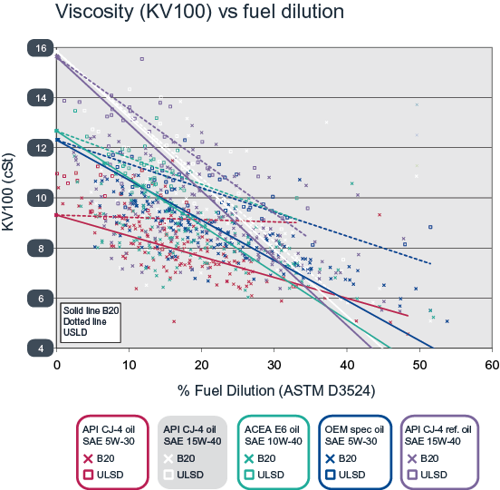
The main danger of fuel dilution is reduced oil viscosity. Viscosity describes how easily oil flows. When fuel mixes with oil, the mixture may become too thin for the engine’s design.
Thin oil can cause:
• Weaker protection during cold starts
• Lower oil pressure
• Greater bearing wear
• More piston and cylinder wear
• Increased timing chain wear
• Reduced protection for turbocharger bearings
• Faster oxidation and sludge formation
• A greater chance of scuffing or seizure
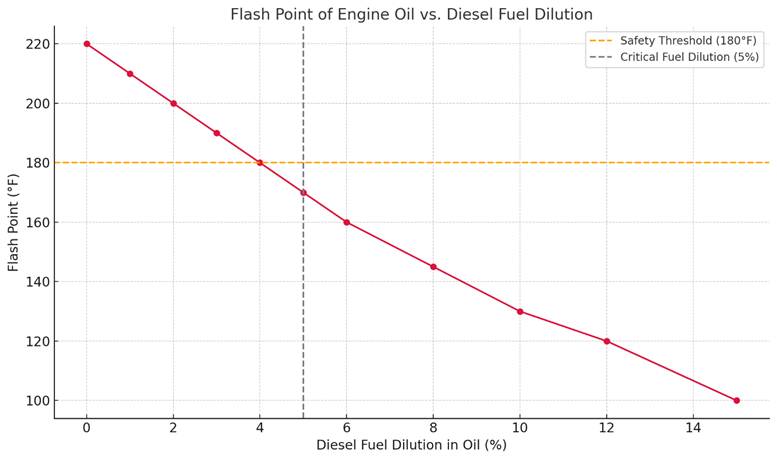
Fuel dilution can also lower the oil’s flash point. This means the contaminated oil may release fuel vapors more easily when heated. The exact risk depends on the type of fuel, the amount present, the oil formulation, and engine temperature.
Modern engines can be more sensitive to fuel dilution than older designs. Turbochargers, tight bearing clearances, variable valve timing systems, and long oil change intervals place greater demands on lubricant performance.
Fuel dilution does not always cause immediate failure. That is what makes it dangerous. Wear may build slowly, like sand passing through a gear. By the time the engine becomes noisy, damage may already be serious.
How Fuel Dilution Is Diagnosed
A professional diagnosis should combine vehicle inspection, oil analysis, and fuel system testing. No single clue proves the cause.
Check the Oil Level and Smell
Start with the dipstick. Look for a rising oil level and a strong fuel smell. This is a useful first check, but it cannot measure the fuel percentage accurately.
The smell test also has limits. Diesel fuel and some gasoline blends can be difficult to detect by odor. A strong smell suggests a problem, but a weak smell does not rule one out.
7 Best Oil For Fuel Dilution (Tested For High-Viscosity and Synthetic Oils)
Use Laboratory Oil Analysis
Used oil analysis can measure fuel dilution and identify related signs of wear. Many laboratories use gas chromatography because it can separate and measure fuel compounds more accurately than a simple shop test.
A report may include:
• Fuel dilution percentage
• Oil viscosity
• Wear metals
• Oxidation
• Nitration
• Soot
• Coolant indicators
• Additive condition
Always compare the result with the vehicle maker’s guidance and the laboratory’s testing method. Different methods may produce different readings.
Some quick tests estimate fuel dilution through viscosity or flash point. These can be useful screening tools, but they are less precise than laboratory analysis.
Test the Fuel System
A technician may inspect:
• Injector leak-down performance
• Fuel rail pressure
• Fuel trim data
• Oxygen sensor readings
• Mass airflow readings
• Glow plug and injector operation
• Compression
• Cylinder leak-down results
• Crankcase ventilation function
Diesel vehicles may also need a review of regeneration history. Repeated failed regeneration events can point toward a fuel dilution problem.

How Much Fuel Dilution Is Too Much?
There is no single safe number for every engine. Acceptable limits depend on the engine design, fuel type, oil grade, operating pattern, and test method.
Some manufacturers treat fuel dilution near 5% as a concern, while certain engines and oil analysis programs may use different limits. A result above the manufacturer’s stated limit deserves prompt attention.
The trend matters as much as the number. For example:
• 1% that remains stable may be less concerning
• 3% that rises quickly needs investigation
• 5% or more may require immediate action
• Any rising oil level requires attention
Never assume a low percentage is harmless if the oil level is climbing or the engine is showing symptoms. Ask the laboratory or vehicle manufacturer how to interpret the result for that specific engine.
Oil analysis is useful, but it also has limits. A sample may not represent the entire oil charge if it was taken soon after an oil change or from a poorly mixed sump. Sampling at regular intervals gives a much clearer trend.
How to Fix Fuel Dilution
The correct repair depends on the source of the contamination. Replacing the oil alone may protect the engine for a short time, but it will not stop new fuel from entering the crankcase.
A proper repair may include these steps:
- Confirm fuel dilution with an oil sample or inspection.
- Check for a rising oil level and fuel odor.
- Scan the engine control module for fault codes.
- Review fuel trims, injector data, and regeneration history.
- Test fuel pressure and injector sealing.
- Inspect sensors that control fuel delivery.
- Check compression and cylinder sealing when needed.
- Repair the root cause.
- Replace the contaminated oil and filter.
- Recheck the oil level after several drives.
Do not keep driving for weeks while waiting for a repair if the oil level is rising. Driving can spread contaminated oil through the engine and increase wear.
Use the oil grade and filter specified by the vehicle manufacturer. A thicker oil is not a proper cure unless the manufacturer recommends it. Changing viscosity can affect oil pressure, fuel economy, and variable valve timing operation.
How to Prevent Fuel Dilution
Prevention starts with good service habits and the right driving pattern.
• Follow the correct oil change interval
• Check the oil level every few weeks
• Check the oil after severe use or repeated short trips
• Use the exact oil specification listed in the owner’s manual
• Repair misfires and warning lights quickly
• Avoid long periods of unnecessary idling
• Allow diesel vehicles to complete regeneration when safe
• Use quality fuel from reliable stations
• Keep the air filter and crankcase ventilation system in good condition
• Have suspected injector problems tested early
A longer drive can help evaporate small amounts of fuel from oil, but it is not a repair for a leaking injector or a serious engine fault. Do not use a long drive to hide a rising oil level.
For vehicles that make many short trips, an earlier oil change may be wise. The correct interval depends on the owner’s manual, climate, traffic, engine type, and oil analysis results.
Fleet operators can learn a great deal from trend monitoring. Recording oil level, fuel economy, regeneration frequency, and oil analysis results can reveal a problem before it causes downtime.
Gasoline Fuel Dilution vs. Diesel Fuel Dilution
Gasoline and diesel engines can both suffer from fuel dilution, but the causes often differ.
Gasoline fuel dilution is commonly linked to cold starts, direct fuel injection, rich operation, misfires, and leaking injectors. Gasoline direct injection engines may be more sensitive because fuel is sprayed directly into the combustion chamber.
Diesel fuel dilution is often linked to injector faults, failed particulate filter regeneration, excessive idling, and poor cylinder sealing. Diesel fuel can also enter the oil when late injection events do not burn as intended.
Both types reduce oil viscosity and increase wear risk. The diagnostic process must match the engine. A diesel regeneration review is important for many diesel cases, while fuel trim and ignition checks are often central to gasoline diagnosis.
Common Mistakes to Avoid
Fuel dilution problems often become expensive because the first response is incomplete.
Avoid these mistakes:
• Changing the oil without finding the cause
• Ignoring a rising dipstick level
• Assuming dark oil is the only warning sign
• Using thicker oil to mask the issue
• Extending the oil interval after repeated short trips
• Replacing injectors without testing them
• Blaming worn piston rings before checking the fuel system
• Continuing to drive with a flashing misfire light
• Skipping oil analysis when the cause is unclear
A flashing check engine light usually indicates an active misfire that may damage the catalytic converter. It can also increase unburned fuel entering the oil. Stop driving when the vehicle manufacturer advises it and have the fault checked.
Frequently Asked Questions About Fuel Dilution
What does fuel dilution mean in engine oil?
Fuel dilution means gasoline or diesel has mixed with the engine oil. It can make the oil thinner and reduce its ability to protect engine parts.
Can fuel dilution damage an engine?
Yes. Severe or ongoing fuel dilution can reduce oil viscosity, lower protection, and increase wear in bearings, pistons, timing parts, and turbochargers. Early diagnosis can prevent major damage.
How can I tell if fuel is in my oil?
A rising oil level, strong fuel smell, and unusually thin oil can suggest fuel dilution. Laboratory oil analysis is the most reliable way to measure it.
Can an oil change fix fuel dilution?
An oil change removes contaminated oil but does not repair the cause. If a leaking injector, rich mixture, or interrupted diesel regeneration continues, the new oil may become contaminated again.
Is fuel dilution normal in direct injection engines?
A small amount can occur in some direct injection engines, especially during cold operation. A rising trend or a level above the manufacturer’s limit is not normal and should be investigated.
Can short trips cause fuel dilution?
Yes. Short trips may keep the engine and oil too cool to evaporate fuel that enters the crankcase. Repeated short trips can make the contamination build over time.
Does fuel dilution lower oil pressure?
It can. When fuel reduces oil viscosity, the oil may not maintain the pressure and film strength the engine needs, especially at high temperature or low engine speed.
Conclusion
Fuel dilution is the buildup of gasoline or diesel in engine oil, and it should never be ignored. Cold starts, short trips, leaking injectors, rich mixtures, diesel regeneration, and worn engine parts can all play a role.
Check the oil level often, watch for fuel odor, follow the correct oil specification, and use laboratory oil analysis when the cause is uncertain. Most important, repair the source before simply changing the oil.
A few minutes of inspection can protect thousands of dollars in engine parts. If you have seen fuel dilution in your vehicle, share your experience or speak with a qualified technician for a tailored diagnosis.