How Does Gdi Engine Work?
Have you ever wondered how modern car engines deliver more power while using less fuel? One key reason is the Gasoline Direct Injection (GDI) engine. If you drive a newer car, there’s a good chance it uses this technology. GDI engines have changed the way fuel is delivered inside the engine, making cars faster, cleaner, and more efficient than older engines. But how does a GDI engine actually work? Let’s break it down in simple terms so you can really understand what happens under your car’s hood.
How Does Gdi Engine Work: The Basic Principle
At its core, a GDI engine sprays gasoline directly into the engine’s combustion chamber, not into the intake manifold like older engines. Here’s a simple overview of how it works:
- High-pressure fuel pump sends gasoline from the fuel tank to the injectors.
- Electronic control unit (ECU) decides how much fuel is needed and exactly when to inject it.
- Fuel injectors spray a fine mist of gasoline straight into the combustion chamber.
- Air intake brings in fresh air, mixing with the fuel right where the spark plug ignites it.
- Spark plug ignites the air-fuel mix, creating a small explosion that pushes the piston down.
This direct method gives engineers much more control over how fuel mixes with air, which leads to better performance and lower emissions.
How Does Gdi Engine Work Differently From Port Fuel Injection
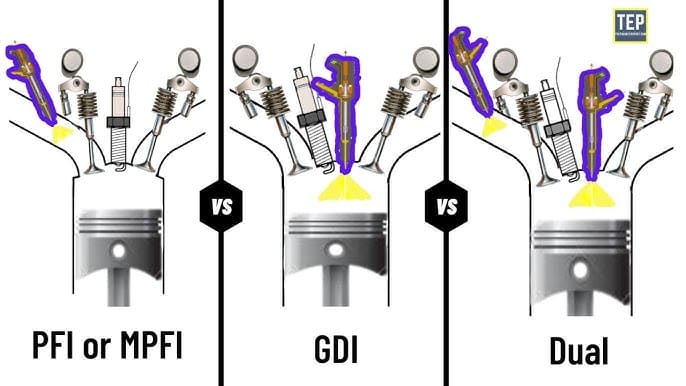
The main difference between GDI and older Port Fuel Injection (PFI) engines is where the fuel is mixed with air.
- In PFI engines, fuel is sprayed into the intake manifold, mixing with air before entering the cylinder.
- In GDI engines, fuel is sprayed right inside the combustion chamber.
This change may sound small, but it makes a big difference.
Comparison Table: Gdi Vs Port Fuel Injection
| Feature | GDI Engine | Port Fuel Injection |
|---|---|---|
| Fuel Injection Point | Directly in combustion chamber | Intake manifold |
| Pressure Level | High (up to 2,000 psi) | Low (40-60 psi) |
| Efficiency | Higher | Lower |
| Emissions | Lower (with proper tuning) | Higher |
| Power Output | Higher | Lower |
How Does Gdi Engine Work: Step-by-step Process
To really understand how a GDI engine works, let’s go through the process step by step:
1. Fuel Delivery
A special high-pressure fuel pump pushes gasoline from the tank to the engine at pressures that can reach up to 2,000 psi (pounds per square inch). This is much higher than in regular engines. The high pressure is needed to create a fine mist of fuel for better combustion.
2. Air Intake
Fresh air enters the engine through the air intake system. The amount of air is controlled by a throttle, just like in most engines.
3. Direct Injection
The fuel injector sprays gasoline directly into the combustion chamber at the right moment. The timing and amount of fuel are controlled by the ECU, which constantly monitors engine conditions.
4. Mixing And Combustion
Because the fuel is injected directly, it mixes with the air right where the spark plug is. This allows for different types of mixing:
- Homogeneous mixture: Fuel and air are fully mixed for smooth combustion.
- Stratified charge: More fuel near the spark plug for a strong ignition, less fuel elsewhere for efficiency.
5. Ignition
The spark plug fires, igniting the air-fuel mix. The explosion pushes the piston down, turning the engine’s crankshaft and making your car move.
6. Exhaust
Burned gases leave the cylinder and exit through the exhaust system.
How Does Gdi Engine Work To Improve Efficiency
GDI engines are all about using fuel more wisely. Here’s how they do it:
- Precise fuel control: The ECU can add just the right amount of fuel for each situation—more when you press the gas pedal, less when you’re cruising.
- Lean burn: GDI engines can run on a “lean” mix (more air, less fuel) during light driving, which saves fuel.
- High compression ratio: Because fuel is injected directly, engines can use higher compression without knocking (unwanted early combustion), which makes them more efficient.
Table: Fuel Efficiency Comparison
| Engine Type | Average Fuel Economy (mpg) | CO2 Emissions (g/km) |
|---|---|---|
| Port Fuel Injection | 25-28 | 180-200 |
| GDI | 30-35 | 140-170 |

5 Best Oil Additive For Older Engine: Professionals Use to Save Aging Valvetrains
How Does Gdi Engine Work To Boost Power
By injecting fuel directly, GDI engines can create a denser air-fuel mix in the combustion chamber. This means more power from the same size engine. Turbochargers are often used with GDI to make even more power without using more fuel.
- Stronger explosions: More precise mixing gives bigger, more controlled explosions in the cylinder.
- Turbocharging: GDI works well with turbos because it cools the air-fuel mix, allowing even more air to be packed in.
Example: Many modern 2.0-liter turbo GDI engines now make over 250 horsepower, which was rare in small engines just a decade ago.
How Does Gdi Engine Work To Lower Emissions
Reducing pollution is a big goal for carmakers. GDI engines help in a few ways:
- Better combustion: Direct injection creates a more complete burn, so there’s less unburned fuel and fewer hydrocarbons in the exhaust.
- Precise timing: The ECU can adjust injection timing to lower nitrogen oxides (NOx) and other pollutants.
- Stratified charge: Using less fuel in light-load conditions produces fewer emissions.
However, GDI engines can make more fine particles (soot), so many use special particulate filters to clean up the exhaust.
How Does Gdi Engine Work With Modern Technologies
GDI engines often work together with other new technologies to reach even higher levels of performance and efficiency.
Turbocharging
GDI engines and turbochargers are a common pair. The turbo forces extra air into the engine, and direct injection makes sure there’s enough fuel to match.
Variable Valve Timing
Systems like VVT let the engine control when valves open and close, making sure the right amount of air and fuel enter the cylinder at all times.
Cylinder Deactivation
Some GDI engines can shut off cylinders when you don’t need full power (like on the highway), saving even more fuel.
How Does Gdi Engine Work: Key Components
To understand GDI, it helps to know the main parts that make it work.
High-pressure Fuel Pump
This pump builds the high pressure needed for direct injection. It’s usually powered by the engine’s camshaft.
Direct Fuel Injectors
These injectors are specially designed to handle high pressure and spray fuel in a very fine mist.
Electronic Control Unit (ecu)
The ECU is the brain of the engine. It controls when and how much fuel is injected.
Sensors
Many sensors feed information to the ECU:
- Oxygen sensor (measures exhaust gases)
- Mass airflow sensor (measures air entering)
- Knock sensor (listens for engine knock)
- Throttle position sensor
All these work together to help the engine run smoothly and efficiently.
How Does Gdi Engine Work: Real-world Example
Let’s look at the Mazda Skyactiv-G engine, a well-known GDI example.
- It uses a very high compression ratio (up to 14: 1).
- Direct injection cools the combustion chamber, preventing knock.
- As a result, the engine gets strong power and up to 15% better fuel economy compared to older engines.
Another example is the Ford EcoBoost family, which uses GDI and turbocharging to get high horsepower from small engines while using less fuel.
How Does Gdi Engine Work: Advantages And Disadvantages
Like any technology, GDI engines have both benefits and drawbacks.
Advantages
- Better fuel efficiency: Up to 15% improvement over non-GDI engines.
- More power: Higher horsepower from smaller engines.
- Lower CO2 emissions: Helps meet strict pollution rules.
- Faster throttle response: More precise control over fuel delivery.
Disadvantages
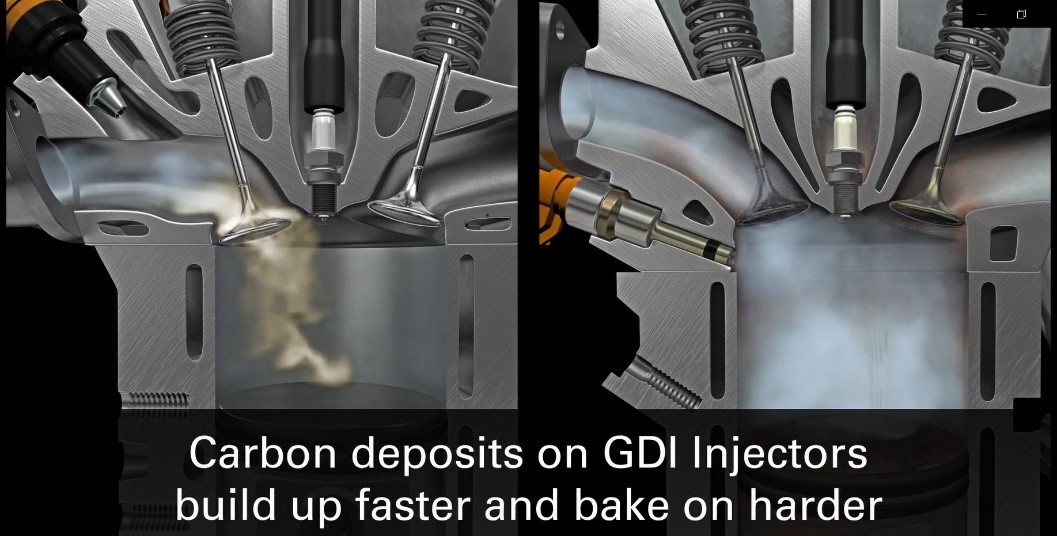
- Carbon build-up: Because fuel doesn’t wash intake valves, carbon deposits can form and affect performance.
- Complexity: More parts mean higher repair costs if something breaks.
- Fine particle emissions: More soot, which means some cars need extra filters.
How Does Gdi Engine Work: Maintenance Tips
If you own a GDI car, here are practical tips to keep it running well:
- Use top-quality fuel: Poor fuel can make carbon problems worse.
- Change oil regularly: Clean oil helps keep engine internals free of build-up.
- Consider intake cleaning: Some shops offer walnut blasting to remove carbon from intake valves.
- Replace air and fuel filters on schedule: This keeps the fuel system working at its best.
- Follow the manufacturer’s service guide: Skipping maintenance can lead to expensive repairs.
Non-obvious tip: Short trips and lots of idling can make carbon build-up worse in GDI engines. Try to take longer drives when possible to let the engine fully heat up and burn off deposits.
How Does Gdi Engine Work: Common Problems And Solutions
While GDI engines are reliable, they do have some known issues.
Carbon Build-up
Because fuel doesn’t wash the intake valves, carbon deposits can form. This can cause rough idling, hesitation, or poor fuel economy. Regular cleaning or using special additives can help.
High-pressure Pump Failure
The high-pressure pump is under a lot of stress. If you hear ticking noises or have trouble starting, this could be the problem.
Injector Clogging
GDI injectors can get clogged by dirty fuel or deposits. Use good fuel and change filters regularly.
If you notice your engine running rough, lower power, or warning lights, get it checked soon. Early fixes are cheaper than waiting for major problems.
How Does Gdi Engine Work: Future Developments
Car companies are still working to make GDI engines better. Some future trends include:
- Dual injection: Using both port and direct injection to get the best of both worlds.
- Advanced particulate filters: To catch more soot and lower emissions further.
- Mild hybrid systems: Adding electric motors to work with GDI for even better economy.
For more about GDI technology, you can check the Wikipedia page on Gasoline Direct Injection.
Frequently Asked Questions
What Is The Main Advantage Of A Gdi Engine?
The main advantage of a GDI engine is better fuel efficiency and more power from the same engine size. You get more miles per gallon and stronger acceleration.
How Often Should You Clean Gdi Intake Valves?
It depends on driving habits, but a good rule is every 30,000 to 60,000 miles. If you do a lot of short trips or city driving, you may need to clean them more often.
Can You Use Regular Gasoline In A Gdi Engine?
Most GDI engines are designed to run on regular gas, but some high-performance models need premium. Always check your owner’s manual to be sure.
Are Gdi Engines More Expensive To Repair?
Yes, GDI engines can cost more to repair because of their complex parts, like high-pressure pumps and injectors. Regular maintenance can prevent most big problems.
Do Gdi Engines Last As Long As Older Engines?
With proper care and maintenance, GDI engines can last just as long as older engines. Keeping up with oil changes and intake cleaning is key for long life.
Modern GDI engines are a smart choice for drivers who want both power and efficiency. With regular maintenance and good driving habits, they’ll serve you well for many years.