
To check engine oil quality in a bike, place the motorcycle on level ground, let the engine cool, and inspect the oil using the dipstick or sight glass. Clean the dipstick, reinsert it, then check both the oil level and color. Fresh oil appears amber or light brown, while very dark, gritty, milky, or burnt-smelling oil indicates contamination or degradation. If the oil looks dirty, feels thin, or smells burnt, it’s time to change it to protect the engine and maintain smooth performance.
The “Essential Maintenance Kit”
Product Why it’s essential for Oil Quality Amazon Link Motul 7100 4T Synthetic Oil The “Gold Standard” for high-performance bikes. [View on Amazon] Lumax LX-1301 Oil Drain Pan Low-profile design specifically for motorcycles. [View on Amazon] Carb Choke Cleaner To clean your dipstick and sight glass for a clear reading. [View on Amazon] Pro Tip: Don’t Rely on Guesswork
While the “finger rub” test is a good start, it’s hard to see microscopic metal shavings with the naked eye. To truly check engine oil quality in a bike, I always keep a Magnetic Drain Plug installed.
Check oil level, color, smell, and feel; add a simple paper blot test.
If you want to know how to check engine oil quality in bike the right way, you’re in the perfect spot. I’ve spent years in the garage and on the road. I’ll teach you the exact steps that riders and techs use. This guide is clear, simple, and based on real use. Read on to avoid wear, save money, and keep your bike smooth.
Best Universal Oil Dipstick (2026) – Accurate Fits for Multiple Engines | Tested & Reviewed
Why engine oil quality matters
Engine oil is your bike’s life support. It cuts friction, cools hot parts, cleans grit, and fights rust. In many bikes with a wet clutch, the oil also helps the clutch work right.
Poor oil quality harms power and parts. It can glaze the clutch and starve the top end. Learn how to check engine oil quality in bike now, and you dodge big repair bills later.
Tools and setup for a clean check
You do not need fancy tools. A clean setup works best.
- Owner’s manual for steps and spec
- Center stand or paddock stand
- Clean white paper towel or coffee filter
- Lint‑free rag and nitrile gloves
- Flashlight or phone light
- Small funnel for top‑ups
- Notebook app to log date, miles, and notes
Warm the bike a short ride, then shut it off. Park on level ground. Give it 2–3 minutes so oil drains back to the sump.
Does the Quality of Engine Oil Matter?– Performance, Wear & Cost Compared
Step-by-step: how to check engine oil quality in bike
Follow this simple flow. It takes five minutes.
- Level check
- Use the center stand if you can. A side stand skews the reading.
- Sight glass bikes: hold the bike upright. Oil should sit between low and high marks.
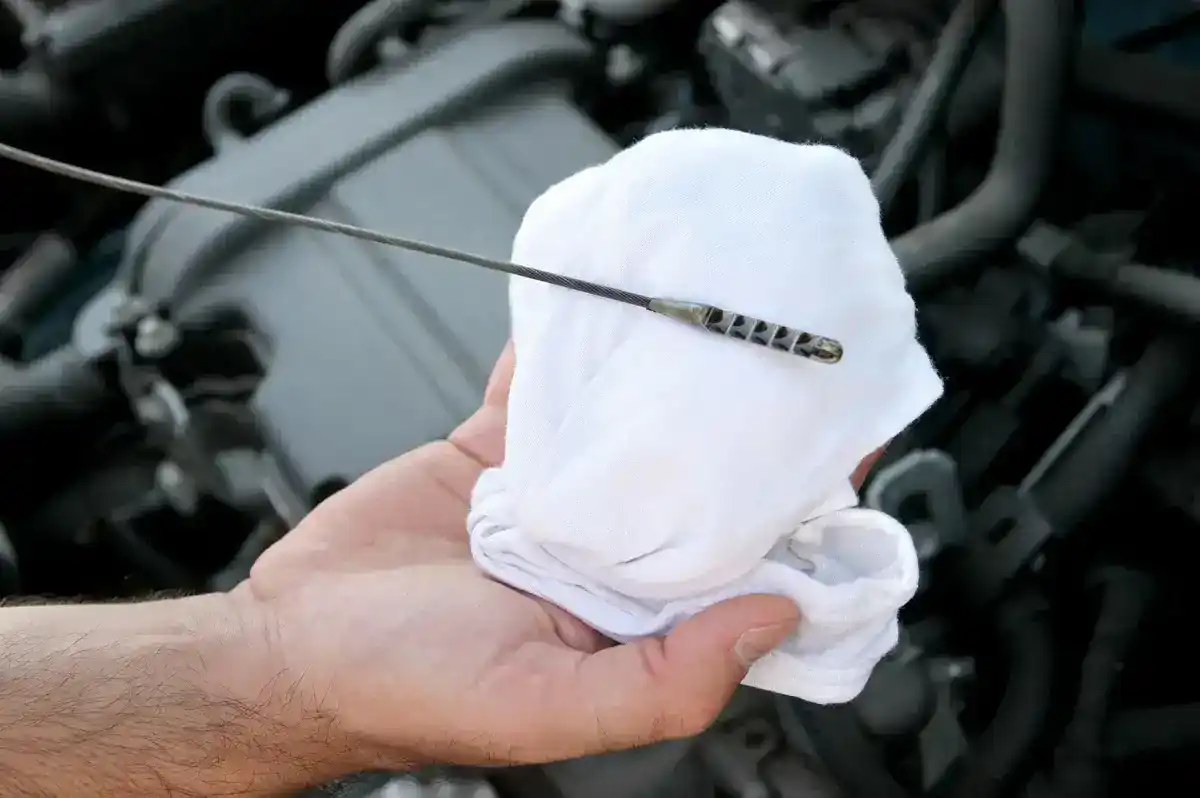
- Dipstick bikes: wipe, insert (often not screwed in; check manual), pull, and read. It should be between the marks.
- Low level thins oil film and heats parts. High level can foam and leak.
- Color check
- New oil is honey to amber. Used oil goes brown, then dark.
- Dark alone is not bad. Detergent oils clean fast.
- Thick black with sludge strings is a red flag.
- Smell check
- Sharp fuel smell means fuel dilution. This thins oil and hurts film strength.
- Burnt smell hints at high heat or long drains.
- Sweet smell can signal coolant on liquid‑cooled bikes.
- Feel test
- Rub a thin film between fingers. It should feel slick, not watery.
- Grit or metal specs mean wear or dirt in the oil.
- Sticky goo hints at sludge or old oil.
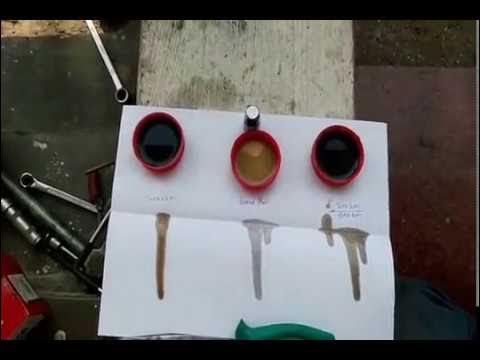
- Paper blot test
- Put one drop of warm oil on a white paper towel.
- Wait 15–30 minutes. Read the rings:
- Dark even center with a light brown halo is normal use.
- A wide pale ring outside the spot points to fuel dilution.
- Soot clumps or no spread suggest oxidation or sludge.
- Milky clouds hint at coolant.
- Top‑up or change
- If level is low, add the right grade and spec. Stop at the upper mark.
- If tests show fuel, grit, or burnt smell, plan a change soon.
- When in doubt, follow the manual. Short trips and heat need shorter intervals.
That is how to check engine oil quality in bike at home with no fuss. I do this before long rides and after heavy traffic weeks.
How to Stop Car from Burning Oil (2026) – Causes, Repairs & Best Solutions
Reading your results: what they mean
Use these signals to decide what to do next.
- Low level: Add the right oil. Look for leaks and smoke.
- High level: Drain to spec. Fuel or coolant may be raising level.
- Milky or creamy oil: Coolant leak risk. Do not ride hard. Get a test.
- Strong fuel smell: Short trips or bad tune. Change oil and fix the cause.
- Burnt odor, very dark thick oil: Overdue change or high heat.
- Sparkly metal: Wear in cams, clutch, or gears. Plan a filter and oil change.
- Foam or bubbles: Overfill or aeration. Check breather and level.
If you ever feel lost on how to check engine oil quality in bike, repeat the steps with care and keep notes.
Advanced checks without draining oil
You can go deeper if you want more proof.
- Used oil analysis kit
Draw a small sample during a change and mail it. Labs report fuel %, wear metals, silicon (dust), viscosity, and additive life. It is the gold standard for long‑term trends. - Infrared thermometer on cases
Not a direct oil test, but rising running temps can point to thin or old oil. - Service data and tune
A rich mix, stuck injector, or many cold starts cause fuel in oil. Fix the root cause so oil stays healthy.
Match your oil to your bike’s needs. Most wet‑clutch bikes need JASO MA or MA2. That helps clutch grip and gearbox life. This ties back to how to check engine oil quality in bike with system thinking, not just a glance.
Common mistakes to avoid when you check engine oil quality in bike
Skip these traps. They cause bad reads or damage.
- Checking on the side stand
- Screwing in the dipstick when the manual says not to
- Wiping with a dirty rag that adds grit
- Mixing random grades or car oil with friction modifiers
- Overfilling past the top mark
- Ignoring the filter at change time
- Long idling and short trips that flood oil with fuel
Each mistake hides the truth when you try how to check engine oil quality in bike. Slow down and do it clean.
Maintenance schedule and oil types for motorcycles
Intervals vary by bike and oil type. Most manuals call for 3,000–6,000 miles for mineral or semi‑syn, and 5,000–8,000 miles for full synthetic under normal use. Time also matters. Change at least once a year if you ride little.
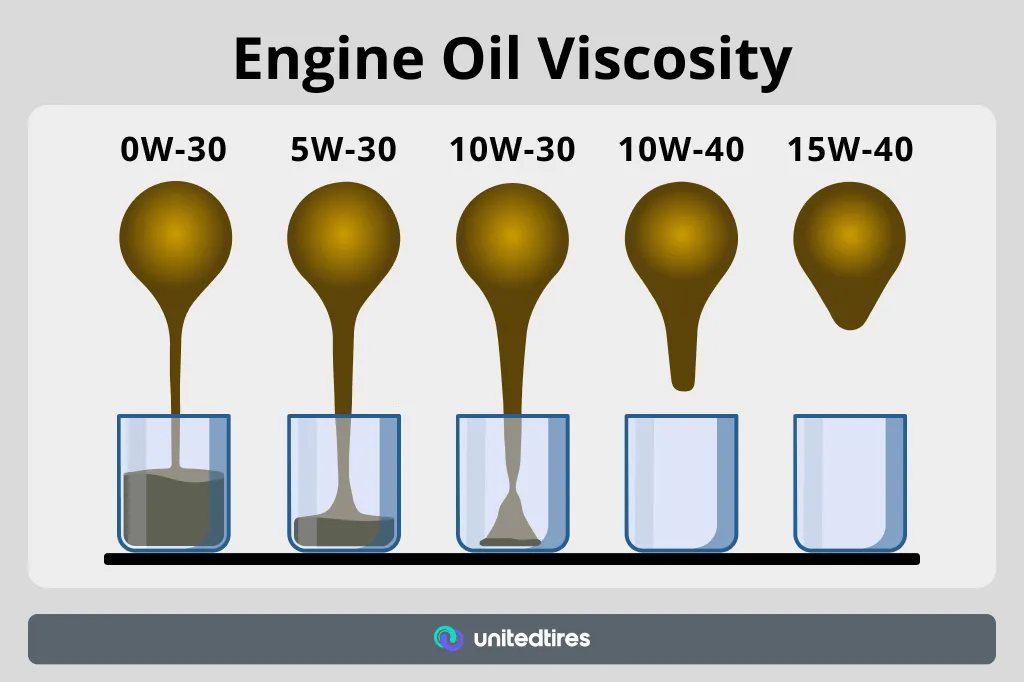
Pick the right spec and grade for your climate. Many bikes use 10W‑40 or 10W‑30 JASO MA2. Avoid “Energy Conserving” car oils in wet‑clutch bikes. Off‑road, hot cities, and short trips all shorten oil life. That is why knowing how to check engine oil quality in bike is so useful between changes.
My hands-on tips from the garage
I learned this the hard way on a city commuter. Many short trips made the oil smell like gas by 1,500 miles. The paper blot test showed a pale outer ring. A change fixed hot idle noise at once.
Now I do three things. I warm the bike at low rpm, not long idle. I log date, miles, and notes after each check. And I use a JASO MA2 10W‑40 that holds up in heat. These small moves make how to check engine oil quality in bike fast, clear, and repeatable.
Frequently Asked Questions of how to check engine oil quality in bike
How often should I check oil quality on my bike?
Check level and basic quality once a month or every 500–1,000 miles. Check sooner after hard rides, track days, or dusty trips.
Is dark oil always bad?
No. Detergent oils turn dark as they clean. Worry if it is thick, sludgy, smells burnt, or shows grit.
Can I use car oil in my motorcycle?
Use only if it meets JASO MA/MA2 and has no friction modifiers. Many car oils can make a wet clutch slip.
What if my oil smells like fuel?
That points to fuel dilution from short trips or a tune issue. Change the oil and fix the root cause soon.
Do I need a lab test?
Not for daily checks. A lab test helps diagnose engine wear, fuel dilution, or dust over time.
What’s the right oil level on a sight glass?
Between the low and high marks with the bike held upright. Let the bike sit a few minutes after shutdown.
Will synthetic oil hide problems?
No. It resists heat better but still shows fuel smell, color change, and feel signs. Your checks still work.
Conclusion
You now know how to check engine oil quality in bike with simple, clear steps. Warm the bike, park level, read the level, and test color, smell, feel, and a blot. Act on what you find, and your engine and clutch will thank you.
Make this a five‑minute habit each month. Keep a small log, and you will spot issues early. Want more tips like this? Subscribe, share your own checks in the comments, and ride with confidence.