
Engine oil turns dark primarily due to normal use and contamination from combustion byproducts, dirt, and soot. As the engine runs, oil absorbs heat, tiny metal particles, and carbon deposits, which gradually darken its color. While dark oil can indicate aging, it doesn’t always mean the oil is no longer effective, but it’s a sign to check the oil level, monitor performance, and follow the manufacturer’s recommended change intervals to ensure proper engine protection.
Recommended Tools for Engine Health
Product Why it’s the Best for Dark Oil Key Feature Blackstone Laboratories Oil Analysis Kit The Ultimate Diagnostic. Tells you if dark oil is soot or metal wear. Mail-in lab test for professional results. Castrol GTX High Mileage 20W-50 Best for High-Heat Engines. Resists thermal breakdown (darkening) longer. Phosphorus & Zinc (ZDDP) for wear protection. K&N Premium Oil Filter Superior Filtration. Captures the particles that turn oil black. High-flow design with heavy-duty construction.
Oil turns dark from heat, combustion byproducts, oxidation, and additive detergents working.
Curious about what causes engine oil to turn dark and if it means trouble? I’ve spent years diagnosing oil issues in daily drivers and performance cars, and here’s the truth: darker oil often means your oil is doing its job. In this guide, I’ll unpack what causes engine oil to turn dark, show you when to worry, and share simple checks and habits that protect your engine.
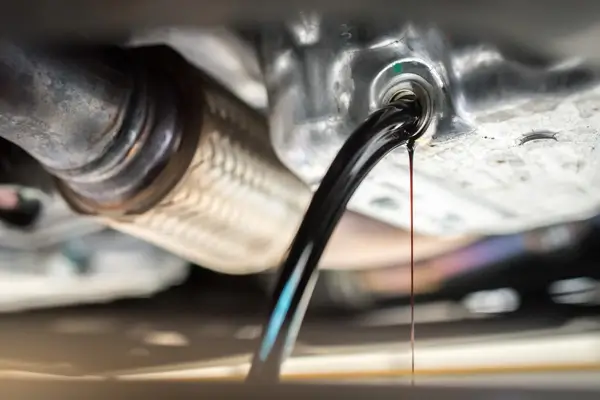
What causes engine oil to turn dark? The core reasons
Engine oil darkens because of chemistry, heat, and what happens during combustion. Most of the time, that color shift is normal. When you ask what causes engine oil to turn dark, start with these key drivers.
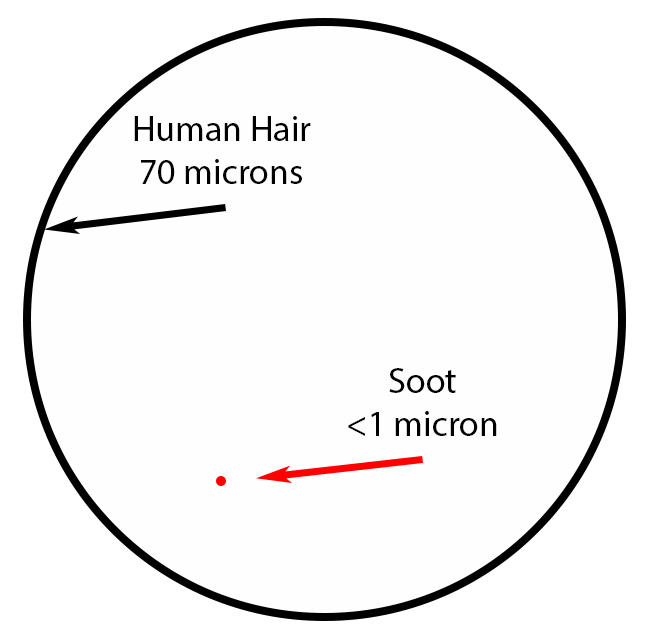
- Soot and carbon from combustion: Tiny soot particles slip past piston rings. Your oil’s dispersants hold them in suspension, which makes the oil look dark.
- Oxidation from heat and air: Hot oil reacts with oxygen. This forms acids and varnish, which deepen color over time.
- Detergents doing their job: Additives scrub deposits from metal. Those particles stay in the oil so they can be caught by the filter.
- Nitration from fuel byproducts: Unburned fuel and nitrogen oxides react in the oil. This can make oil darker and thicker over long intervals.
- Shear and additive depletion: Additives like ZDDP, moly, and friction modifiers change tone as they work and break down.
- Moisture and short trips: Water from cold starts does not burn off on short drives. That can speed oxidation and discolor oil.
From my shop notes, used oil analysis backs this up. Engines with direct injection, EGR, or turbos darken oil faster due to higher soot and heat. So when people ask what causes engine oil to turn dark, the short answer is heat plus byproducts plus additives doing cleanup.
Is it normal when engine oil turns dark? What to check next
Dark oil is often normal, but you still want to verify health. The color alone does not tell the full story. If you wonder what causes engine oil to turn dark, pair the color with these quick checks.
- Smell: Strong fuel smell hints at fuel dilution. A sweet scent can suggest coolant.
- Feel: Rub a drop between fingers. Grit or metal flakes signal wear. A smooth, slick feel is fine.
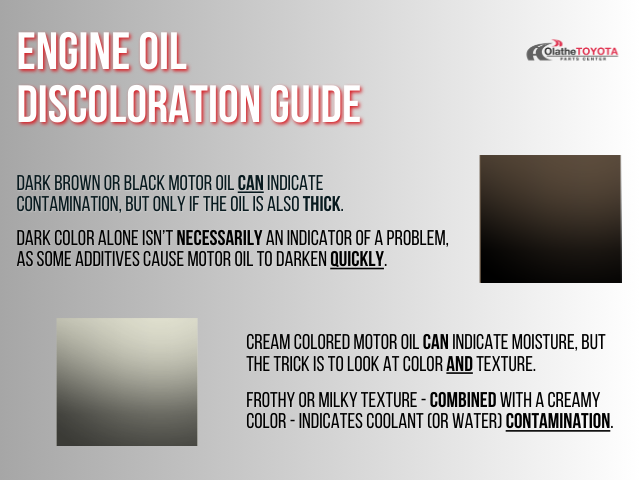
- Look: Milky or tan foam means water or coolant. Jet black but smooth often points to soot in suspension.
- Time and miles: Synthetic oil can darken within 500–1,000 miles and still be healthy.
If in doubt, use a used oil analysis once per year. It measures wear metals, fuel, water, oxidation, and soot. That test answers what causes engine oil to turn dark in your car, not in theory.
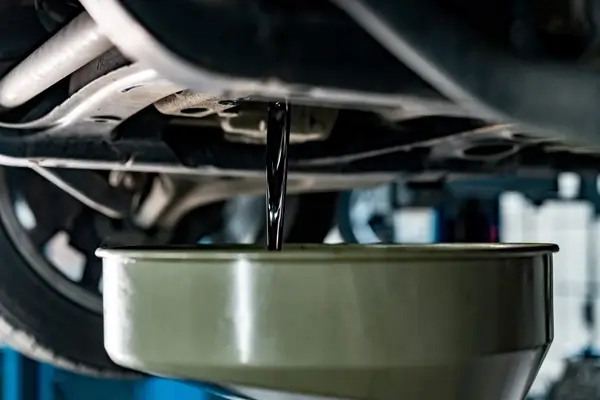
The chemistry behind dark oil, in simple terms
To understand what causes engine oil to turn dark, it helps to know what is inside the bottle. The base oil is like the canvas. The additive pack is the paint set.
- Base oils: Conventional, synthetic blend, or full synthetic. Synthetics handle heat and oxidation better.
- Detergents and dispersants: Keep engines clean and hold dirt in the oil. This alone makes oil look darker, faster.
- Anti-wear and anti-oxidants: ZDDP, moly, and phenols protect parts and slow aging. These can tint the oil as they react.
- Viscosity modifiers: Help oil flow well when cold and stay thick enough when hot.
When people ask what causes engine oil to turn dark, detergents and dispersants are key. They suspend junk so parts stay clean. Clean parts and dark oil beat bright oil and dirty parts every time.
Oil Change Time vs Mileage: Signs You’re Overdue | 3,000 vs 5,000 vs 10,000 Miles Explained
Driving factors that make engine oil darken faster
Two cars with the same oil can darken at different rates. That is why what causes engine oil to turn dark depends on how and where you drive.
- Short trips and cold starts: Oil never heats up enough to boil off water and fuel.
- Towing, hot climates, track days: High heat speeds oxidation and thickening.
- Direct injection and turbos: More soot and higher temps make oil darken fast.
- Dusty roads: More dirt load for the filter and dispersants to handle.
- Worn PCV systems: Extra blow-by pushes more soot into the crankcase.
Real example: A turbo SUV I service turns oil black by 800 miles after a track weekend. Lab reports still show normal wear metals. So when owners ask what causes engine oil to turn dark on their car, I point to heat and soot from how they drive.
How to check and respond when your oil looks very dark
Do not panic. Use a simple process. This is how I coach customers who ask what causes engine oil to turn dark and what to do next.
- Check the dipstick on level ground. Wipe, reinsert, and read again.
- Inspect color, smell, and feel. Note any milkiness or metallic sparkle.
- Review service history. How many miles and months on the oil and filter?
- Top up if low. Use the correct spec from the owner’s manual.
- Change the oil and filter if intervals are up or signs are bad.
- Consider used oil analysis for a trend. One test is a snapshot. Three tests tell a story.
Extra tips:
- Use a high-quality filter with strong dirt-holding capacity.
- Follow severe service intervals if you make many short trips.
- Fix small leaks and PCV issues early. They add to what causes engine oil to turn dark.
20w50 vs 20w60– Viscosity, Protection & Performance Compared
Red flags: When dark oil points to a real problem
Most dark oil is fine. But some signs need fast action. These are the cases where what causes engine oil to turn dark is more than normal soot.
- Milky or tan oil: Coolant leak or condensation. Check for rising coolant loss.
- Strong fuel smell and thin feel: Fuel dilution. Could be short trips, stuck injector, or rich tune.
- Metallic shimmer: Wear. Think bearings, cams, or timing parts.
- Fast level drop: Consumption. Valve seals, turbo seals, or ring wear.
- Sludge on the cap: Moisture and long intervals. Clean out with proper service and shorter runs.
If you see any of these, change the oil and filter now. Then diagnose the root cause.
My hands-on lessons about what causes engine oil to turn dark
A few stories from my bay may help. These show how what causes engine oil to turn dark can vary.
- Daily commuter, short hops: Oil turned dark in 600 miles and smelled like fuel. We switched to a lower volatility synthetic and cut the interval. We also advised a weekly 20-minute highway run. The smell went away.
- Track-day turbo: Oil went black fast but lab tests were clean. We moved to a higher HTHS oil and a premium filter. Wear stayed low even after events.
- Older V8 with blow-by: Oil darkened and formed varnish. A PCV service and ring soak helped. With more frequent changes, color still darkened, but varnish stopped growing.
Mistakes to avoid:
- Judging oil health by color alone.
- Extending intervals without data.
- Using a bargain filter on a hot-running engine.
Pro tip: If you keep asking what causes engine oil to turn dark on your car, spend a little on analysis once. It is the cheapest peace of mind you can buy.

Frequently Asked Questions of What causes engine oil to turn dark?
Is dark engine oil always bad?
No. Dark oil often means detergents are suspending soot and deposits. Check smell, feel, and service interval before you worry.
How fast should new oil turn dark?
It can start darkening within a few hundred miles, especially on direct-injection or turbo engines. That can be normal if other signs look healthy.
Can synthetic oil still turn dark quickly?
Yes. Synthetic resists breakdown better, but it still cleans and suspends soot. That cleaning can darken the oil fast while still protecting well.
Does idling make oil darker?
Long idling increases soot and fuel dilution. That speeds darkening and can thicken or thin the oil over time.
What color is a warning sign?
Milky or chocolate milk color points to water or coolant. Shiny metallic specks or a strong fuel smell also need fast attention.
Will a better filter keep oil lighter?
A good filter can hold more dirt and protect better, but the oil may still look dark. Color is not a measure of filtration quality.
Can fuel type affect oil color?
Yes. High sulfur or poor-quality fuel adds to soot and acids. That can darken oil and raise oxidation and nitration.
Conclusion
Darker oil does not equal danger. In most cases, what causes engine oil to turn dark is heat, soot, and detergents doing hard work to keep parts clean. Use simple checks, follow a smart interval, and confirm with used oil analysis if you want proof.
Take action today: check your dipstick, note the smell and feel, and set a maintenance plan that fits your driving. If this helped you understand what causes engine oil to turn dark, share it with a friend, subscribe for more simple car care tips, or drop your questions in the comments.