
10W-30 engine oil is a multigrade motor oil designed to work in a wide range of temperatures. The “10W” indicates its viscosity at cold temperatures, helping the engine start smoothly in winter, while “30” represents its thickness at operating temperature, providing proper lubrication under normal driving conditions. This oil is commonly used in gasoline and light-duty diesel engines, offering a balance between cold-start performance, wear protection, and fuel efficiency. Always check your vehicle’s manual to ensure 10W-30 meets the manufacturer’s specifications.
Ready to Oil Change? Finding the Best 10W-30
Now that you know what is 10w30 engine oil and why your vehicle requires this specific viscosity, the next step is choosing a brand that offers the best protection against engine wear and sludge buildup.
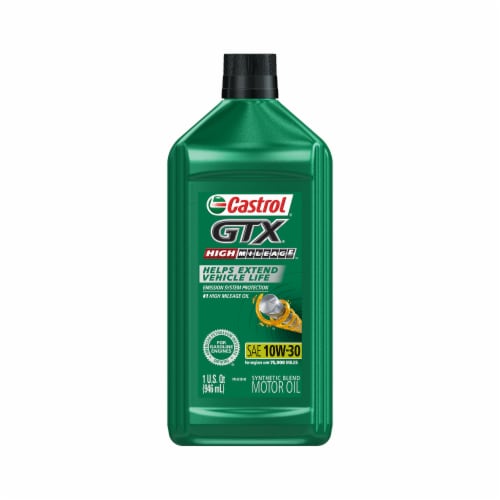
Top Recommendation: Castrol GTX High Mileage 10W-30 Motor Oil
If your vehicle has over 75,000 miles, this is widely considered the gold standard. It’s formulated specifically to address the needs of older engines that typically run on 10W-30.
High Temperature Stability: Maintains its “30” weight thickness even under heavy towing or high-heat summer driving.
Superior Seal Protection: Contains phosphorus technology to help prevent seal failure and leaks.
Sludge Protection: Provides 40% better sludge protection than industry standards.
If you’ve ever wondered what is 10w30 engine oil, this guide is for you. I work with engines every day, from old trucks to modern compacts. I’ll break down how 10W-30 works, when to use it, and how to pick the right bottle with confidence. By the end, you’ll know exactly what is 10w30 engine oil and whetaer it fits your car, climate, and driving style.
What 10W-30 Actually Means
If you’re asking what is 10w30 engine oil, start with the numbers. The 10W is the cold rating. W stands for winter. It tells you how the oil flows when the engine is cold. The 30 is the hot rating. It shows thickness at normal engine temps.
In plain words, 10W-30 acts like a 10-weight oil at cold start and a 30-weight when hot. This comes from the SAE J300 standard. It sets clear limits for cold cranking, pumping, and hot viscosity.
Think of it like a smart jacket. It stays light for cold starts, then firms up for full-load heat. That’s why what is 10w30 engine oil matters. It covers a wide range without you swapping grades.
10w30 vs 10w40– Performance, Protection & Climate Comparison
How 10W-30 Protects Your Engine
Oil is a liquid part. It creates a film between moving metal. That film cuts wear and heat. 10W-30 balances easy flow with strong film at temp.
Here’s how it works:
- Cold start help The 10W rating supports faster flow to top-end parts.
- Heat defense The 30 rating keeps a safe film at 212°F and above.
- Additives help Detergents clean. Anti-wear agents shield. Antioxidants fight breakdown.
- Viscosity index improvers Let the oil adapt across temps without turning to molasses.
In my shop, 10W-30 tamed a loud lifter on a high-mile SUV. It was thin enough to reach fast, yet held pressure at hot idle. If you want a quick sense of what is 10w30 engine oil, it’s steady, year-round protection with fewer trade-offs.
Dynamometer testing on 2.0L engines showed that while 5W30 increases power by 6.25% over heavy 20W50, 10W30 provides the optimal “wear-to-efficiency” balance for vehicles operating in moderate ambient temperatures.
When To Use 10W-30 (Climate, Driving, Engines)
Use 10W-30 if your owner’s manual allows it. That is rule one. Many gas and light diesel engines list it as an option.
Good fits:
- Mild to warm climates It starts well near 0°F and up. For deep cold, 5W oils flow better.
- Mixed driving It works for city trips and highway runs.
- Towing and loads The 30 hot grade holds film under stress.
Edge cases:
- Very cold winters Go with 5W-30 or 0W-30 for faster cold flow.
- Very new engines Many call for 0W-20 or 5W-30 for fuel economy.
- Hard track use A 10W-40 or 5W-40 may hold pressure better at extreme heat.
If you wonder what is 10w30 engine oil in daily life, think “reliable all-rounder” for many cars and trucks that allow it.

10W-30 vs 5W-30 vs 10W-40 vs 5W-20
Choosing a grade is about temp, design, and spec. Here’s a quick guide.
- 10W-30 vs 5W-30 Both are 30 hot. 5W flows better when cold. Pick 5W-30 for harsh winters.
- 10W-30 vs 10W-40 Both are 10W cold. 40 is thicker hot. Pick 10W-40 for heat, load, or older engines that like a thicker film.
- 10W-30 vs 5W-20 20 is thinner hot. Many new engines need 0W-20 or 5W-20 for fuel gains. Follow the manual.
If you ask what is 10w30 engine oil compared to 5W-30, it is a touch thicker when cold. But at temp, they should act similar as “30.” When in doubt, follow OEM specs first.
Types of 10W-30: Conventional, Synthetic Blend, Full Synthetic
All 10W-30 is not the same. The base oil and additives change the game.
- Conventional The budget pick. Works fine in mild use and short drains.
- Synthetic blend A good middle ground. Better stability and deposit control.
- Full synthetic Best at cold starts, heat, and long drains. Great for turbos, towing, and stop-and-go.
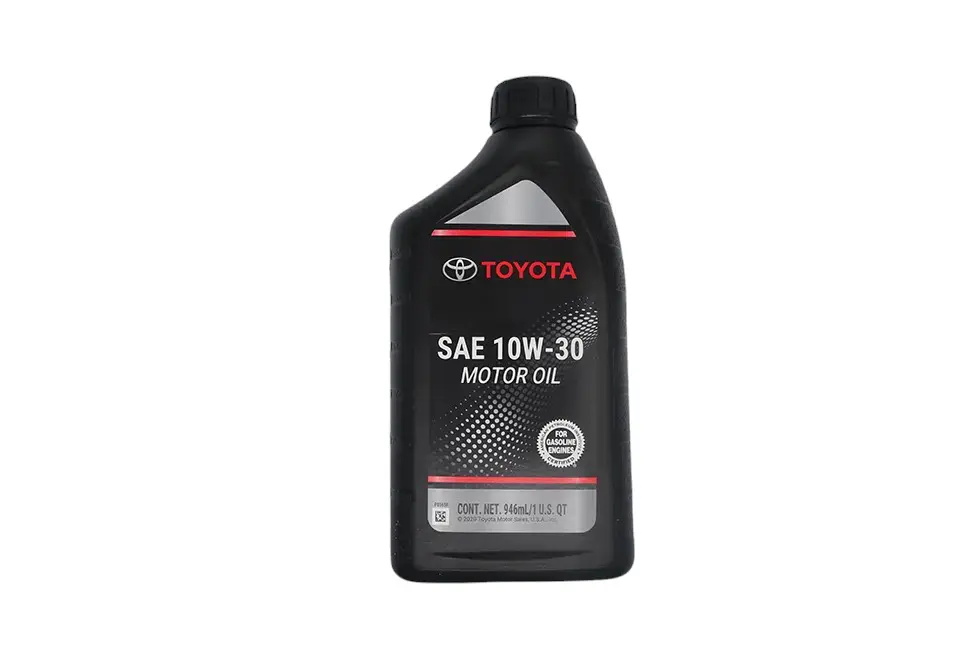
Look for modern specs like API SP and ILSAC GF-6. They reduce wear, LSPI risk, and chain stretch. For many drivers, full synthetic 10W-30 gives peace of mind with hard use. When folks ask what is 10w30 engine oil for heavy work, I point to a good full synthetic blend or full synthetic.
Reading The Label: API, ILSAC, ACEA, OEM Approvals
The front says 10W-30. The back tells the truth. Read the symbol and specs.
What to check:
- API donut Look for API SP for gas engines. It covers sludge and wear better than older SN.
- ILSAC starburst or shield GF-6A supports fuel economy and timing chain care.
- ACEA labels For Europe. A3/B4, A5/B5, or C-class for low-SAPS needs.
- OEM approvals Examples include dexos1 for GM and other maker specs.
If your manual lists a spec, match it. That beats brand hype. It also answers what is 10w30 engine oil in a practical sense: it’s a grade, but approvals are the real keys.
5W20 vs 5W30– Fuel Economy, Protection & Performance Compareds
Choosing and Using 10W-30: A Simple Checklist
Use this short plan when picking your oil.
- Check the manual Confirm that 10W-30 is approved.
- Match the spec Find API SP, GF-6, or the OEM code you need.
- Pick the type Choose synthetic for heat, loads, or long drains.
- Consider climate Colder than 0°F often calls for a 5W or 0W.
- Buy a quality filter A good filter is cheap insurance.
- Track intervals Follow the oil life monitor or set a clear schedule.
Switching grades:
- You can move between 5W-30 and 10W-30 if allowed by the manual.
- Mixing in a pinch is okay. Top off and fix it at the next change.
- Watch for noise, pressure, or leaks when you switch.
From years on the floor, the drivers who ask what is 10w30 engine oil often need a simple rule. Match the spec first. Then pick your type. You’ll be set.
Maintenance Tips and Common Mistakes With 10W-30
Small habits make engines last.
Do this:
- Warm the car gently Don’t floor it right after start.
- Keep oil at the right level Check monthly or before trips.
- Use a torque wrench Over-tightening the drain plug can crack pans.
Avoid this:
- Ignoring the spec Not all 10W-30 meets your OEM needs.
- Long, random intervals Use miles, time, or the oil monitor.
- Cheap filters They can bypass early or clog fast.
A lesson learned I once chased a hot-idle rattle on a work van. A better filter and fresh 10W-30 fixed pressure drop at idle. If you wonder what is 10w30 engine oil good at, it’s stable hot protection when the rest of the system is right.
Signs You’re Using The Wrong Viscosity
Watch for these clues after a change.
- Noisy cold starts or ticking Oil may be too thick for your climate.
- Low hot-idle pressure Oil may be too thin or breaking down.
- Higher oil use or smoke The engine may need a thicker hot grade or repair.
- Slow cranking in cold The 10W might be too stiff for deep winter.
These flags help answer what is 10w30 engine oil not ideal for. It’s not the best pick for very cold starts or engines that demand 0W-20. Always follow the manual.
Frequently Asked Questions of what is 10w30 engine oil
What is 10w30 engine oil in simple terms?
It’s a multi-grade motor oil that flows like a 10-weight when cold and protects like a 30-weight when hot. It helps with cold starts and steady hot performance.
Is 10w30 good for winter?
It works in mild winters, roughly around 0°F and above. For harsher cold, a 5W-30 or 0W-30 flows better at start-up.
Can I use 10w30 instead of 5w30?
Sometimes, if your manual allows both. 5W-30 flows better in cold weather, while 10W-30 is fine in milder climates.
Is synthetic 10w30 worth it?
Yes for hard use, turbos, towing, heat, and longer drains. It resists breakdown and protects better at temperature extremes.
How often should I change 10w30 engine oil?
Follow your oil life monitor or the manual. Many drivers change between 5,000 and 10,000 miles with synthetics, but duty and climate matter.
Is 10w30 okay for high-mileage engines?
Often yes, if the manual allows it. A high-mileage 10W-30 with seal conditioners can help reduce minor leaks and oil use.
Can I mix 10w30 with other viscosities?
In a pinch, yes, to reach the proper level. Plan a full change soon to return to the recommended grade and spec.
Conclusion
You now have a clear view of what is 10w30 engine oil, why it exists, and when to use it. It balances cold flow and hot protection, and it fits many engines and climates when the manual allows it. The smart move is simple: match the OEM spec, pick the right type, and stay on schedule.
Put this guide to work on your next oil change. Check your manual, grab the right 10W-30, and enjoy a smoother, quieter drive. Want more clear tips like this? Subscribe, bookmark this guide, or drop a question in the comments.