
Engine oil should be between the “MIN” and “MAX” (or “LOW” and “FULL”) marks on the dipstick, ideally close to the maximum line without exceeding it. Oil below the minimum mark can lead to poor lubrication and engine damage, while overfilling above the maximum mark can cause foaming and pressure issues. Always check the oil on a level surface with the engine off and cool, then add small amounts if needed to reach the proper level.
The “DIY Oil Check” Essentials
If you find that your oil is low, you don’t necessarily need a mechanic. You just need the right tools to top it up without making a mess in your engine bay.
Must-Have Tool Why You Need It Best Feature Hopkins FloTool Funnel No-Mess Topping. Prevents oil from spilling on a hot engine block. Integrated handle and “no-roll” design. Mechanix Wear Original Gloves Heat & Grime Protection. Keeps your hands clean from engine soot. Breathable TrekDry material. AstroAI Digital Pressure Gauge The “Full Check” Buddy. While the hood is open, check your tires too. Backlit LCD for dark garages.
If you want a car that runs smooth and lasts long, you need to know what level should oil be on dipstick. I’ve checked hundreds of cars and fixed many oil mistakes. In this guide, I’ll show you how to read a dipstick with confidence, why the right level matters, and what to do if the reading looks off. Stick with me, and you’ll never guess again.
Dipstick Oil Level Too High– Symptoms, Problems & Solutions
What the dipstick marks mean and how they vary
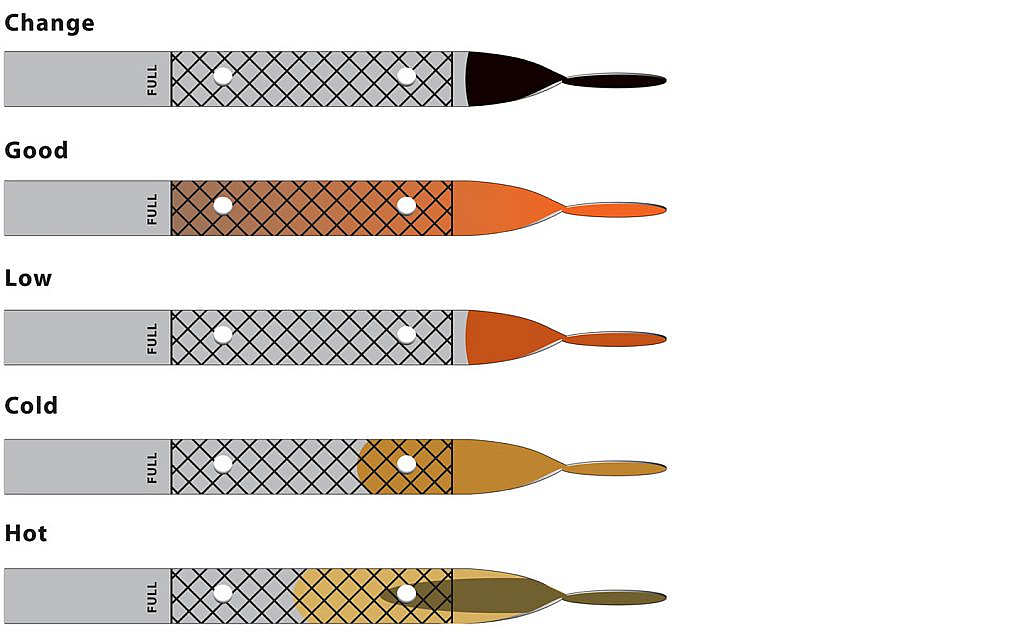
Most dipsticks have two marks. One says low or add. The other marks full or max. The safe range sits between these two points. Many sticks also have crosshatch or dots.
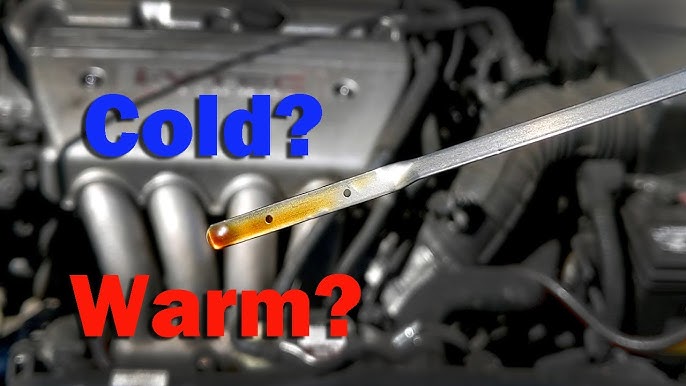
Some cars read best when warm. Others prefer a cold check. Some dipsticks twist or have odd shapes. Always use your owner’s manual if in doubt. It tells you what level should oil be on dipstick for your model.
Step-by-step: how to check oil level the right way
Follow this simple process for a clean, clear reading.
- Park on level ground. A slope skews the result.
- Let the engine rest. Five to ten minutes is fine after a drive.
- Pull the dipstick and wipe it with a clean rag.
- Insert it all the way. Pull it back out steady.
- Read the level at eye height in good light.
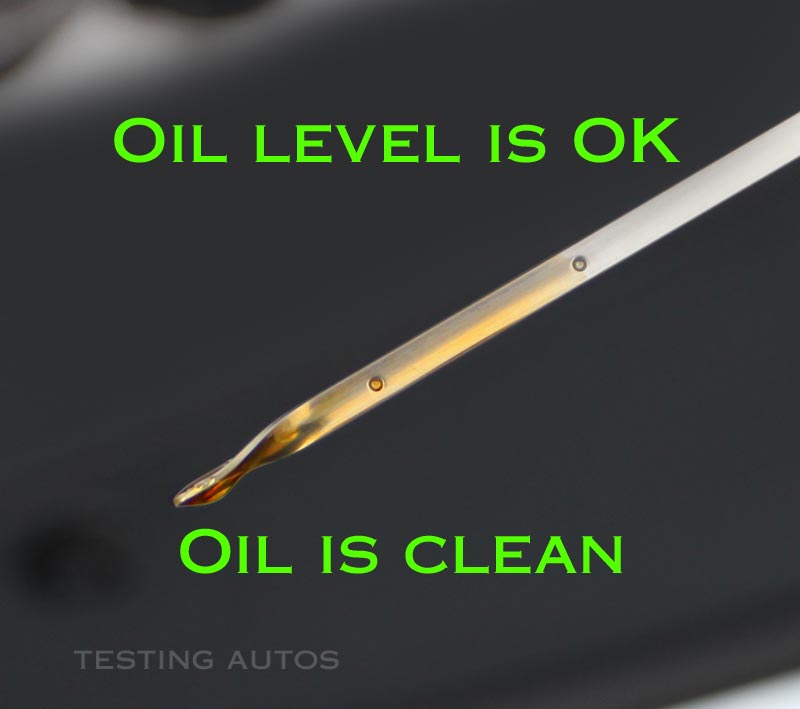
Aim for a level near the top mark but not over it. This is the best answer to what level should oil be on dipstick for most cars. If you see streaks, recheck once more.
What level should oil be on dipstick in real-world conditions
Real life is messy. Here is how to handle it.
- Cold morning check: Oil sits lower. A reading at mid to high is fine.
- After a highway run: Oil films up and looks higher. Let it sit a few minutes.
- On a slight hill: The reading can lie. Move to flat ground and recheck.
- Right after topping up: Wait a minute. Then recheck for a stable mark.
If you ask what level should oil be on dipstick when hot or cold, the safe rule holds. Keep it in the safe zone. Stay just under full.
Oil Dipstick Reading Unclear –Causes, Common Mistakes and Expert Advice
Why the exact level matters more than you think
Too low is risky. Oil pressure can drop. Metal rubs metal. Heat builds fast. Wear goes up.
Too high is risky too. The crank can whip the oil. It foams and aerates. Pressure can spike. Seals can leak. You might see blue smoke. Catalytic converters can suffer.
In short, what level should oil be on dipstick is not a tiny detail. It protects your engine and your wallet.
How much oil to add based on the dipstick
The space between low and full is usually about one quart. Some engines use a bit less or more.
- If the level is at low: Add one quart, then recheck.
- If the level is halfway: Add half a quart.
- If it sits just below full: Add a small splash. Recheck after a minute.
Pour slow with a funnel. Wipe spills. Check again to confirm the new mark. This is the most practical way to hit what level should oil be on dipstick without guessing.
Reading odd dipsticks, tricky engines, and common mistakes
I have seen every mistake in the book. Here are the big ones to avoid.
- Not seating the dipstick fully. This gives a false high reading.
- Reading a streaky film. Always wipe and recheck twice.
- Checking on a slope. It can read way off.
- Overfilling out of fear. Stop at the safe zone.
- Ignoring the manual. Some engines want a hot check. Some want cold.
If your stick has dots or crosshatch, aim near the top of the pattern. That is still what level should oil be on dipstick.
Hot vs. cold checks: which one should you trust?
I trust a warm, rested engine most. Drive a few miles. Park flat. Wait five to ten minutes. Then check. Oil drains back. The reading is stable.
If the manual says check cold, do that instead. Many modern cars allow both. In either case, keep it in the safe zone. That is the best way to meet what level should oil be on dipstick every time.
Best Universal Oil Dipstick (2026) – Accurate Fits for Multiple Engines | Tested & Reviewed
What the oil itself can tell you at a glance
While you check the level, also note:
- Color: Fresh oil looks honey to amber. Dark is normal with miles.
- Texture: Grit can mean wear or dirt. Change oil and filter soon.
- Smell: Fuel smell can mean short trips or a problem. Keep an eye on it.
- Milky look: Could be coolant mixing. Get it checked at once.
These quick signs can save a headache. You learn a lot while you confirm what level should oil be on dipstick.
Personal notes from the bay: small habits that pay off
As a tech and long-time DIYer, I learned this fast. Small habits save big money.
- Keep a clean rag and a funnel in the trunk.
- Log checks with dates and miles on your phone.
- Check level every second fill-up on older cars.
- After each oil change, confirm the level yourself.
I once saw a sedan overfilled by two quarts after a quick-lube stop. The owner asked what level should oil be on dipstick. We drained the excess. The smoke cleared. The engine ran smooth again. Simple checks matter.
Quick PAA-style answers
Is it okay if oil is a little above full?
No. A small overfill can foam and stress seals. Drain to the safe zone.
How often should I check my dipstick?
Monthly is fine for most. Check more often if the car is older or leaking.
Can low oil cause a no-start?
It can prevent a start if the engine seized. More often, it causes noise and wear first.
Maintenance timing and oil types that help accurate readings
Match oil to your climate and car. Use the grade on the cap or in the manual. Common grades are 0W-20, 5W-30, or 5W-40.
Follow the oil life monitor or a set mile range. Short trips need shorter intervals. A clean filter also keeps the level stable on the stick.
Fresh oil drains back faster and reads clean. That makes it easier to confirm what level should oil be on dipstick without doubt.
What level should oil be on dipstick: summary checkpoints
Use these quick points when you check.
- Park flat and wait a few minutes after a drive.
- Wipe, insert, and read twice in good light.
- Aim just under full, within the safe marks.
- Top off in small steps. Recheck after each pour.
- If unsure, follow the manual for hot or cold checks.
These steps nail what level should oil be on dipstick in a simple, repeatable way.
Frequently Asked Questions of what level should oil be on dipstick
How far between low and full on a dipstick?
Usually about one quart. Some engines vary, but one quart is a common rule.
What if the oil looks foamy on the dipstick?
That can mean overfill or aeration. Let the car rest and recheck; if still foamy, drain to the safe mark.
Can I check oil right after shutting off the engine?
Yes, but wait five to ten minutes. This lets oil drain to the pan for a true reading.
Do I check oil with the engine running or off?
Always off. A running engine throws oil around and will not give a valid reading.
Why does my reading change day to day?
Temperature, parking slope, and drain-back time can shift the mark. Use the same process each time for steady results.
What if I overfilled by a small amount?
Do not drive far. Use an extractor or drain a bit from the plug until it sits in the safe zone.
Conclusion
Keep the oil in the safe zone, just under full, and your engine will thank you. Use the same simple steps each time, and you will master what level should oil be on dipstick without doubt. Small, steady habits add years to your car.
Ready to take control of your maintenance? Save this guide, check your dipstick today, and share your results or questions in the comments.