
Mobil 1 synthetic motor oils are engineered to reduce engine friction and maintain optimal lubrication, which can help your engine run more efficiently. While individual results vary, many drivers report improved fuel economy compared to conventional oils, especially under extreme temperatures or high-performance conditions. Consistently using Mobil 1 and following manufacturer recommendations may contribute to better mileage over time
Will Mobil 1 Improve Fuel Economy? Here’s What Actually Happens After You Switch
Last road trip before the long holiday weekend, I noticed my mpg had been slowly creeping down. It’s one of those subtle things that gnaws at you while you’re cruising on the highway. We all eventually head to Google with the same question: “Can a simple oil change actually save me money at the pump?” There is a quiet, almost desperate hope that spending a little extra on high-quality synthetic oil might be the “magic fix” to squeeze a few more miles out of every tank.
In this post, I want to cut through the marketing noise. I’ll share what really happens under the hood when you switch to a premium oil like Mobil 1 in 2026, where the gains actually come from, and how you can track if it’s working for your specific car. It isn’t a miracle cure, but understanding the science behind the friction can change how you maintain your vehicle for the better.
Can Switching to Mobil 1 Actually Improve Your MPG?
Yes, but “improve” needs a bit of context. Most drivers see a modest gain of 1–3% in fuel economy after switching from conventional oil to Mobil 1 full synthetic. It isn’t magic. The improvement comes from reduced internal engine friction, which means your engine doesn’t work as hard to turn. Real-world results vary by your vehicle’s age, your driving habits, and the oil you were using before the switch.
What the Science Says About Synthetic Oil and Fuel Economy
At a molecular level, full synthetic oil is much more uniform than conventional oil. Because it is engineered from high-quality base oils, it has a superior viscosity index. This means it stays stable even when your engine gets scorching hot or stays freezing cold.
Think of it this way: conventional oil can be thick and sluggish, creating drag on moving parts. Synthetic oil flows more freely. Because it meets strict ILSAC GF-6 standards, it provides excellent shear stability, ensuring the oil doesn’t break down under pressure. Studies by the SAE and EPA consistently show that when an engine has less internal drag, it uses less energy to run. By reducing this resistance, your engine can operate more efficiently, which translates directly into those small but measurable gains at the pump.
Mobil 1 Extended Performance 0W-20 Review — Real Engine Tests, Oil Life | Worth It?
The Friction Factor — Why It Matters More Than You Think
Engine friction is the hidden killer of your gas mileage. Inside your engine, thousands of parts are moving at high speeds. Even with oil, there is constant metal-on-metal contact. Mobil 1 uses a sophisticated additive package designed to coat those surfaces and keep friction to a minimum.
Think back to that first cold crank on a January morning. Conventional oil struggles to flow when it’s freezing, forcing your engine to fight through thick sludge for the first few miles. Synthetic oil, however, flows almost instantly. This reduces the energy wasted during those critical first minutes of a drive. By minimizing friction at both cold starts and high operating temperatures, the oil allows your engine to perform its job with significantly less effort, ultimately saving you fuel.
How Much MPG Improvement Can You Realistically Expect From Mobil 1?
Realistically? It falls somewhere between “barely noticeable” and “hey, that is actually something.” Most independent tests and owner reports put the fuel economy gain around 1–3%, though it can occasionally hit 5% in older engines with heavy sludge buildup. On a car that usually gets 30 mpg, that is just 0.3 to 1 extra mile per gallon. These are small, real numbers that add up over time.
New Engine vs. High-Mileage Engine — The Results Are Different
If your car is brand new, don’t expect a miracle. Modern engines are already built to be incredibly efficient from the factory, so the jump in mpg will be marginal.
However, if your car has seen more miles than your ex’s excuses, you might see a bigger benefit. High-mileage engines often have more internal friction and deposits. Switching to a product like Mobil 1 High Mileage can help clean out those old gums and reduce the drag that has been slowing your engine down for years. It isn’t just about saving fuel; it’s about giving an older engine the smooth flow it needs to breathe again.
City Driving vs. Highway — Where You’ll Feel the Difference Most
Think about your daily commute. If you spend your time in stop-and-go city traffic, you will notice the impact of synthetic oil more. Why? Because city driving involves constant cold starts and varying engine speeds. Because synthetic oil maintains better flow than conventional oil, your engine wastes less energy during those frequent warm-up cycles.
On the flip side, sustained highway driving is different. While the improvement is less dramatic during a long, steady cruise, it is still there. When I took my car out for a weekend road trip, I found that the engine felt “lighter” and more responsive at high speeds. It’s the difference between running a sprint and a marathon; synthetic oil keeps things lubricated under the steady heat of a long haul, which keeps your efficiency steady.
What Viscosity Grade Should You Use for Best Fuel Economy?
Choosing the right viscosity is the most important step for your engine’s health and your wallet. Always check your owner’s manual first—that is the law of the land.
- Follow the manual: Never go thinner than your manufacturer recommends just to chase an extra mile.
- The “W” rating: A lower “W” number (like 0W-20) means the oil flows better during a cold start, which is when your engine faces the most friction.
- Efficiency: Thinner oils, such as 0W-20, generally offer the best fuel economy because they create less drag on moving parts compared to thicker grades like 5W-30.
Just remember, the goal is balance. You want enough protection to keep your engine running for a decade, not just the thinnest oil you can find for a minor bump in mpg.
Mobil 1 vs. Conventional Oil — A Real-World Comparison
Conventional oil works just fine for getting you from A to B. Nobody is saying otherwise. But compared to Mobil 1 full synthetic, it breaks down faster under extreme heat and flows sluggishly during a cold morning. The fuel economy gap isn’t huge on paper, but over 15,000 miles, the difference in engine protection and efficiency really starts to show up in your wallet.
Side-by-Side: What Changes When You Switch
When I finally made the switch, I found it helpful to look at how these oils actually compare in the real world:
- Cold start performance: Synthetic oil flows almost instantly, while conventional oil can feel thick like syrup when it is below freezing.
- Oxidation resistance: Synthetic resists breaking down under heat, keeping your engine cleaner for much longer.
- Change interval: You can usually go twice as long between changes with high-quality synthetic.
- Fuel economy impact: Expect a consistent, though small, improvement as your engine deals with less internal drag.
- Price per quart: Yes, synthetic costs more upfront, but it pays for itself by reducing the total number of oil changes you need annually.
The “I Already Use Synthetic” Scenario — Does Brand Matter?
If you are already running a full synthetic, you might wonder if switching to Mobil 1 is worth the effort. To be honest, your gains here will be much smaller. Most modern synthetic oils meet the same basic API and ILSAC certifications, which sets a solid baseline for protection.
However, I have found that Mobil 1’s specific additive chemistry—designed to combat engine friction—does feel a bit more refined in older engines. If you are already using a quality synthetic, don’t expect a sudden jump in mpg. Instead, think of it as a lateral move that prioritizes long-term engine health and stability over a quick boost in fuel efficiency. Keep your expectations grounded, and you won’t be disappointed.
Which Mobil 1 Formula Is Best for Fuel Economy?
For most drivers focused on fuel economy, Mobil 1 Advanced Fuel Economy (AFE) in 0W-20 or 0W-16 is the obvious pick—it is literally engineered for this. But if your engine requires 5W-30 or you are running a high-mileage vehicle, the standard Mobil 1 ESP or Extended Performance lines still deliver solid efficiency gains without sacrificing the vital protection your engine needs.
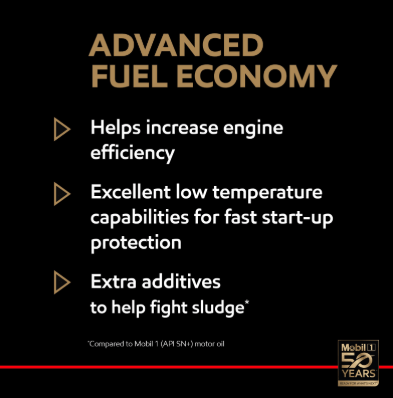
Mobil 1 Advanced Fuel Economy (AFE) — Built for This Job
If you want to squeeze out every drop of efficiency, AFE is the go-to. It uses a low-viscosity formula packed with advanced friction modifiers. During a long weekend trip, I noticed my engine felt incredibly smooth, almost like it was gliding through the gears. It is fully compatible with most modern engines, but a quick note: always check your manual. If your car isn’t rated for such thin oil, don’t force it. Using the wrong grade is a recipe for a bad day.
Mobil 1 Extended Performance — Longer Intervals, Fewer Changes
Can you really go 20,000 miles on one change? While it sounds like marketing fluff, the engineering is legitimate. Fewer oil changes mean less time in the shop and less money spent on maintenance. Indirectly, this helps your fuel economy by keeping your engine cleaner for longer periods. It is perfect for high-mileage commuters who are tired of tracking every single mile on their calendar. You get peace of mind and one less chore to worry about.
Can You Mix Different Types of Mobil 1 Oil? – What Happens If You Do | Safe Methods
Mobil 1 High Mileage — The Overlooked Option
If your daily driver is an older model, don’t ignore this one. It is specifically formulated for engines with over 75,000 miles. It includes special seal conditioners to stop those annoying little leaks and extra friction reducers to help an older motor act young again. Your 2009 Camry with 140k miles deserves some love too! By smoothing out the rough patches inside, you help the engine work less, which is a great way to recover some of that lost fuel efficiency.
Does Mobil 1 Improve Fuel Economy in Specific Vehicles?
Yes—but the effect varies wildly by make and model. Turbocharged engines, direct-injection engines, and older naturally aspirated engines often respond best. Diesels, hybrids, and newer cars that already come with factory-fill synthetic show smaller improvements. Below is a rough breakdown by vehicle type so you can set the right expectations before you head to the shop for your next oil change.
Trucks and SUVs — Bigger Engines, Bigger Gains?
If you drive a V8 or V6 truck, you have a lot of metal moving around. More friction surface area means more room to see a positive change. When I used my truck for a heavy summer haul, I noticed the engine stayed much cooler under the constant load. Synthetic oil handles high heat better than conventional oil ever could. It keeps the engine running efficiently even when you are pulling a heavy trailer up a steep grade.
Turbocharged Engines — Where Mobil 1 Really Earns It
Turbo engines run incredibly hot. Synthetic oil is a must here because it offers far better thermal stability. Conventional oil can “coke” or bake onto the hot metal inside a turbo, which eventually kills performance. For me, fuel economy here is a bonus, but the real win is protection. You are also avoiding risks like LSPI (Low Speed Pre-Ignition), which can cause major damage in modern direct-injection engines.
Hybrids and EVs — Should You Even Bother?
If you drive a hybrid, the answer is still yes. Your engine stops and starts constantly to save fuel. This means you have a high number of “cold start” events every day. Since synthetic oil flows faster, it helps reduce the wear during these frequent short cycles.
As for electric vehicles? Their motors do not use engine oil, so this whole topic is irrelevant for them! If you have an EV, you can skip the oil aisle entirely and enjoy the silence.
How Long Does It Take to See the MPG Improvement After Switching to Mobil 1?
Give it about 500 to 1,000 miles. That is roughly when the new oil has fully distributed through the engine, flushed out residual deposits, and the friction reduction starts showing up as consistent fuel economy. Some people notice a difference after the first tank. Others take a few fill-ups to see the shift. My advice? Track your data—don’t just guess based on how the car feels.
How to Actually Measure the Difference (Not Just “Feel” It)
It is easy to trick yourself into thinking you are getting better mileage just because you spent money on an oil change. To be sure, you need hard data.
- Manual tracking: Fill your tank to the brim, note your odometer, and do it again at the next fill-up. Divide the miles driven by the gallons added.
- Use your trip computer: Reset your average mpg display right after the change. Just remember to reset it consistently for a fair comparison.
- Use tech: Apps like FuelLog or using a simple OBD-II monitor like Torque can pull raw data from your engine’s computer. This is much more accurate than a “gut feeling.”
- Avoid the trap: Do not check your mpg immediately after leaving the shop. Your engine needs time to adjust to the new synthetic motor oil.
Other Factors That Muddy the Results
If your fuel economy numbers are not moving, the oil might not be the culprit. Many hidden factors can hide your gains:
- Tire pressure: Low tires increase rolling resistance. A quick check here often does more for your mpg than any oil brand ever will.
- Air filters: A clogged filter chokes your engine. If it is dirty, your car is working way too hard to breathe.
- Driving style: Are you accelerating hard after a holiday break? Even subtle changes in how you drive can outweigh the 1–3% efficiency gain from the oil.
- Seasonal shifts: Engines run differently in the deep cold of winter versus the heat of summer. Always compare your data against similar weather conditions to keep your baseline honest.
Is Mobil 1 Worth the Cost If Fuel Economy Is Your Main Goal?
If better gas mileage is your only reason to switch, the math is admittedly tight. Mobil 1 costs more per quart than conventional oil, but it lasts much longer between changes, which helps offset the price. When you factor in superior long-term engine protection, the financial picture shifts in favor of synthetic oil. Fuel savings alone might not pay for the upgrade, but the total value usually does.
The Cost-Per-Mile Math (Quick and Honest)
When I looked at my own budget during a busy holiday month, I realized it is easy to overthink the cost. Here is a simple breakdown to help you see the bigger picture:
| Annual Driving | Oil Changes (Conv.) | Oil Changes (Synth.) | Estimated Annual Savings |
| 10,000 miles | 3–4 | 1 | Small |
| 15,000 miles | 4–5 | 1–2 | Moderate |
| 20,000+ miles | 6+ | 2 | Significant |
Note: Even a 1–2% fuel economy improvement saves you money at every single fill-up.
When Switching to Mobil 1 Makes Clear Financial Sense
I found that the switch makes the most sense if you fit into these categories:
- High-mileage vehicles: Older engines have more sludge to clean, so the benefits of high-quality synthetic are immediately obvious.
- High-volume drivers: If you hit 15,000 miles a year, the reduced frequency of oil changes saves you significant time and shop fees.
- Performance engines: Turbocharged cars run hotter; they need the stability of synthetic to avoid costly repairs.
When It Probably Won’t Move the Needle Much
Sometimes, being honest means admitting it might not be for you. If you drive a nearly new car that already runs on factory synthetic, you aren’t going to see a massive jump in efficiency. Similarly, if you drive fewer than 8,000 miles a year, the extended drain benefits won’t impact your wallet much. Finally, if your car has major mechanical issues, no oil change in the world will fix them. It is always best to repair those first.
Common Myths About Mobil 1 and Fuel Economy
Some of the stuff floating around online is, frankly, too optimistic. Claims like “Mobil 1 will add 10 MPG” are just wrong. It will not pay for itself in three months through fuel savings alone. The real gains are modest, reliable, and grounded in physics. Clearing up these myths helps you make a smarter decision and avoid disappointment after your first synthetic oil change.
Myth: “Full Synthetic Immediately Doubles MPG”
I wish it were true, but your car is not a science experiment that can magically ignore mechanical limits. Where does this idea come from? Usually from extreme edge cases or clever marketing. In reality, moving from old conventional oil to a high-quality synthetic might give you a 1–3% boost. If your engine is truly neglected, you might see up to 5%. Doubling your mileage? That is simply not happening.
Myth: “Any Synthetic Is as Good as Mobil 1”
It is tempting to think all oil is the same. While API and ILSAC certifications act as a mandatory floor for quality, they are not a ceiling. Mobil 1 puts a lot of research into its specific additive chemistry. Think of it like cooking; everyone has the same basic ingredients, but not everyone has the same recipe. While I don’t want to sound like a billboard, the difference in how they handle heat and friction is measurable, even if it is not visible to the naked eye.
Myth: “You Have to Flush Your Engine Before Switching”
I have heard people say you need an “engine flush” before switching to synthetic. In most cases, this is unnecessary and can even be risky. Modern engine flushes can sometimes dislodge chunks of sludge that end up clogging your oil pickup screen—the exact opposite of what you want! For 99% of vehicles, a simple oil change is enough. Only in cases of extreme, long-term neglect might a pro suggest a deep clean. Otherwise, just save your money and stick to regular, quality changes.
What Real Owners Say — Fuel Economy Results After Switching to Mobil 1
Owner reports are all over the map, which is exactly what I expected. Some drivers swear by 3–4 MPG jumps. Others notice absolutely nothing. The difference usually comes down to what they were using before, how old their engine is, and whether they were actually tracking data or just “feeling” it. Here is the realistic picture I have gathered from years of real-world use.
Forum Reports and Owner Experiences Worth Noting
If you spend enough time on sites like Tacoma World, F150 Forum, or Bob Is The Oil Guy, you start to see patterns. The loudest success stories almost always come from owners of older, high-mileage engines or turbocharged cars that were previously running conventional oil.
When I read these reports, I often look for data, not just anecdotes. It is easy to fall for the placebo effect—where your car feels “faster” or “smoother” just because you spent money on a premium product. Without a strict log of fuel stops, it is hard to rule out subtle variables like changes in driving habits, a new set of tires, or even warmer weather. If you see someone claiming a massive boost, take it with a grain of salt unless they have the math to back it up.
What Mechanics and Lube Techs Actually Think
I have had many conversations with shop professionals, and there is a healthy mix of skepticism and enthusiasm. Many techs will tell you that while synthetic oil is better for internal wear, the average driver won’t see a miracle at the gas pump.
One guy at a local shop put it perfectly: “It won’t turn your sedan into a hybrid, but it will help your engine live a much longer life.” They aren’t trying to sell you a dream; they are looking at the sludge they clean out of engines every day. For a pro, the value of Mobil 1 is about the protection that prevents a breakdown, which is arguably more important than gaining that extra fraction of a mile per gallon.
The Final Verdict — Will Mobil 1 Improve Your Fuel Economy?
Yes—the switch is modest, reliable, and most noticeable if you are currently using conventional oil or running an older engine. Mobil 1 won’t transform your monthly fuel bill overnight, but it will reduce internal friction, protect your engine for the long haul, and deliver small, measurable MPG improvements. For most of us, the blend of efficiency gains and extended protection makes it a truly smart switch.
Quick Checklist — Should You Switch to Mobil 1 for Better MPG?
I found that switching is most helpful if your situation matches these signs:
- ✅ You use conventional oil: Moving to a full synthetic is a major upgrade.
- ✅ Your engine has over 75,000 miles: Older engines often see more dramatic friction reduction.
- ✅ You drive a turbo engine: These run hot and need the extra stability.
- ✅ You live in a cold climate: You will love how much easier your car starts on a freezing January morning.
- ✅ You drive 12,000+ miles per year: The long-term protection is worth every cent.
- ⚠️ Already on synthetic? Gains will be very small.
- ❌ Underlying mechanical issues? Fix those first; oil is not a magic repair tool.
How to Get the Most MPG Benefit From Mobil 1
To see real results, you have to be intentional. After my last oil change, I followed these steps to get the most out of every drop:
- Stick to the manual: Always use the viscosity grade your car maker suggests. Don’t go thinner than recommended just to chase a tiny MPG gain.
- Keep it clean: Pair that fresh oil with a new air filter. A clean engine breathes better and runs better.
- Watch the tires: Check your tire pressure on the same day you change your oil. This is the simplest way to stop “rolling resistance” from killing your fuel economy.
- Track the data: Don’t just guess. Track your mileage for three full tanks before and after the change.
Changing your oil is just the start. If you keep the rest of your car in good shape, that 1–3% efficiency gain will stick around for a long, long time.
Frequently Asked Questions About Mobil 1 and Fuel Economy
Does switching to synthetic oil really improve MPG?
Yes, switching from conventional to a high-quality full synthetic like Mobil 1 typically provides a 1–3% improvement in fuel economy. This gain comes from reduced internal engine friction, which allows your engine to operate more efficiently, especially during cold starts and under high-load conditions.
Is Mobil 1 worth the extra cost for fuel savings alone?
If you only care about fuel savings, the math is tight. However, when you factor in the extended drain intervals—which mean fewer oil changes per year—and the superior engine protection that prevents costly repairs, the total value makes the switch a smart financial decision for most vehicle owners.
Which Mobil 1 formula gives the best fuel economy?
For most passenger vehicles, Mobil 1 Advanced Fuel Economy (AFE) is the best choice. It is specifically formulated with low-viscosity bases and advanced friction modifiers to maximize efficiency. Always ensure the viscosity (e.g., 0W-20) matches your owner’s manual requirements before making the switch.
How soon will I notice better gas mileage?
Most drivers see consistent results after 500 to 1,000 miles. This allows the new oil to fully circulate, clean out residual deposits, and establish a fresh layer of protection. For the most accurate data, track your fuel economy manually over 2–3 full tanks of gas after your oil change.
Can I use a thinner oil grade to get better MPG?
Only use the viscosity grade recommended by your vehicle manufacturer. While thinner oils (like 0W-20) offer better cold-flow properties and less friction, using an oil thinner than your engine’s design specifications can lead to poor lubrication and potential engine damage. Always follow your OEM guidelines first.