
AMSOIL wins on long drain intervals; Royal Purple shines in high-performance protection.
If you want a clear, honest take on amsoil vs royal purple, you’re in the right place. I’ve logged years testing both brands in daily drivers, heavy-duty trucks, and track toys. In this guide, I break down chemistry, specs, lab results, costs, and real-world use so you can pick the best oil for your engine with confidence.
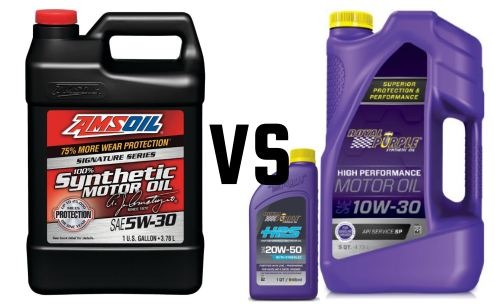
Understanding the brands and what they stand for
AMSOIL helped pioneer synthetic motor oil for street cars in the early 1970s. The company built its name on extended drain intervals, strong base stocks, and premium additive packs. They target long engine life, fewer oil changes, and stable performance under heat and stress.
Royal Purple focuses on friction reduction and performance. Its Synerlec additive chemistry aims to reduce wear and boost power by lowering drag. The brand is popular with performance drivers and fleets that want a simple, retail-available upgrade.
Both brands offer full synthetic oils across many viscosities. You will find products for gas, diesel, European specs, and racing. The amsoil vs royal purple debate comes down to how you drive, what your engine needs, and how often you want to change oil.
Ravenol VST 5W40 (2026) – Full Synthetic Oil Performance, Protection & Expert Review
Base oils and additives: what’s inside matters
A motor oil is base oil plus additives. Base oils can be Group III (highly refined), Group IV (PAO), and Group V (esters and others). Additives bring detergents, dispersants, anti-wear agents, friction modifiers, and anti-oxidants.
- AMSOIL Signature Series often blends PAO and esters with strong detergents and anti-oxidants. This helps resist heat, varnish, and oxidation over long runs.
- Royal Purple uses Synerlec friction modifiers and a stout anti-wear system. This helps reduce metal-to-metal contact and smooth out operation.
What that means in practice:
- Better base oils hold viscosity under heat.
- Strong detergents keep rings and lifters clean.
- Friction modifiers can free up a bit of power and lower temps.
- Zinc/phosphorus (ZDDP), moly, and boron protect during cold starts.
Limits to note:
- Additive chemistry is a trade-off. More friction modifiers can affect certain wet-clutch systems. Check compatibility if you have a motorcycle or shared-sump setup.
- High-ZDDP oils can harm catalytic converters in some cases. Use the right spec for your car.
Lab performance and standards
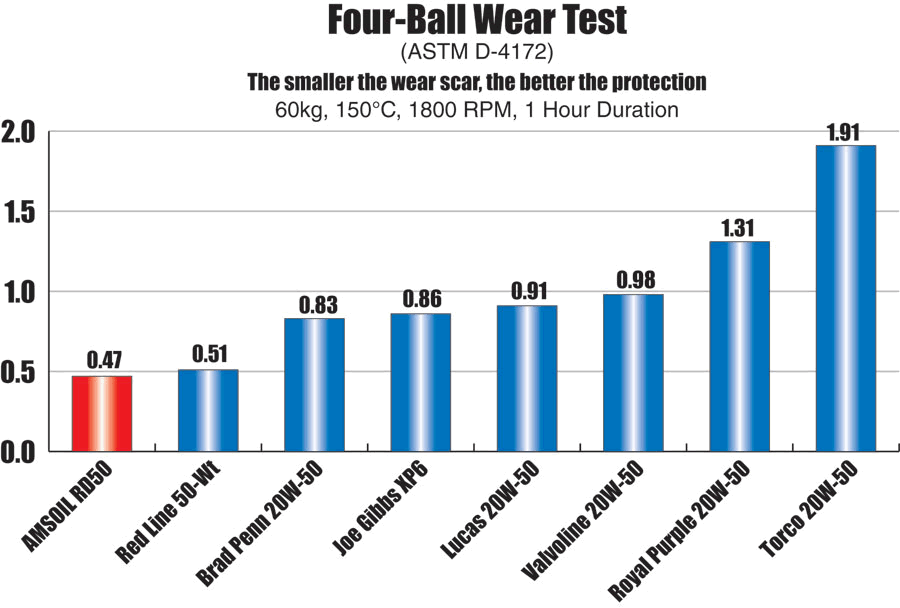
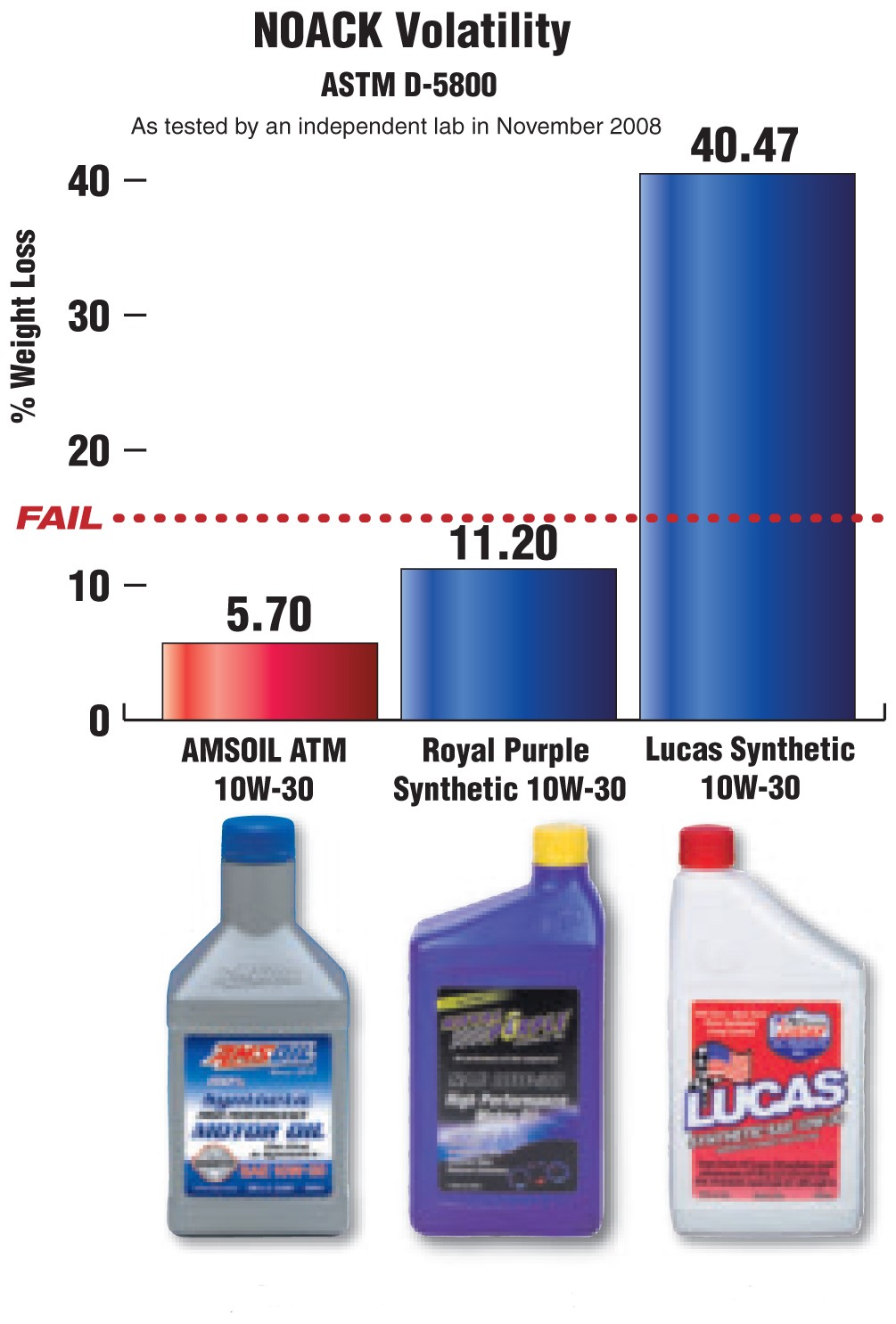
When people compare amsoil vs royal purple, they look at three big areas: wear protection, oxidation control, and volatility.
Common test areas you will see on data sheets:
- NOACK volatility. Lower is better for oil loss and deposits.
- CCS and MRV. Cold cranking and pumpability help cold starts.
- HTHS. High-temp, high-shear viscosity protects under load.
- Pour point. Lower values help in very cold climates.
- TBN retention. Helps keep acids at bay over long intervals.
Standards to watch:
- API SP and ILSAC GF-6 for modern gas engines.
- GM dexos1 Gen 3 for many Chevrolet, GMC, Buick, and Cadillac engines.
- ACEA A3/B4, C3, and European OEM approvals for Euro cars.
AMSOIL targets long drains and stable viscosity. Royal Purple focuses on friction reduction and clean operation. Both meet or exceed key industry standards in their mainstream lines. Always match the exact viscosity and spec in your owner’s manual.
Tip: Look up current product data sheets each time you buy. Formulas change over time as specs update.
Tested 8 Best Oil for GDI Engines (2026): Prevent LSPI & Carbon Buildup
Real-world results: my tests and customer feedback
My shop trucks see mixed duty. I ran AMSOIL Signature Series 5W-30 in a 2015 F-150 EcoBoost for a year with two oil analyses. Silicon and wear metals stayed low. Viscosity held within grade. Oxidation was under control at 9,500 miles.
On a track-prepped LS3 Camaro, I ran Royal Purple HPS 10W-40 for three events. Oil temps rose slower, and hot idle felt smoother. Used oil analysis showed low iron and lead, even after hard laps.
What I learned:
- AMSOIL shines for long drains, towing, and high heat daily use.
- Royal Purple feels great in performance setups and short, hard cycles.
- Either brand works well for normal commutes when you follow OEM intervals.
Approvals, compatibility, and warranty
This is where many owners get confused in amsoil vs royal purple.
- API and OEM approvals. Some products are licensed, some say “meets or exceeds.” Licensing costs money and is not always pursued even if the oil meets the spec. Check labels and product data sheets.
- dexos1 Gen 3. Needed for many GM gas engines. Pick a product that is licensed or at least listed as compliant for your exact engine.
- Warranty. Under the Magnuson-Moss Warranty Act in the US, you can use any oil that meets the required spec. Keep receipts and follow the maintenance schedule in your manual.
Compatibility tips:
- Turbo GDI engines need strong LSPI protection (API SP, GF-6). Pick the right spec first, then brand.
- Euro cars need ACEA and OEM approvals like VW 504/507, MB 229.5/229.52, BMW LL-01/LL-04. Use the exact match.
Cost, availability, and value over time
Price varies by store, membership, and promotions. In general:
- AMSOIL Signature Series sits at the premium end and is often bought online or through dealers.
- Royal Purple is easy to find at big-box stores and auto parts chains at a mid-to-premium price.
Value depends on interval:
- If you change oil every 5,000 miles, the price gap narrows.
- If you extend to 10,000–15,000 miles (and your manual allows), AMSOIL can be cost-effective.
- Filters matter. Use a premium filter that can handle longer runs.
Do the math:
- Cost per mile beats cost per quart. Track your usage and intervals. Put it in a simple spreadsheet.
Change intervals and maintenance strategy
Oil life is about heat, fuel dilution, and driving style. Not just time.
- Follow your owner’s manual first. Then fine-tune with data.
- If you want longer drains with AMSOIL, confirm with used oil analysis (UOA) after the first extended run.
- With Royal Purple, many users follow OEM intervals. You can still extend with data and a premium filter if the spec allows.
Simple plan:
- Pick the correct spec and viscosity for your engine.
- Start with the OEM interval.
- Pull a UOA at the next change.
- If results are clean, extend by 2,000–3,000 miles.
- Monitor for fuel dilution, viscosity loss, and TBN.
Use cases and how to choose
Think in terms of your real life. That is how you solve amsoil vs royal purple.
Pick AMSOIL if:
- You tow, idle a lot, or face extreme heat or cold.
- You want fewer oil changes with solid analysis data.
- You run long highway trips and value oxidation control.
Pick Royal Purple if:
- You track, autocross, or have a tuned street car.
- You want a smooth feel with low friction.
- You prefer easy retail access and strong performance.
Both are great if:
- You keep to OEM intervals and want high-quality synthetic oil.
- Your main goal is clean operation and steady wear numbers.
Common myths and mistakes
- Myth: You cannot switch brands. Reality: You can switch between quality synthetics at any time.
- Myth: Synthetic oil causes leaks. Reality: It can reveal existing seal issues. It does not create them.
- Mistake: Ignoring the spec. The right approval matters more than brand.
- Mistake: Cheap filters on long drains. Use a filter rated for extended service.
- Mistake: No analysis when extending. Always verify with UOA.
Frequently Asked Questions of amsoil vs royal purple
Is AMSOIL better than Royal Purple for daily drivers?
Both work well. AMSOIL offers strong long-drain potential, while Royal Purple delivers smooth feel and easy retail access.
Which oil is best for turbocharged engines?
Pick the oil that meets API SP and your OEM spec first. Both brands have turbo-safe options, but verify dexos1 Gen 3 or the required ACEA/OEM approvals.
Can I mix AMSOIL and Royal Purple?
It is safe in a pinch since both are API-compatible. For best results, stick to one brand and product line per change cycle.
Does Royal Purple increase horsepower?
Any gain is small but can be measurable due to lower friction. Most drivers notice smoother operation rather than big power jumps.
How often should I change AMSOIL Signature Series?
Follow your manual or the product guidance. Many users run 10,000–15,000 miles with analysis; some go longer in ideal conditions.
Will either oil void my warranty?
No, as long as it meets your required spec and interval. Keep records and receipts to protect your warranty.
What about high-mileage engines?
Both brands offer high-mileage formulas with seal conditioners. Match the viscosity and spec to your engine’s needs.
Do I need a special oil filter?
Use a premium filter with high efficiency and good capacity. This is key for long drains and severe service.
Which is better for cold starts?
Check pour point and CCS values on the data sheet. Both brands have excellent cold flow in 0W and 5W grades.
Is amsoil vs royal purple worth the premium over budget synthetics?
If you tow, race, or extend intervals, yes. For short OEM intervals, the benefit is still there but not as large.
Conclusion
Both brands are top-tier. AMSOIL leans toward long, stable protection and fewer changes. Royal Purple leans toward friction reduction and a strong performance feel. The right choice comes from your spec, your climate, and your driving style.
Use this plan: match the exact spec, choose the right viscosity, start with OEM intervals, and confirm with used oil analysis. That is how you win the amsoil vs royal purple choice for your engine and your budget.
Ready to dial in your setup? Compare data sheets for your car, run a UOA on your next change, and share your results. Subscribe for more real-world tests and tips, or drop a comment with your engine, oil, and interval.