
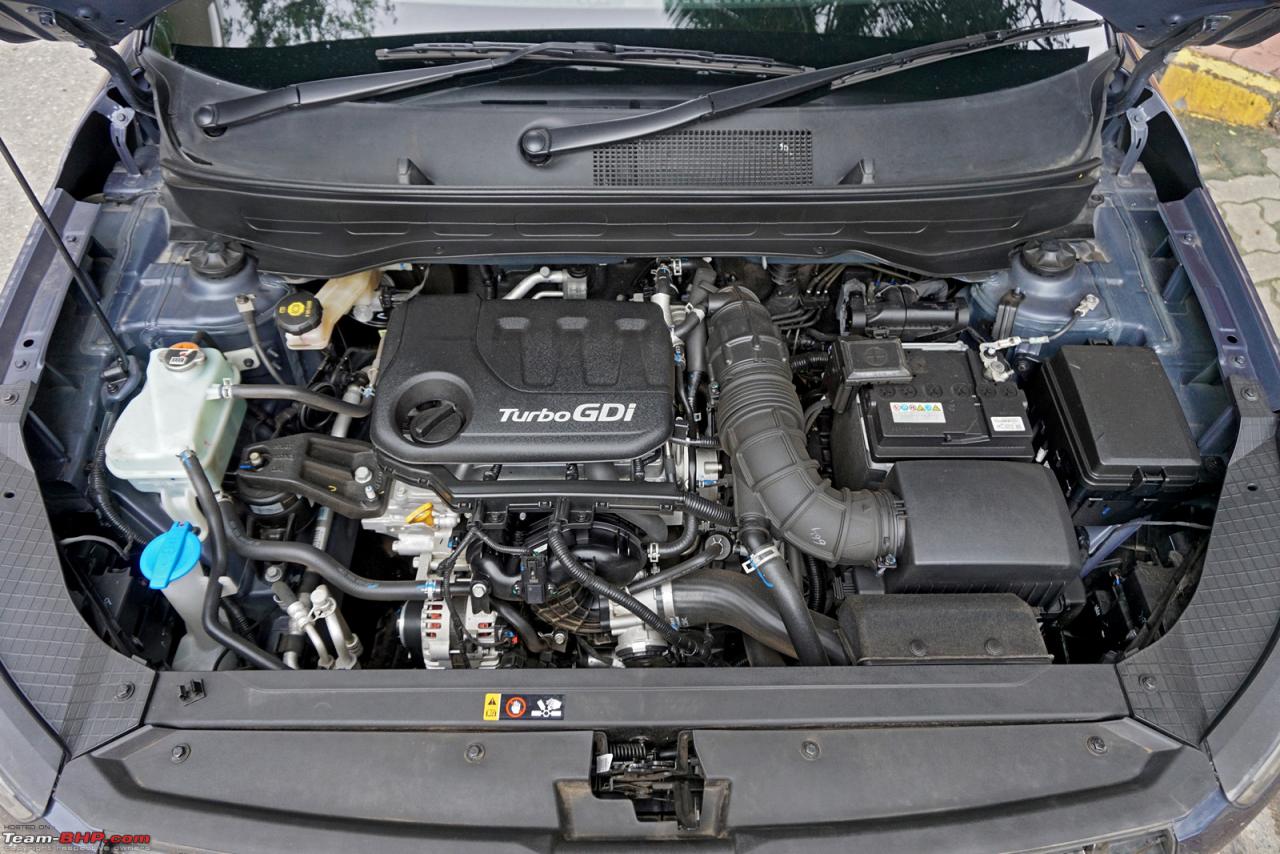
A Turbo GDI engine is an advanced internal combustion powertrain that combines Gasoline Direct Injection (GDI) and turbocharging to deliver high performance, improved fuel economy, and reduced emissions from a smaller displacement engine.
At its core, a Turbo GDI engine combines two key technologies: Gasoline Direct Injection (GDI) and turbocharging. GDI technology precisely injects fuel directly into the engine’s combustion chamber, bypassing the intake manifold. Turbocharging, on the other hand, uses exhaust gases to spin a turbine, which in turn forces more air into the cylinders.
When these two powerful systems work in tandem, they create an engine that is both potent and remarkably efficient, challenging the long-held trade-off between performance and fuel consumption. Understanding the intricacies of this technology reveals why it has become a dominant force in today’s automotive landscape.
Key Takeaways
- Turbo GDI engines combine Gasoline Direct Injection (GDI) and turbocharging for enhanced performance and efficiency.
- GDI precisely injects fuel directly into the combustion chamber, improving atomization and combustion control.
- Turbocharging increases engine power by forcing more air into the cylinders, allowing for smaller, more efficient engines.
- The synergy between GDI and turbocharging leads to higher power output, improved fuel economy, and lower emissions.
- Key advantages include downsizing potential, better throttle response, and precise fuel control.
- Potential drawbacks include increased complexity, the risk of carbon buildup on intake valves, and higher particulate matter emissions under certain conditions.
- Maintenance requires attention to specific areas like carbon cleaning and turbocharger care.
The Core Components: Gdi And Turbocharging
To truly grasp the essence of a Turbo GDI engine, it’s crucial to dissect its two primary technological pillars: Gasoline Direct Injection (GDI) and turbocharging. Each system, independently, offers significant advantages over older engine designs. When integrated, their combined effect is transformative.
Gasoline Direct Injection (gdi) Explained
Gasoline Direct Injection (GDI) is a fuel delivery system where fuel is injected directly into the combustion chamber, rather than into the intake manifold or port, as in traditional port fuel injection (PFI) systems. This direct approach offers several critical benefits:
- Precise Fuel Delivery: GDI systems utilize high-pressure fuel pumps and injectors capable of delivering fuel at pressures significantly higher than PFI systems (often exceeding 2,000 psi). This allows for a much finer fuel atomization, creating a more homogenous air-fuel mixture within the cylinder.
- Improved Combustion Efficiency: The direct injection allows for stratified charge or homogeneous charge combustion strategies. In stratified charge, a richer fuel mixture is concentrated around the spark plug, while the rest of the cylinder contains a leaner mixture, improving efficiency, especially at lower loads. In homogeneous charge, a uniform mixture is created for better power delivery.
- Cooling Effect: The process of injecting fuel directly into the hot combustion chamber has a cooling effect. This reduces the tendency for engine knocking (detonation), allowing engineers to use higher compression ratios. Higher compression ratios, in turn, lead to increased thermal efficiency and power output.
- Reduced Unburned Hydrocarbons: Better atomization and more precise control over the combustion process generally lead to more complete combustion, reducing the amount of unburned fuel (hydrocarbons) released.
best fuel system cleaner for gDI engines: Top 5 PEA-Based Picks
The Power Of Turbocharging
Turbocharging is an induction method that uses a turbine driven by the engine’s exhaust gases to spin a compressor. This compressor then forces more air into the engine’s cylinders than would be drawn in naturally. This has a profound impact on engine performance:
- Increased Airflow: By compressing the intake air, the turbocharger effectively increases the density of the air entering the cylinders. More air means more oxygen is available to burn more fuel.
- Higher Power Output: The increased air and fuel mixture translates directly into a significant boost in horsepower and torque. This allows smaller displacement engines to produce power comparable to larger, naturally aspirated engines.
- Engine Downsizing: The ability of a turbocharged engine to generate more power from a smaller displacement is a cornerstone of modern engine design. This engine downsizing leads to reduced weight and friction within the engine, contributing to better fuel economy.
- Exhaust Gas Utilization: Turbochargers harness energy from the exhaust gases that would otherwise be wasted. This makes the system inherently more efficient than mechanically driven superchargers, which draw power directly from the engine’s crankshaft.
The synergy between these two technologies is where the magic of a Turbo GDI engine truly lies.

How Turbo Gdi Engines Work Together
The real innovation of a Turbo GDI engine isn’t just the presence of GDI and turbocharging, but how these two sophisticated systems interact to optimize engine operation across a wide range of conditions. This integration allows for a level of control and efficiency previously unattainable.
The Synergy In Action
When an engine equipped with both GDI and turbocharging operates, several key processes occur:
- Air Intake and Compression: The turbocharger draws in ambient air, compresses it, and forces it into the intake manifold. As mentioned, this compressed air is denser, meaning more oxygen molecules are packed into each cylinder.
- Direct Fuel Injection: As the piston moves down on the intake stroke or begins the compression stroke, the GDI system injects a precise amount of fuel directly into the combustion chamber. The timing and quantity of this injection are meticulously controlled by the engine’s computer (ECU).
- Precise Mixture Formation: Because the fuel is injected directly into the cylinder, it mixes with the incoming compressed air just before ignition. The high pressure of the GDI system ensures excellent atomization, creating a fine mist of fuel that readily mixes with air. This direct interaction allows for tighter control over the air-fuel ratio.
- Optimized Combustion: The ECU uses data from various sensors (e.g., oxygen sensors, knock sensors, mass airflow sensors) to adjust fuel injection and ignition timing in real-time. This allows the engine to operate efficiently under different loads and speeds. For instance, at low loads, it might use a lean mixture with stratified charge for maximum fuel economy. At higher loads, it can switch to a richer, homogeneous mixture for maximum power, taking full advantage of the boosted air from the turbocharger.
- Cooling and Knock Prevention: The direct injection of fuel into the hot combustion chamber provides an internal cooling effect. This is particularly important when the turbocharger is delivering highly compressed, warmer air and the engine is under heavy load. The cooling effect helps prevent pre-ignition and detonation (knocking), allowing the engine to safely operate at higher boost pressures and ignition timings, further enhancing power and efficiency.
6 Best Fuel System Cleaner For GDI Engines: Use This Fuel Cleaner Before You Damage It
The Role Of The Engine Control Unit (ecu)
The Engine Control Unit (ECU) is the brain of the Turbo GDI system. It constantly monitors dozens of sensors throughout the engine and vehicle, processing this data to make split-second decisions about fuel delivery, ignition timing, turbocharger boost pressure, and more. This sophisticated electronic management is what enables the engine to seamlessly switch between different operating modes, optimizing for performance, fuel economy, or emissions as needed.
For example, if the driver suddenly demands more acceleration, the ECU will command the turbocharger to increase boost and simultaneously adjust the fuel injection and spark timing to deliver maximum power safely. Conversely, during steady cruising, the ECU will lean out the mixture and reduce boost to maximize fuel efficiency.
Advantages Of Turbo Gdi Engines
The combination of direct injection and turbocharging yields a range of significant benefits that have made Turbo GDI engines a popular choice for modern vehicles, from economy cars to performance machines. These advantages address key consumer demands for power, efficiency, and environmental responsibility.
Enhanced Performance And Power Delivery
- Higher Power-to-Weight Ratio: Turbo GDI engines allow manufacturers to use smaller, lighter engines that produce power comparable to larger, naturally aspirated engines. This improves a vehicle’s overall performance, acceleration, and handling due to reduced weight.
- Improved Torque Curve: Turbochargers are typically designed to deliver boost at relatively low engine speeds. Combined with GDI’s precise fuel control, this results in a flatter, broader torque curve, meaning the engine delivers strong pulling power across a wider range of RPMs. This translates to more responsive acceleration from a standstill and better passing power.
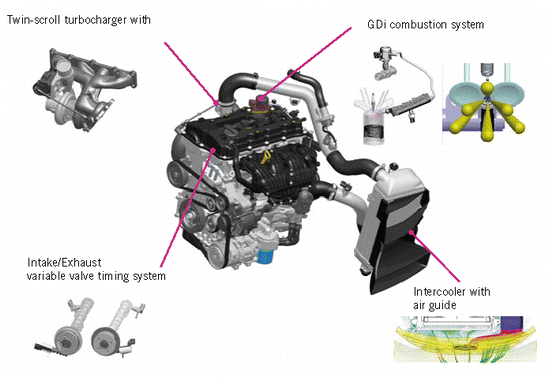
- Responsive Throttle: While older turbochargers could suffer from “turbo lag” (a delay in boost delivery), modern designs, often featuring variable geometry turbines (VGT) or twin-scroll turbochargers, significantly reduce this lag. Coupled with the quick response of GDI, these engines feel very immediate and responsive to throttle inputs.
Superior Fuel Efficiency
- Engine Downsizing: As previously mentioned, the ability to achieve higher power outputs from smaller displacement engines is a major contributor to fuel economy. A smaller engine has less internal friction and weighs less, both of which reduce the energy required to operate the vehicle.
- Precise Fuel Control: GDI’s ability to precisely meter fuel directly into the cylinder allows for leaner air-fuel mixtures under certain conditions (like cruising) and more efficient combustion overall. This minimizes fuel wastage compared to older injection systems.
- Higher Compression Ratios: The knock-suppressing effect of direct injection allows engineers to design engines with higher compression ratios. Higher compression ratios lead to greater thermal efficiency, meaning more of the fuel’s energy is converted into mechanical work rather than being lost as heat.
Reduced Emissions
- More Complete Combustion: The precise control over fuel injection and the resulting homogenous or stratified charge in the combustion chamber generally lead to more complete combustion. This reduces the amount of unburned hydrocarbons (HC) and carbon monoxide (CO) emitted.
- Advanced Catalytic Converters: Turbo GDI engines are often paired with advanced catalytic converters designed to handle the specific exhaust gas composition. The precise control over combustion helps the catalytic converter operate at its optimal temperature and efficiency, further reducing harmful emissions like nitrogen oxides (NOx).
Real-world Example: The Rise Of The 4-cylinder Turbo
A prime example of the success of Turbo GDI technology is the widespread adoption of 2. 0-liter or even 1. 5-liter turbocharged 4-cylinder engines in vehicles that previously used larger 6-cylinder engines. For instance, many mid-size sedans and SUVs now offer turbocharged 4-cylinder engines that match or exceed the horsepower and torque of their naturally aspirated V6 predecessors, while offering a noticeable improvement in highway fuel economy.
Brands like Ford (EcoBoost), Hyundai/Kia (Smartstream Turbo), and Volkswagen (TSI/TFSI) have heavily invested in this technology, demonstrating its market viability and consumer acceptance.
Potential Drawbacks And Considerations
While Turbo GDI engines offer compelling advantages, they are not without their potential downsides. Understanding these limitations is crucial for both consumers and mechanics.
Increased Complexity And Cost
- Higher Manufacturing Costs: GDI systems require high-pressure fuel pumps, specialized injectors, and more robust fuel lines. Turbochargers add significant mechanical complexity. These components increase the overall manufacturing cost of the engine, which can translate to a higher vehicle purchase price.
- More Complex Maintenance: The intricate nature of these systems means that diagnosing and repairing issues can be more challenging and expensive. Specialized tools and knowledge are often required.
Carbon Buildup On Intake Valves
- The GDI Effect: In traditional Port Fuel Injection (PFI) engines, fuel is sprayed onto the back of the intake valves, acting as a cleaning agent. In GDI systems, fuel is injected directly into the cylinder, bypassing the intake valves. Without the cleansing effect of the fuel, oil vapors and other contaminants from the crankcase ventilation system can accumulate on the intake valve surfaces, forming hard carbon deposits over time.
- Impact of Carbon Buildup: These carbon deposits can restrict airflow, disrupt the smooth spray pattern of the intake air, and lead to rough idling, misfires, reduced power, and decreased fuel efficiency.
- Mitigation Strategies: Manufacturers employ various strategies to mitigate this, including improved PCV (Positive Crankcase Ventilation) systems and sometimes combining GDI with a small amount of port injection for cleaning purposes. However, it remains a common issue requiring periodic maintenance, such as intake valve cleaning (often referred to as walnut blasting or chemical cleaning).
Particulate Matter Emissions
- Leaner Mixtures and Combustion: While GDI generally reduces certain emissions, the nature of direct injection, especially when operating with very lean mixtures or under specific transient conditions, can sometimes lead to higher emissions of particulate matter (PM), also known as soot.
- Regulatory Response: In response to these concerns, many manufacturers are now fitting Gasoline Particulate Filters (GPFs) to GDI engines, particularly in Europe and other regions with strict emissions standards. These filters function similarly to diesel particulate filters, trapping soot before it exits the exhaust.
Turbocharger Longevity And Maintenance
- Heat and Lubrication: Turbochargers operate under extreme heat and high rotational speeds. Proper lubrication is critical for their longevity.
- Oil Quality: Using the correct, high-quality engine oil and adhering to recommended oil change intervals is paramount. Dirty or degraded oil can clog the turbocharger’s oil passages, leading to premature failure.
- Cool-Down Periods: While modern turbochargers are more robust, older advice regarding “cool-down periods” after hard driving still holds some relevance. Allowing the engine to idle for a minute or two after aggressive driving can help dissipate extreme heat from the turbocharger, preventing oil coking in the turbine housing.
Potential For Increased Oil Consumption
- Ring Seal Issues: In some cases, particularly with aggressive driving or if carbon buildup affects piston ring seal, Turbo GDI engines can exhibit slightly higher oil consumption compared to naturally aspirated engines. This is an area that requires careful monitoring by the owner.
Maintenance And Care For Turbo Gdi Engines
Proper maintenance is key to ensuring the longevity and optimal performance of a Turbo GDI engine. Due to their advanced technology, specific attention needs to be paid to certain aspects.
Regular Oil Changes With Quality Oil
- Importance: The turbocharger relies heavily on clean, high-quality engine oil for lubrication and cooling. The high temperatures and pressures within a turbocharger mean that oil degradation can happen more quickly.
- Recommendation: Always use the specific oil viscosity and specification recommended by the vehicle manufacturer. Adhere strictly to the recommended oil change intervals, and consider more frequent changes if the vehicle is subjected to severe driving conditions (e.g., frequent short trips, towing, high-performance driving).
Addressing Carbon Buildup
- Symptoms: Be aware of potential symptoms like rough idling, hesitation during acceleration, reduced power, or decreased fuel economy.
- Professional Cleaning: If carbon buildup is suspected, consult a qualified mechanic. They can perform intake valve cleaning procedures, which often involve using specialized tools and solvents (like walnut shell blasting or chemical cleaners) to remove the deposits. The frequency of this service depends on the vehicle model, driving habits, and manufacturer recommendations, but it might be needed every 30,000 to 60,000 miles.
Fuel Quality Matters
- Octane Rating: Many turbocharged engines are designed to run on premium (higher octane) gasoline to prevent knocking, especially when operating under boost. Always check your owner’s manual for the recommended fuel octane rating.
- Top Tier Gasoline: Using Top Tier gasoline, which contains higher levels of detergents, can help keep fuel injectors clean and potentially reduce the rate of carbon buildup in the combustion chamber and on intake valves.
Monitoring Coolant And Air Filters
- Coolant: The cooling system is vital for managing the heat generated by both the engine and the turbocharger. Ensure coolant levels are maintained and the system is free of leaks.
- Air Filters: A clogged air filter restricts airflow to the turbocharger and engine, reducing performance and efficiency. Regularly inspect and replace the engine air filter according to the manufacturer’s schedule.
Driving Habits
- Warm-Up: While modern engines warm up relatively quickly, avoid high-performance driving immediately after a cold start. Allow the oil to reach operating temperature.
- Cool-Down: As mentioned, after prolonged periods of hard driving, allowing the engine to idle for a minute or two before shutting it off can help the turbocharger cool down more gradually, reducing the risk of oil coking.
Turbo Gdi Vs. Other Engine Technologies
To fully appreciate the place of Turbo GDI engines in the automotive world, it’s helpful to compare them against other common powertrain technologies. This comparison highlights the specific trade-offs and advantages.
Turbo Gdi Vs. Naturally Aspirated (na) Engines
| Feature | Turbo GDI Engine | Naturally Aspirated (NA) Engine |
|---|---|---|
| **Power Output** | Higher power from smaller displacement | Lower power from equivalent displacement |
| **Torque** | Flatter, broader torque curve, stronger low-end | Torque builds more linearly with RPM |
| **Fuel Efficiency** | Generally better, especially at cruising speeds | Can be less efficient, especially larger engines |
| **Complexity** | Higher (turbocharger, high-pressure fuel system) | Lower |
| **Cost** | Higher manufacturing and potential repair costs | Lower manufacturing and repair costs |
| **Emissions** | Can be lower overall, but PM can be higher | Generally lower PM, but HC/CO can be higher |
| **Maintenance** | Requires attention to carbon buildup, turbo care | More straightforward maintenance |
| **Driving Feel** | Responsive, strong acceleration | Linear power delivery, predictable |
Pro Tip: For drivers who prioritize strong acceleration and fuel savings on the highway, a Turbo GDI engine often presents a compelling package. However, for those who prefer simpler mechanics and predictable power delivery without concerns about potential carbon buildup, a well-engineered NA engine can still be a solid choice.
Turbo Gdi Vs. Port Fuel Injection (pfi) Turbo Engines
| Feature | Turbo GDI Engine | Turbo PFI Engine |
|---|---|---|
| **Fuel Delivery** | Direct injection into combustion chamber | Injection into intake port |
| **Atomization** | Superior, finer mist | Less fine |
| **Combustion Control** | More precise, enables stratified charge | Less precise, primarily homogeneous charge |
| **Knock Resistance** | Higher due to internal cooling effect | Lower |
| **Compression Ratio** | Can use higher ratios | Limited to lower ratios |
| **Power Potential** | Generally higher | Lower |
| **Carbon Buildup** | Risk on intake valves | Minimal risk on intake valves |
| **Efficiency** | Typically higher | Can be good, but less optimized than GDI |
Example: Early turbocharged engines often used PFI. While they offered a power boost over NA engines, they were prone to knocking and couldn’t achieve the same level of efficiency or power density as modern Turbo GDI systems. The GDI aspect is key to unlocking the full potential of turbocharging.
Turbo Gdi Vs. Hybrid Powertrains
| Feature | Turbo GDI Engine | Hybrid Powertrain (e.g., HEV, PHEV) |
|---|---|---|
| **Primary Power** | Internal Combustion Engine (ICE) | Combination of ICE and Electric Motor(s) |
| **Fuel Efficiency** | Good, especially on highway | Excellent, especially in city driving |
| **Emissions** | Reduced ICE emissions | Very low to zero tailpipe emissions (PHEV) |
| **Complexity** | High mechanical complexity | Very high (ICE, electric motor, battery, control) |
| **Cost** | Moderate to high | High |
| **Performance** | Strong acceleration, responsive | Instant torque from electric motor, smooth |
| **Infrastructure** | Standard refueling | Requires charging for PHEV |
| **Weight** | Lighter than hybrid | Heavier due to battery pack |
External Link: For a deeper understanding of hybrid technology, you can explore resources on fueleconomy.gov, which provides comprehensive information on various vehicle types and their efficiency.
While Turbo GDI engines represent a significant advancement in ICE technology, hybrid and full-electric powertrains offer even greater potential for fuel savings and emissions reduction, albeit often at a higher initial cost and complexity.
The Future Of Turbo Gdi Technology
The evolution of the internal combustion engine is far from over, and Turbo GDI technology continues to be a focal point for innovation. Manufacturers are constantly refining these systems to push the boundaries of efficiency, performance, and emissions control.
Advancements In Turbocharging
- Electric Turbochargers: One area of active development is the integration of electric motors with turbochargers. These electric-assisted turbochargers can provide instant boost response, virtually eliminating lag, and can even be used to generate electricity during deceleration to charge the battery.
- Variable Geometry Turbochargers (VGT): While more common in diesel engines, VGT technology is becoming more prevalent in gasoline applications. VGTs adjust the angle of vanes within the turbine housing to optimize exhaust gas flow across a wider range of engine
Final verdict
Electric-assisted turbochargers and Variable Geometry Turbochargers (VGT) represent the leading edge of modern powertrain innovation, effectively eliminating traditional turbo lag and maximizing efficiency across all RPM ranges.