
The best diesel fuel lubricity additive protects pumps, quiets injectors, and saves money.
If you run ultra-low sulfur diesel, you know the struggle. ULSD is clean-burning, but it is dry. That dryness robs your high-pressure pump and injectors of the slippery film they need to survive. Add towing, hot summers, cold starts, or long idle time, and wear speeds up. A smart lubricity additive puts that lost slickness back. It helps cut wear scars in standard HFRR tests. It can smooth idle, lower injector chatter, and even help fuel economy. Below, I break down top picks I trust, who they fit best, and how to use them for long-term protection.
Top 3 Diesel Additives: The Heavy Hitters
| Product | Current Price | Best Use Case | Rating | Buy Link |
| Archoil AR6500 (40 oz) | $$ | All-in-one daily performance; best for smoothness. | ⭐ 4.8/5 | Check Price |
| Hot Shot’s EDT (1 Gallon) | $$ | Bulk value; best for high-mileage drivers/fleets. | ⭐ 4.7/5 | Check Price |
| Stanadyne Lubricity (Case/12) | $$$ | Maximum pump protection; OEM/Mechanic choice. | ⭐ 4.9/5 | Check Price |
Stanadyne Lubricity Formula 16 oz, Case of 12

This Stanadyne Lubricity Formula is built for one job: add back the slickness ULSD lacks. Each 16 oz bottle treats about 125 gallons, and this case includes 12 bottles for steady use. Stanadyne has deep roots with diesel injection systems, so it targets the exact wear points inside pumps and injectors. It is ashless and designed to be safe for emissions gear like DPF and SCR systems.
If you tow, idle often, or drive a truck known for a sensitive high-pressure pump, extra lubricity helps. In industry HFRR testing, better lubricity lowers wear scar size, which helps parts last longer. The formula blends smoothly with both straight ULSD and biodiesel blends. For fleets and farms, the case pack makes dose control simple and consistent.
Pros:
- Focused lubricity boost to protect pumps and injectors
- Trusted brand with injection system expertise
- Ashless and DPF/SCR friendly
- Works with ULSD and common biodiesel blends
- Case pack supports fleets and regular dosing
- Simple formula avoids additive stacking confusion
- Helps quiet injector clatter and smooth idle
Cons:
- No cetane boost or detergent cleaning
- Comes as a case; more than a casual user may need
- Not a cold-flow or anti-gel product
My Recommendation
Choose this if you want a pure, proven lubricity bump without extras. It is ideal for trucks with CP4-style pumps or any engine that sees heavy load and long miles. If you already run a cleaner or anti-gel, this formula plays well as a dedicated wear shield. For many owners, it is the best diesel fuel lubricity additive when you want straightforward protection and consistent dosing across a fleet.
| Best for | Why |
|---|---|
| CP4-equipped trucks and high-pressure systems | Focused lubricity helps reduce wear at the pump and injector tips |
| Fleets and farm equipment | Case pack supports routine dosing and inventory control |
| Warranty-conscious owners | Ashless formula designed to be emissions-equipment safe |
Archoil AR6500 Diesel Treatment 40 oz

Archoil AR6500 is a multi-function diesel treatment that does more than boost lubricity. The 40 oz bottle treats up to 400 gallons, so a small dose goes far. It combines lubricity improvers, injector detergents, and a cetane booster for cleaner, smoother combustion. It also includes deposit control for DPF and turbo components, which helps with low-ash operation over time.
Use it when you want a single bottle to handle day-to-day needs. In my experience, AR6500 can smooth idle, sharpen throttle response, and reduce visible smoke on a hard pull. The extra cetane helps cold starts and reduces ignition delay, which many drivers feel as a quieter engine. It is a strong pick if you want the best diesel fuel lubricity additive that also cleans and boosts cetane.
Pros:
- All-in-one formula: lubricity, cleaning, and cetane boost
- Treats up to 400 gallons per 40 oz bottle
- Helps control turbo and DPF deposits
- Can smooth idle and reduce injector chatter
- Useful for mixed driving: short trips, towing, and highway
- Supports efficient combustion for potential MPG gains
Cons:
- Not a cold-weather anti-gel
- Multi-function formula may cost more than pure lubricity-only options
- Larger bottle can be awkward to pour without a funnel
My Recommendation
Pick AR6500 if you want a smart, single-bottle solution for your daily driver or tow rig. It improves lubricity while also cleaning injectors and lifting cetane. That blend helps newer engines with emissions systems run smoother, cleaner, and quieter. For many owners, it is the best diesel fuel lubricity additive when you want an “everything in one” answer that is easy to dose and gives clear seat-of-the-pants gains.
| Best for | Why |
|---|---|
| Modern diesels with DPF/SCR | Deposit control and ash-conscious chemistry support emissions systems |
| Towing and heavy load | Cetane boost and cleaner burn improve pull and response |
| One-bottle simplicity | Lubricity, detergents, and cetane in a single treatment |
Hot Shot’s Secret LX4 1 Gallon

LX4 is Hot Shot’s Secret’s dedicated lubricity booster, and the 1-gallon jug is the value play. It treats up to 1,280 gallons, which is excellent coverage for fleets, over-the-road haulers, or anyone who maintains a few diesel rigs. The chemistry increases boundary lubrication in ULSD, which helps lower wear on high-pressure fuel pumps and precision injectors. It is safe for both diesel and gasoline, and it is designed to be emissions-equipment friendly.
I like LX4 when I want maximum lubricity at a fair per-gallon cost. It mixes well with other Hot Shot’s Secret products like Everyday Diesel Treatment (EDT) or their cold-weather anti-gel. Because it is focused on lubricity and not detergency, you can stack it with a cleaner if needed. If you want the best diesel fuel lubricity additive for big dosing needs, this jug delivers.
Pros:
- Strong, targeted lubricity improvement
- Excellent per-gallon cost at 1,280 gallons treated
- Compatible with both diesel and gasoline
- DPF/SCR safe and ashless
- Stacks easily with cleaners or anti-gel products
- Good choice for bulk tanks and fleets
Cons:
- No detergents or cetane boost
- Large jug is heavy to handle; use a measure or pump
- Still need a separate anti-gel in winter
My Recommendation
Go with this 1-gallon LX4 if you treat fuel often or run more than one diesel. It is a high-impact lubricity booster that is easy to pair with a cleaner or anti-gel for a tailored setup. For long-haul trucks, farm gear, and construction equipment, it is hard to beat. In terms of pure pump and injector protection, this earns a top spot among the best diesel fuel lubricity additive choices today.
| Best for | Why |
|---|---|
| Fleets and bulk users | Treats up to 1,280 gallons per jug for great value |
| Engines with known pump wear risks | Focused lubricity helps defend high-pressure components |
| Custom additive routines | Stacks cleanly with detergents, cetane, or anti-gel products |
Hot Shot’s Secret LX4 32 oz
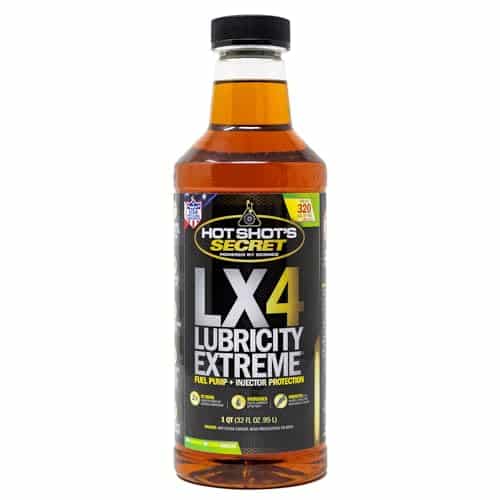
The 32 oz LX4 offers the same lubricity chemistry as the 1-gallon jug, but in a handier size. It treats up to 320 gallons, which works well for a single pickup, an RV, or seasonal equipment. If you are trying lubricity additives for the first time, this size is easy to test without a big buy-in. It is safe for use with modern emissions systems and plays well with other fuel treatments.
In daily use, LX4 can quiet injector tick and help smooth idle, especially on ULSD that trends dry. If you notice rough cold starts or louder clatter after a fill-up, this is a smart first step. I also like this size for owners who store diesel in small tanks or jerry cans. It is a strong contender for the best diesel fuel lubricity additive if you want a compact, budget-friendly option.
Pros:
- Same strong lubricity as the 1-gallon option
- Portable and easy to dose
- Great for single-vehicle owners or RVers
- DPF/SCR safe and ashless
- Works with gasoline and diesel
Cons:
- Higher cost per treated gallon than the 1-gallon jug
- No detergents or cetane boost included
- May run out faster for heavy users
My Recommendation
Choose the 32 oz LX4 if you want to try a dedicated lubricity booster without committing to a gallon. It gives you the same protection benefits in a size that fits a toolbox or side pocket in the bed. For weekend warriors and RV travelers, it is easy to keep on hand. It earns a place among the best diesel fuel lubricity additive picks for its balance of power, portability, and price.
| Best for | Why |
|---|---|
| First-time users | Smaller size reduces cost of entry while you test results |
| RVs and seasonal equipment | Easy storage and dosing for occasional use |
| Owners who stack additives | Focused lubricity lets you add separate cleaners or anti-gel |
Hot Shot’s Secret EDT 1 Gallon

Everyday Diesel Treatment (EDT) is Hot Shot’s multi-function workhorse. The 1-gallon jug treats up to 3,200 gallons, so your per-tank cost stays low. In one dose, you get lubricity improvers, injector detergents, a cetane lift, corrosion inhibitors, and water control. It is made for year-round use and is safe for modern emissions systems.
If you want one product for daily use, EDT makes fuel feel more consistent across stations. The lubricity agents help protect the pump and injectors, while detergents keep tips clean for a proper spray pattern. Cetane boost reduces ignition delay, which can make cold starts easier and the engine quieter. For many owners, this is the best diesel fuel lubricity additive when they want a simple routine that also cleans and boosts performance.
Pros:
- All-in-one formula with lubricity, detergents, and cetane
- Very low treat rate: up to 3,200 gallons per gallon
- Supports cleaner combustion and smoother running
- Helps control moisture and corrosion in the fuel system
- Emissions-system friendly and ash-conscious
- Great for high-mile daily drivers and fleets
Cons:
- Lubricity level is strong, but not as singularly focused as LX4
- Not a cold-flow or anti-gel product
- Large jug needs careful measuring or a pump
My Recommendation
Use EDT if you want to keep your process fast and simple. You get protection, cleaning, and a shot of cetane from one jug, which helps the truck run the same from tank to tank. It is easy to recommend to commuters, long-haul drivers, and light-duty fleets. In the real world, this is one of the best diesel fuel lubricity additive choices if you value a great treat rate and broad benefits without juggling bottles.
| Best for | Why |
|---|---|
| Daily drivers and long-haul trucks | Big treat rate with cleaning and cetane for steady performance |
| Owners using varied fuel stations | Stabilizes feel from tank to tank and supports clean injectors |
| One-bottle routine | Lubricity plus detergents and cetane in a single dose |
5 best diesel fuel additive for cp4 pump: $20 Bottle Save Your Entire Fuel System
Expert Tips for Picking the Best Diesel Fuel Lubricity Additive
Choosing the right additive is about more than just grabbing a bottle off the shelf; it’s about understanding your engine’s specific needs and the science of friction reduction.
Match the Product to Your Main Pain Point
If you tow heavy loads or drive a truck equipped with a sensitive CP4 pump, favor a dedicated lubricity booster like LX4 or the Stanadyne Lubricity Formula. These are engineered specifically for high-friction environments. However, if your goal is maintaining injector cleanliness and gaining a bit more throttle “snap,” opt for a multi-function blend like EDT or AR6500. Consistency is key—lubricity protection works best when added every tank, not sporadically.
Master the Dose and Delivery
Always use the correct ratio for your tank size. Concentrations vary wildly: some products treat 10 gallons per ounce, while others cover 25 gallons. Using a small graduated bottle or measuring cup ensures accuracy. Especially at truck stops where fuel quality fluctuates, maintaining your standard dose helps the engine perform consistently from tank to tank, resulting in quieter operation and reduced wear.
Understand the Science: The HFRR Test
Industry experts use the ASTM D6079 (HFRR) test to gauge wear protection.
- The Rule: The lower the wear scar number (measured in microns), the better the protection.
- The Reality: While pump fuel must meet minimum specs, variables like storage time and mixing can “dry out” the fuel. A high-quality additive ensures your system hits safe wear targets even when the base fuel is subpar.
Listen for Early Signs of Fuel “Dryness”
Your engine will often tell you when it’s struggling. Watch for:
- Increased injector “tick” or clatter.
- Rough idling.
- Sluggish throttle response.
If you notice more noise after a fill-up, try a lubricity dose on the next tank and note the change. Keeping a simple log of your fuel source, dose, and mileage can help you dial in the perfect routine for your specific rig.
Stack Smart During Winter Months
It is a common misconception that lubricity additives prevent gelling. Lubricity is not anti-gel. During cold snaps, you must use a dedicated anti-gel or an all-in-one winter blend. However, because cold fuel is less forgiving on moving parts, a dedicated lubricity booster remains highly valuable even when you are already treating for flow.
Protect Your Invisible Components
Modern common-rail systems operate at incredibly high pressures. In these environments, microscopic wear or deposits can quickly escalate into hard starts or balance-rate issues. The best additive provides a quiet layer of defense for the injectors and pumps you can’t see, preventing “snowball” failures before they begin.
Focus on Long-Term Value
Don’t judge an additive by the price of the bottle; judge it by the cost of the repair it prevents. Replacing a high-pressure pump or a set of injectors can cost thousands of dollars. When averaged out over a year, a quality additive typically costs only a few cents per gallon—a small insurance premium against catastrophic fuel system failure.
Start with a Clean Slate
If you’ve recently purchased a used diesel or are switching fuel stations, run a dedicated cleaner for one or two tanks before settling into a lubricity routine. A clean injector tip produces a better spray pattern, which leads to a smoother burn. Combining cleanliness with high lubricity reduces the two primary stressors on your combustion cycle.
Trust Both Feel and Facts
While technical specs like HFRR targets and ash content are vital, don’t ignore your intuition. A smooth idle, reduced clatter, and a steady steering wheel at stoplights are the real-world indicators of a healthy fuel system. The right additive won’t just meet the industry spec; it will make the truck feel “right” every time you turn the key.
FAQs Of best diesel fuel lubricity additive
What does a diesel lubricity additive actually do?
It puts back the “slippery” film ULSD lacks. That film reduces metal-to-metal contact in pumps and injectors. In standard HFRR tests, better lubricity lowers wear scar size and helps parts last longer.
Do I still need one if I use biodiesel blends?
Most biodiesel adds lubricity, but quality and blend level vary. A small dose of a good additive helps keep protection steady. It is cheap insurance, especially with high-pressure systems.
Can I use too much additive?
Yes. Follow the label. Overdosing may not add benefits and could affect combustion or filters. Use the normal dose, and only double-dose when the maker says it is safe.
Is it safe for DPF and SCR systems?
Choose ashless, low-metal formulas designed for modern emissions systems. The products above are built for ULSD and DPF/SCR use when used as directed.
Will lubricity additives help cold starts?
Indirectly, yes. Some blends include cetane boosters that aid cold starts. Pure lubricity products reduce wear but do not replace a winter anti-gel in freezing weather.
Final Verdict: Which Should You Buy?
If you want pure wear protection at a strong value, Hot Shot’s Secret LX4 (1 gallon) is hard to beat. For a one-bottle plan that cleans and lifts cetane, Hot Shot’s Secret EDT or Archoil AR6500 shines.
Need simple, fleet-ready dosing from a trusted injector brand? Stanadyne Lubricity Formula is a safe bet. Any of these can be the best diesel fuel lubricity additive for your setup based on how you drive and what you need.