
Spark plugs are small but mighty. They light the fire that makes your engine run. When they go bad, your car tells you. It may shake. It may lose power. It may drink more gas. If you catch these signs early, you can save money and stress. If you wait too long, you can hurt your engine, your catalytic converter, and your wallet. In this guide, we will show you the clear signs to look for. We will also show you how to check plugs, how long they last, and what to buy. You will learn what bad spark plug symptoms look like, what to do next, and when to replace them.

Bad Spark Plug Symptoms at a Glance
Bad spark plug symptoms are easy to miss at first. But they grow with time. The engine feels rough. The car is slow to start. You burn more fuel. The check engine light comes on. The engine may misfire or hesitate. In cold weather, it gets worse. If this sounds like your car, your spark plugs may be worn, fouled, or damaged. Take note of the signs below. They can help you act fast and avoid big repairs.
- Engine misfire, often felt as a shake or jerk
- Hard starting, more cranks than normal
- Rough idle, rattles or dips in RPM
- Poor acceleration or weak throttle response
- Poor fuel economy
- Check engine light with misfire codes
- Engine hesitation under load
- Loss of engine power
- Increased exhaust emissions or fuel smell
- Difficult cold starts
10 Common Bad Spark Plug Symptoms
We will walk through common signs one by one. Each sign has a cause. Many link back to the spark plug tip, gap, or fouling. You may have more than one sign at a time. That is normal. Plugs work as a set.
1. Engine Misfire
A misfire feels like a stumble. The engine shakes or jerks. You feel it most at idle or under load. A bad spark plug can fail to light the air-fuel mix. That cylinder does not make power. You lose smoothness and power. You may also hear a pop in the exhaust.
What to watch for:
- The car shakes at idle.
- It jerks when you speed up.
- The exhaust note sounds rough.
What causes it:
- Worn center or ground electrode.
- Wrong spark plug gap.
- Carbon, oil, or fuel fouling.
- Cracked ceramic insulator.
Tip:
- Scan for codes. Look for P0300 (random misfire) or P0301–P0308 (misfire on cylinder 1–8).
2. Hard Starting
If the engine takes longer to start, that is a red flag. Bad plugs can make cold starts worse. A weak spark is slow to light the mix. You need more cranks. The starter and battery work harder.
What to watch for:
- The engine cranks longer than normal.
- It fires, then stalls, then starts on the second try.
- It is worse on cold mornings.
What causes it:
- Large plug gap from wear.
- Fuel-soaked plug tips from short trips.
- Heat range too cold for your use.
Tip:
- If the battery is new and the fuel pump is fine, check the plugs next.
3. Rough Idling
A smooth idle feels like a calm hum. A rough idle shakes the cabin. You may see the RPM needle bounce. A bad plug does not light the mix at the right time. The idle gets uneven. On older cars, you hear chugging. On newer cars, it feels like small hiccups.
What to watch for:
- Shakes at a stop light.
- RPM drops and recovers.
- A faint gas smell.
What causes it:
- Carbon fouling from too rich a mix.
- Oil fouling from worn valve guides or rings.
- Cracked plug or damaged wire/coil boot.
Tip:
- Check for vacuum leaks too. But start with plugs. They are simple to check.
4. Poor Acceleration
If the car used to leap and now it lags, that is a sign. Bad plugs can’t make a hot, strong spark. The mix burns slow or not at all. You press the gas and the car feels lazy. Hills feel harder.
What to watch for:
- Sluggish takeoffs.
- Flat spots when you push the pedal.
- The car feels “held back.”
What causes it:
- Worn electrodes that need more voltage to spark.
- Wide plug gap that the coil can’t jump under load.
- Wrong plug type for your engine.
Tip:
- If a tune-up is overdue, do the plugs first. You may feel a big change right away.
5. Poor Fuel Economy
Burn more gas? That may be your plugs. A weak or missed spark wastes fuel. Unburned fuel goes out the tailpipe. The ECM then adds more fuel to try to keep up. Your MPG drops.
What to watch for:
- MPG lower than normal.
- Strong fuel smell after a cold start.
- Soot on the tailpipe.
What causes it:
- Misfires that send raw fuel to the exhaust.
- Rich mix from bad sensors made worse by weak spark.
- Wrong heat range plug that fouls fast.
Tip:
- Track MPG over a month. If the drop is sharp, check plugs and filters.
6. Check Engine Light
Modern cars flag misfires fast. A bad plug is a top cause. The light may blink during a heavy misfire. A steady light with stored codes is common. Scan tools can read it.
What to watch for:
- Check engine light on or flashing.
- Codes P0300–P0312 for misfires.
- Fuel trim codes if the engine runs rich or lean.
What causes it:
- Aged plugs beyond service life.
- Fouled tips from short trips or leaks.
- Damaged plug after a botched install.
Tip:
- A flashing CEL means stop driving. A raw misfire can melt the catalytic converter.
7. Engine Hesitation
Hesitation feels like a pause when you press the gas. It can be mild or scary. It often shows up when you need to pass or merge. The engine stumbles, then surges. That is a common sign of weak spark.
What to watch for:
- Delay between throttle input and engine response.
- Stumble at mid-range RPM.
- Worse under load or on hills.
What causes it:
- Spark blowout under boost or load due to wide gap.
- Dirty or fouled plug face.
- Coil or wire issues triggered by worn plugs.
Tip:
- If gapped too wide, close the gap to spec. Many drivers feel an instant fix.
8. Loss of Engine Power
A bad plug means one or more cylinders do not pull their weight. That kills power. It can feel like the engine shrank by half. Towing or mountain drives suffer first.
What to watch for:
- Poor top-end power.
- Slow highway passing.
- Hard time keeping speed on grades.
What causes it:
- One dead cylinder from a failed plug.
- Several weak sparks from worn plugs.
- Heat-soaked plugs that break down when hot.
Tip:
- If one plug looks worse than the rest, test that cylinder’s coil and injector too.
9. Increased Exhaust Emissions
A bad spark can raise emissions. You may see more smoke or smell fuel. The car can fail a smog test. The oxygen sensor and cat get stressed. Over time, that can get costly.
What to watch for:
- Sooty tailpipe.
- Gas smell at idle.
- Failed emissions test with high HC.
What causes it:
- Raw fuel from misfires.
- Rich mix from repeated cold starts with weak spark.
- Oil-fouled plugs from engine wear.
Tip:
- Fix plug issues before a smog test. It is a fast win that can save you a retest.
10. Difficult Cold Starts
Cold air is dense. Fuel does not vaporize as fast. You need a hot spark. Bad plugs lose in this game. You will crank longer. The engine may start and die. It can also backfire.
What to watch for:
- Long cranks on cold days.
- Rough idle right after start.
- White or gray smoke if fuel is unburned.
What causes it:
- Fouling from short trips where plugs never get hot.
- Gap too wide for cold starts.
- Heat range too cold for your climate.
Tip:
- Take a longer drive once a week. Get the engine hot. This helps burn off light carbon.
Can Bad Spark Plugs Cause…?
People ask the same core questions. The short answer is often yes. A spark plug is small, but it can cause big issues when it fails. Here are the top “can it cause” cases, with clear answers.
Can Bad Spark Plugs Cause a Misfire?
Yes. This is the most common link. A worn or fouled plug weakens the spark. The mix does not light. The cylinder skips power. You feel a shake or jerk. The ECM logs a misfire code. Replace plugs first when you chase misfires.
Can Bad Spark Plugs Cause Poor Gas Mileage?
Yes. A weak spark can waste fuel. Misfires dump raw fuel out the exhaust. The ECM may add even more fuel to try to smooth things out. Your MPG drops. Fresh plugs restore clean burn and help fuel economy.
Can Bad Spark Plugs Cause Rough Idle?
Yes. Rough idle is a top sign. If one cylinder is weak, the idle goes uneven. The engine shakes. The tach bounces. Check plugs, coils, and vacuum leaks. But start with plugs.
Can Bad Spark Plugs Cause Loss of Power?
Yes. One weak cylinder can drop power a lot. Many weak cylinders feel like a big loss. You will feel it in hills, towing, and highway merges. New, correct plugs can bring power back fast.
Can Bad Spark Plugs Cause Hard Starting?
Yes. This is common in cold weather. You need strong spark to fire a cold, rich mix. Worn plugs arc poorly. You crank more. The starter and battery suffer. A new set of plugs can make starts feel new again.
How to Tell if Your Spark Plugs Are Bad
You can check plugs at home with basic tools. Let the engine cool first. Use a spark plug socket and gentle hands. One look at the tip tells a story. Color, deposits, and wear give clear clues.
Inspect the Spark Plug Condition
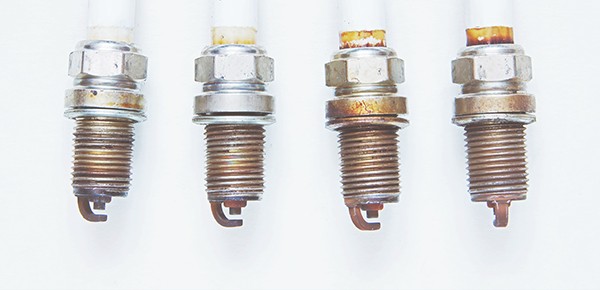
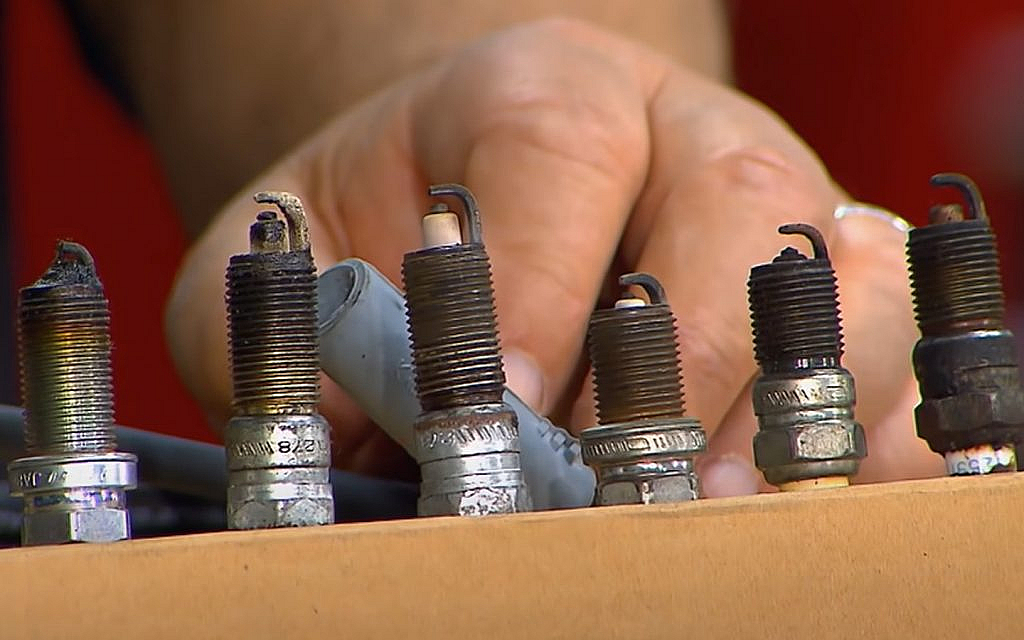
Pull one plug at a time. Keep track of which cylinder it came from. Look at the tip and threads. Note the color and any deposits. A light tan to gray tip is normal. Heavy black soot is not. Oil on the threads or tip is also bad.
What to look for:
- Normal: Light tan or gray on the insulator tip.
- Carbon fouled: Dry, black soot. Often from a rich mix or short trips.
- Oil fouled: Wet, oily deposits. Often from worn rings or valve seals.
- Fuel fouled: Wet with fuel. Often from misfires or flooded starts.
- Overheated: White, blistered tip. Often from lean mix or too hot a heat range.
- Cracked insulator: Hairline cracks. Often from impact or over-torque.
- Worn electrodes: Rounded edges. Wider gap than spec.
Check the Spark Plug Gap
Use a feeler gauge. Check the gap between the center and ground electrode. Compare to the spec in your owner’s manual or service data. If the gap is too wide, the spark is weak, more so under load. If too tight, the spark is small and can misfire.
Tips:
- Do not pry on fine-wire iridium/platinum tips.
- Only adjust gap if the plug maker says you can.
- Many iridium plugs come pre-gapped. Verify, but do not force it.
Look for Spark Plug Fouling
Fouling tells you about the engine. Carbon fouling means the mix is rich or the trips are too short. Oil fouling means oil control is poor. Both cause misfires and rough idle. If you see fouling on new plugs, fix the root cause.
Causes of fouling:
- Rich mix from bad O2 sensor or MAF/MAP.
- Leaky injector.
- PCV issues that pull oil vapor into the intake.
- Worn rings or valve seals.
Compare Spark Plugs From Each Cylinder
Patterns help. If all plugs look the same, the issue is age or driving style. If one plug looks worse, that cylinder needs more checks. Swap coils or injectors to see if the issue moves. That helps you rule out parts fast.
What to note:
- One black, sooty plug among clean ones = that cylinder runs rich or weak spark.
- One oil-fouled plug = oil in that cylinder.
- One cracked insulator = install damage or detonation in that hole.
How To Keep Spark Plug Wires From Melting: 5 Mechanics Solution
How to Test Spark Plugs
You can test plugs in a few simple ways. Start with a visual check. Then check the gap and wear. If the plugs look fine, test the rest of the ignition system. Coils and wires can fail too.
Visual Inspection
Look for damage, fouling, and wear. Use a bright light. Check the ceramic for cracks. Check the shell for rust or bent threads. Look at the electrode for rounding. Check the color of the insulator nose.
Checklist:
- No cracks in ceramic.
- No oil or fuel wetness.
- Electrode edges still sharp.
- Threads clean and not cross-threaded.
- Gasket intact and not crushed flat beyond spec.
Checking the Spark Plug Gap
Use a wire feeler gauge. Slide the right size blade in the gap. You should feel light drag. Too loose or too tight is a no-go. If the maker says you may adjust, use a proper tool. Bend only the ground strap. Never hit the plug to set a gap.
General specs:
- Many modern engines: 0.028″ to 0.044″.
- Turbo or high boost: often tighter gaps.
- Always confirm your spec for your engine.
Checking for Wear and Damage
Wear shows as rounded electrodes and eroded tips. Fine-wire iridium and platinum plugs wear less. But they can still fail if the mix is wrong or the heat range is off. Look for melting, pitting, or peppering of the insulator. That can mean detonation.
Replace if you see:
- Rounded, thin electrodes.
- Melted ground strap.
- Cracked or broken ceramic.
- Heavy deposits that do not clean off.
When to Test Other Ignition Components
If plugs look good but the car still misfires, test the rest. Coils can fail under load. Old wires can arc to ground. Coil boots can crack. Use a scan tool for misfire counts. A lab scope or coil tester can help pros. Swap parts side to side to isolate.
Check next:
- Coil-on-plug units for each cylinder.
- Spark plug wires on older cars.
- Coil boots and springs.
- Ignition control module on some models.
How Long Do Spark Plugs Last?
Spark plug life varies by type. Your use and engine health matter too. Short trips and rich mix will kill plugs fast. Long highway trips help them last. Follow your car’s service schedule for the best results.
Conventional Spark Plugs
These are copper-core plugs with nickel alloy tips. They are cheap and work well. But they wear faster. Expect about 20,000 to 30,000 miles in many cases. Some engines may go a bit longer. Heat and harsh use can cut that down.
Good for:
- Older engines.
- Budget repairs.
- Short-term fixes.
Platinum Spark Plugs
Platinum plugs last longer than copper. They resist wear and hold gap longer. Many last 60,000 to 80,000 miles. They can work well for daily drivers. Single platinum has a platinum disc on the center. Double platinum has it on both center and ground.
Good for:
- Stock engines.
- Longer change intervals.
- Smooth, reliable starts.
Iridium Spark Plugs
Iridium plugs lead the pack for life and performance. The fine-wire tip needs less voltage to fire. It stays sharp for a long time. Many last 90,000 to 120,000 miles or more. They are a top pick for modern engines.
Good for:
- Long service life.
- Strong spark with lower coil load.
- Smooth idle and better cold starts.
Factors That Affect Spark Plug Life
Your driving and engine health matter. Stop-and-go traffic, short trips, and a rich mix age plugs fast. Oil leaks and blow-by foul them. Turbo engines run hotter and may need tighter gaps and more frequent checks.
Key factors:
- Trip length and city vs highway use.
- Fuel quality and mix control.
- Engine oil control and PCV health.
- Intake leaks or boost level on turbo engines.
- Correct heat range and gap.
When Should You Replace Spark Plugs?
Do not wait for the car to feel awful. Replace plugs on time. It keeps the engine smooth and the cat happy. It can also boost MPG and power. Use the right plug and torque. A simple tune-up can make a huge difference.
Replace Spark Plugs at the Recommended Service Interval
Check your owner’s manual. It lists miles or years. Stick to it. Many modern cars call for 60,000 to 100,000 miles. Some turbo or direct-injection engines need sooner checks.
Why it matters:
- Prevents misfires before they start.
- Protects the catalytic converter.
- Keeps fuel trims in line.
Replace Worn or Damaged Spark Plugs
If you pull a plug and see wear or cracks, replace it. Do the full set. Do not mix old and new plugs. Use the correct part number. Confirm gap and heat range match your car.
Signs to replace now:
- Rounded electrodes.
- Cracked insulator.
- Threads damaged or oil-soaked.
- Stubborn fouling that will not clean.
Replace Severely Fouled Spark Plugs
If plugs are oil or fuel fouled, replace them. But fix the root cause. A leaky injector, rich tune, or bad PCV can foul new plugs fast. If the engine burns oil, a hotter heat range can help in mild cases. Always follow the maker’s spec.
Steps to take:
- Replace plugs.
- Fix the cause (injector, sensor, PCV, rings, etc.).
- Clear codes and test drive.
- Re-check a plug after a week to confirm a clean burn.
Can You Drive With Bad Spark Plugs?
You can, but you should not. A mild misfire can turn into a big one. Raw fuel can kill the catalytic converter. The engine can backfire. You risk damage to the coil and the O2 sensors. It can also be unsafe when you need power to pass or merge. If the check engine light flashes, stop driving and fix it now. If it is steady and the car runs, make a plan to replace the plugs soon. Do not wait months. You can save hundreds by acting fast.
What Spark Plugs Should You Buy?
The right plug depends on your car. It also depends on how you drive. Your best bet is the OEM spec. That is what the engine was tuned for. Many cars leave the factory with iridium or platinum plugs. These offer long life and stable spark. In older cars, copper may be fine.
Choose the Correct Spark Plug for Your Vehicle
Start with the owner’s manual. Then check a trusted catalog by VIN or engine code. Use the correct thread size, reach, seat type, heat range, and gap. Do not guess on heat range. Too hot can cause knock and damage. Too cold can foul.
What to match:
- Thread diameter and reach.
- Seat type: gasket or tapered.
- Heat range as per OEM or approved cross-reference.
- Resistor type (most modern cars need resistor plugs).
- Pre-gapped spec for your engine.
Top brands:
- NGK
- Denso
- Bosch
- AC Delco (GM)
- Motorcraft (Ford)
- Champion
Iridium vs Platinum vs Copper Spark Plugs
Each type has pros and cons. Choose based on your car and budget.
- Iridium:
- Pros: Long life, strong spark, great for modern engines.
- Cons: Higher cost.
- Best for: OEM replacements, long intervals, smooth idle.
- Platinum (single or double):
- Pros: Good life, lower cost than iridium.
- Cons: Not as durable as iridium in harsh use.
- Best for: Stock engines, moderate budgets.
- Copper (nickel alloy tip):
- Pros: Low cost, good conductor.
- Cons: Short life, more service.
- Best for: Older engines, race builds tuned for frequent changes.
Check the Correct Spark Plug Gap and Heat Range
Even new plugs can have the wrong gap for your car. Always verify. Do not force-change the gap on fine-wire iridium unless the maker says it is okay. Heat range is key. It controls how fast the plug sheds heat. Stick to OEM range unless a pro tuner says otherwise.
Pro tips:
- Use a wire feeler gauge.
- Lightly coat threads with nickel anti-seize only if the plug maker allows it. Many plugs come with special coatings and do not need anti-seize.
- Torque to spec on a cool engine. Over-torque can crack heads. Under-torque can leak.
Typical torque values (always check your spec):
- 14 mm taper seat: 7–15 lb-ft (9–20 N·m)
- 14 mm gasket seat: 18–25 lb-ft (24–34 N·m)
- 12 mm: often less. Confirm before you tighten.
Best Spark Plugs for Your Vehicle
The “best” plug is the one that matches OEM spec and your use. For most modern cars, an OEM-grade iridium from the factory brand (NGK, Denso, Bosch, AC Delco, Motorcraft) is ideal. For older cars, copper may fit the spec and cost less. For turbo and direct-injection engines, fine-wire iridium often gives the most stable spark and long life.
Buying checklist:
- Confirm part number by VIN.
- Verify heat range, reach, and seat type.
- Check factory gap spec.
- Buy the full set. Do not mix types or brands in one engine.
Frequently Asked Questions
What are the most common bad spark plug symptoms?
The top signs are engine misfire, rough idle, poor fuel economy, hard starting, hesitation, and a check engine light. You may also see loss of power, higher emissions, and tough cold starts. If two or more of these show up, check the plugs first.
How do I know if my spark plugs need replacing?
Pull and inspect a plug. If the electrode is rounded, the gap is wide, the insulator is cracked, or there are heavy deposits, replace the set. If you are past the service interval, replace them even if they look okay. A fresh set prevents misfires and helps MPG.
Can bad spark plugs affect fuel economy?
Yes. A weak spark wastes fuel. Misfires send unburned fuel out the exhaust. The ECM may richen the mix to try to smooth the engine. MPG drops. New plugs can bring back lost mileage.
Can bad spark plugs cause a check engine light?
Yes. Misfires from bad plugs trigger the light. Codes like P0300 to P0308 are common. A flashing light means the misfire is severe. Stop and fix it to protect the catalytic converter.
How often should spark plugs be changed?
It depends on the plug type and the car. Copper plugs can last 20,000–30,000 miles. Platinum plugs can go 60,000–80,000 miles. Iridium plugs can go 90,000–120,000 miles. Always follow the schedule in your owner’s manual.
Can you drive with bad spark plugs?
You can for a short time, but it is risky. Misfires can damage the catalytic converter and coils. Power loss can be unsafe in traffic. If the check engine light flashes, stop driving and fix it right away.
Are iridium spark plugs better?
For most modern cars, yes. They last longer and need less voltage to spark. They help with cold starts and smooth idle. They cost more up front but save you time and money over their life.
Final Verdict
Bad spark plug symptoms are easy to spot once you know them. Look for misfires, rough idle, hard starts, poor MPG, hesitation, loss of power, and a check engine light. Check the plugs for wear, gap, and fouling. Test the coils and wires if needed. Replace plugs on schedule and use the right type for your car. Torque them to spec. This small job pays off with smooth power, better fuel economy, lower emissions, and a longer life for your catalytic converter. When in doubt, start with the basics. Fresh plugs often fix more than you expect.